
GroceriesReview.co.uk provides independent reviews and recommendations. Some pages contain affiliate links to Amazon.co.uk, and we may earn a commission when you make a qualifying purchase at no extra cost to you.
Wholemeal and multigrain often sit side-by-side in UK supermarkets, and they can look similar in the bag, brown slices, a few grains on top, sometimes the same brand family. But they’re not the same type of bread. The real difference is simple:
Wholemeal describes the type of flour used, while multigrain describes the mix of grains included.
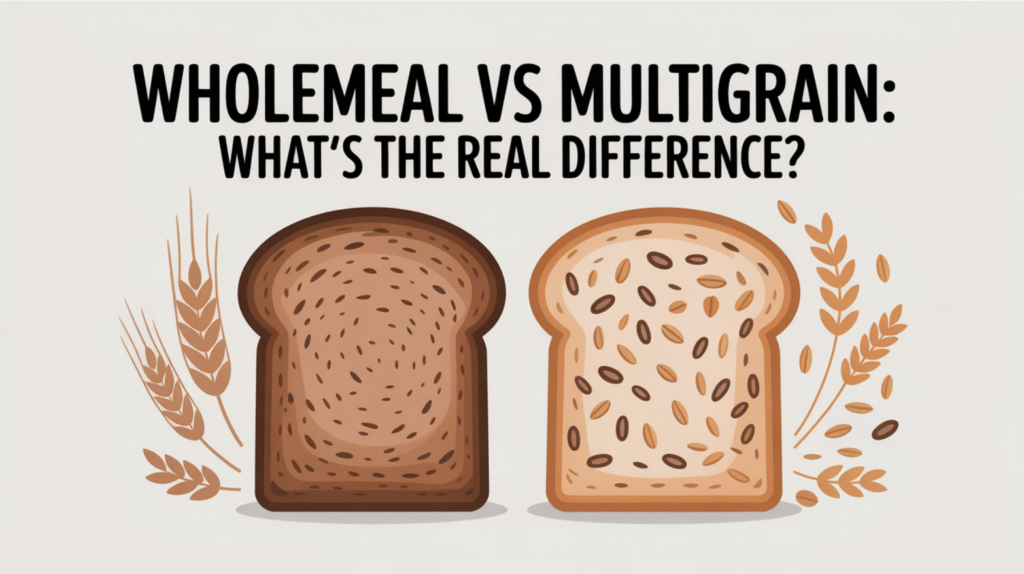
Once you understand that, you can choose based on what you actually want from the loaf, softness, bite, flavour, and how it behaves in toast and sandwiches.
The plain-English definition
Wholemeal bread
Wholemeal bread is made using whole wheat flour (the whole grain is milled, rather than using only the refined part). In UK stores, “wholemeal” is generally a clearer signal than “brown” because it tells you what flour base you’re buying.
If you want a loaf that feels more robust and “wheaty”, your best starting point is usually a proper wholemeal loaf, similar to the styles covered in our wholemeal bread picks in the UK.
Multigrain bread
Multigrain bread means the loaf contains more than one grain. That might include wheat plus oats, rye, barley, spelt, or other cereals, sometimes with seeds as well.
Multigrain is more of a style umbrella. Two multigrain loaves can taste completely different, which is why choosing from multigrain bread options in the UK is often about texture and flavour rather than the word on the front.
What you’ll notice at home (the parts shoppers actually care about)
1) Flavour profile
- Wholemeal usually tastes more consistently “wheaty” and slightly nutty.
- Multigrain can taste oat-y, malty, slightly sweet, or more complex depending on the grains used.
If you like predictable flavour for everyday sandwiches, wholemeal tends to be easier to buy confidently. If you like variety, multigrain is where supermarkets hide the interesting loaves.
2) Texture and bite
- Wholemeal often feels firmer and more uniform.
- Multigrain can be soft or dense, but usually has more “texture moments” (bits of grain, flakes, or seeds).
If you dislike surprise crunch, check the pack, some multigrain loaves are smooth and soft, while others are full of grains and seeds.
3) Toast performance
- Wholemeal tends to toast evenly and stays sturdy.
- Multigrain can toast beautifully, but some versions brown faster because of added grains, flakes, or slightly sweeter ingredients.
If toast is your main use, choose based on how you like the finish, crisp edges, or soft-centre toast. For people who love a more bakery-like toast experience, some will even move towards sourdough-style breads for that chew and crust feel.
4) Sandwich behaviour (important for packed lunches)
- Wholemeal often holds fillings well without tearing, especially with spreads.
- Multigrain depends on the loaf, some are soft-slice, others crumble more.
If you make neat sandwiches daily, wholemeal can be a safer bet. If you want sandwiches that feel a bit more “grown-up”, multigrain can be brilliant, just pick one that slices cleanly.
UK packaging: what the words usually signal
Here’s how shoppers can think about the labels without overcomplicating it:
| Label | What it usually means | What to check quickly |
|---|---|---|
| Wholemeal | Whole wheat flour base | Whether it’s “wholemeal” vs “brown” |
| Multigrain | More than one grain included | Whether it includes seeds or just grains |
| Seeded | Seeds are part of the loaf | Crunch level and slice stability |
| Brown | Could be many recipes | Ingredient list is your friend |
If you want a quick method for decoding those front words, our bread label guide for UK packs keeps it practical.
A quick choosing guide (no overthinking)
Pick wholemeal if you want…
- a dependable “daily” loaf with a consistent taste
- sturdy slices for sandwiches and toast
- a clearer label meaning when you’re shopping fast
Pick multigrain if you want…
- more flavour variation from loaf to loaf
- extra texture (oats, rye notes, grain flecks)
- a bread that feels a little more interesting with simple toppings
The easy mistake people make
A lot of people assume:
- multigrain = wholemeal
- wholemeal = multigrain
But they’re different ideas. One is about the flour base. The other is about the mix.
If you’re building a simple bread routine, you can even keep both: a wholemeal loaf for reliable weekday sandwiches, and a multigrain loaf for toast and “nice plate” meals.