
GroceriesReview.co.uk provides independent reviews and recommendations. Some pages contain affiliate links to Amazon.co.uk, and we may earn a commission when you make a qualifying purchase at no extra cost to you.
Bread packaging in the UK is designed to look simple.
In reality, it quietly decides how your loaf will behave once you take it home.
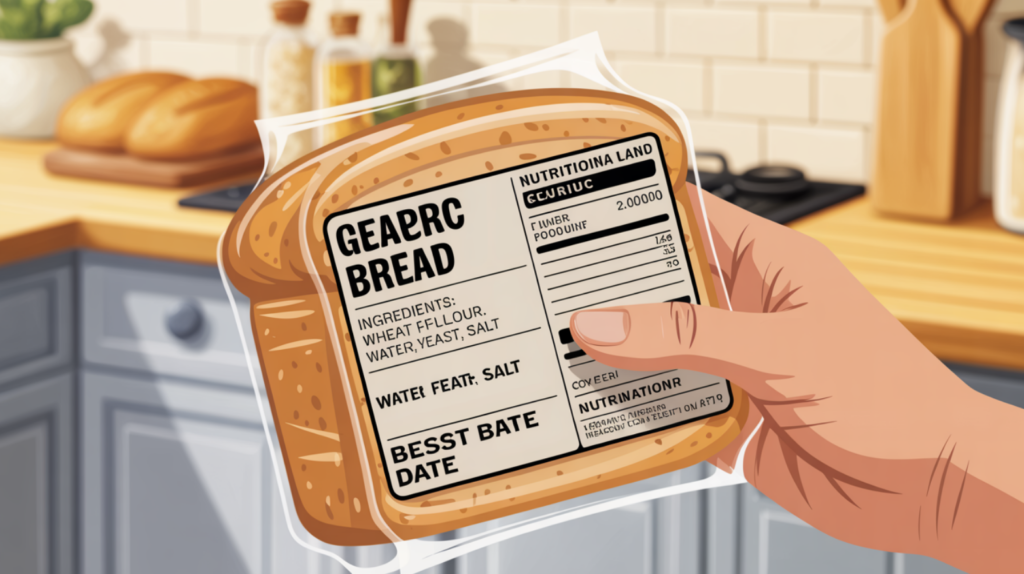
Words like brown, wholemeal, artisan, and multigrain don’t mean the same thing to every shopper, and they don’t always mean what people think they do. Once you know what the labels are actually telling you, choosing the right loaf becomes far easier.
This guide keeps the focus on shopping clarity, not nutrition lectures.
The front of the pack: what catches your eye first
“White”, “Brown”, and “Wholemeal”
These are the three most misunderstood words on bread in the UK.
| Label word | What it usually tells you |
|---|---|
| White | Made mostly from refined flour, soft texture |
| Brown | May contain a mix of white + wholemeal flour |
| Wholemeal | Made from whole grain flour, denser crumb |
That’s why some brown loaves behave more like soft white bread, while others feel closer to true wholemeal loaves.
The word alone doesn’t tell the full story, the ingredient order does.
“Multigrain”, “Seeded”, and “Grainy”
These words describe what’s added, not what the main flour is.
- Multigrain: more than one grain is present
- Seeded: seeds added on top or inside
- Grainy: mostly a texture description
Some multigrain loaves are built on white flour with grains sprinkled in. Others are closer to wholemeal in feel, like the heavier styles found in UK multigrain selections.
The label doesn’t tell you which, the ingredient list does.
“Artisan” and “Baked in-store”
These words describe style and handling, not ingredients.
“Artisan” usually signals:
- rustic shape
- firmer crust
- less uniform crumb
It doesn’t automatically mean sourdough, handmade, or preservative-free. That distinction becomes clearer once you understand what artisan bread means in UK supermarkets.
The ingredient list: your real decision-maker
Ingredients are listed in descending weight order.
The first item tells you what most of the loaf is made from.
If the first word is:
- Wheat flour → mostly white flour
- Wholemeal wheat flour → mainly wholemeal
- Blend of wheat and wholemeal → mixed structure
This single line explains why two loaves with the same front label can behave completely differently at home.
The quiet clues about shelf life
Certain words hint at how long the loaf will stay soft:
- Vegetable oils
- Emulsifiers
- Preservatives
These don’t make a loaf bad, they simply explain why some breads behave like the dependable loaves in UK brown bread picks and stay usable longer, while others go stale quickly.
If you’ve noticed some loaves harden fast, it connects closely to the patterns explained in why bread stales at different speeds.
“Sourdough” on the label
In the UK, “sourdough” should mean the dough was fermented using a starter culture. However, the texture and behaviour still vary widely between brands.
If sourdough is your goal for flavour and toast performance, it helps to compare within UK sourdough options rather than relying on the word alone.
The 15-second supermarket check
When you pick up a loaf, glance at:
- Front label, style expectations
- First ingredient, real base of the bread
- Slice thickness through the bag, storage + staling clues
- Crust look, soft vs crusty behaviour at home
That’s usually enough to avoid the “this isn’t what I expected” moment.
Why this matters at home
When you match label meaning to how you actually eat bread:
- storage becomes easier
- waste drops
- meals become more predictable
- you stop buying the wrong loaf for the job
Which makes the advice in proper bread storage finally work instead of fighting your kitchen.