
GroceriesReview.co.uk provides independent reviews and recommendations. Some pages contain affiliate links to Amazon.co.uk, and we may earn a commission when you make a qualifying purchase at no extra cost to you.
White bread and brown bread sit next to each other in every UK supermarket, but they’re not just the same loaf in different colours. The difference starts with how the flour is processed, then shows up in taste, texture, fibre, and how the bread fits into real-life meals. Once you know what to look for, choosing between them becomes less about guilt and more about what works for your household.
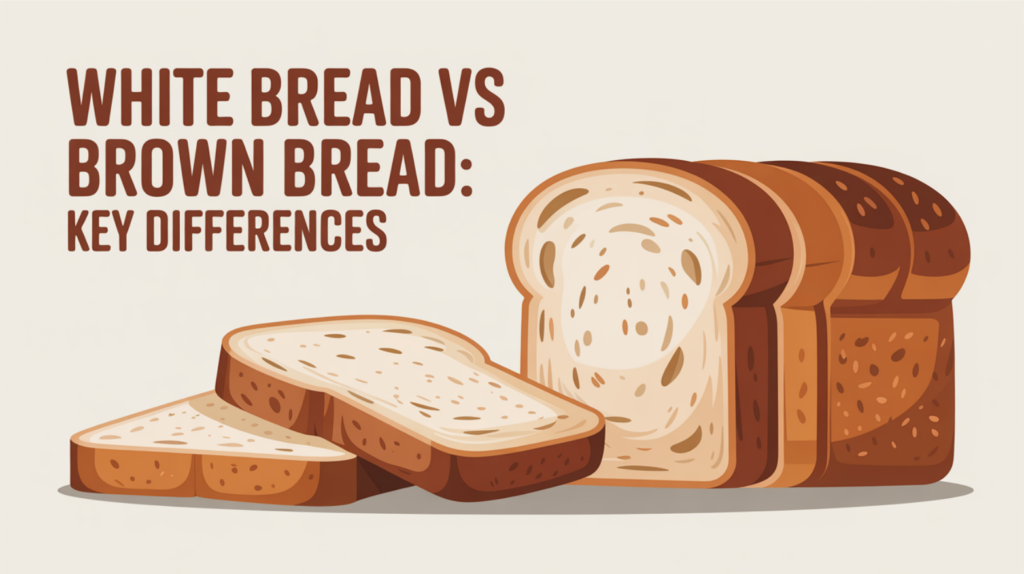
In short: white bread tends to be softer and milder, while brown bread usually brings a deeper flavour and a firmer bite, but the label alone doesn’t always tell the whole story.
The simplest difference (and the one that actually matters)
White bread is usually made from refined wheat flour.
Brown bread is usually made from a mix of flours, often including wholemeal or wheatmeal flour, and sometimes with added malted ingredients or colouring for flavour.
That means two “brown” loaves can be surprisingly different. One may be closer to white bread in nutrition and texture, while another can feel closer to wholemeal.
If you’re comparing options in-store, it helps to keep a mental link between what you buy and what you enjoy at home, especially if you already like the soft everyday style of popular white breads sold in the UK or the slightly heartier feel found in many brown breads in UK supermarkets.
Key differences you’ll notice first
1) Flavour
White bread is typically mild and neutral, which is why it works with almost any filling.
Brown bread often tastes more “toasty” or wheaty, and sometimes slightly sweet depending on the recipe.
Practical takeaway:
If your fillings have strong flavours (cheese, pickles, chutneys), brown bread can hold its own. If you want fillings to be the main event, white bread stays out of the way.
2) Texture and bite
White bread usually has a softer crumb and a more tender chew.
Brown bread often feels a bit firmer, with a slightly denser bite.
Why this matters:
- Soft white bread can make a quick sandwich feel easy to eat
- Firmer brown bread can make the same sandwich feel more filling
3) Fibre and “staying power”
Brown bread is often higher in fibre than white bread, but that depends on the loaf. If the brown bread includes more wholegrain flour, it usually keeps you satisfied longer.
Good to know:
If you want the most dependable wholegrain feel, wholemeal tends to be the clearer option than “brown” in general, especially if you also keep wholemeal bread in rotation for breakfast toast.
4) How well it toasts
White bread often toasts evenly and quickly because it’s softer and more uniform.
Brown bread can toast beautifully too, but it may brown a little differently due to ingredients and density.
If toast is a daily ritual in your home, choosing bread by how it behaves under heat can be more satisfying than choosing by colour. A loaf with more character, like a gentle tang and chew, often shows up in good sourdough-style breads, which many people prefer for toast.
What the labels don’t always tell you
“Brown” doesn’t automatically mean wholegrain
In the UK, “brown bread” can include:
- bread made with a blend of white flour + wholemeal flour
- bread with wheatmeal flour
- bread with added malted ingredients for a darker colour and flavour
So if you’re buying brown bread mainly for nutrition, checking the ingredient list is worthwhile.
If you want help spotting what matters across bread categories, reading bread labels in the UK makes these details easier to catch quickly.
A quick comparison table (real-life shopping view)
| Feature | White Bread | Brown Bread |
|---|---|---|
| Taste | Mild, neutral | More wheaty, sometimes sweeter |
| Texture | Softer, lighter | Often firmer, sometimes denser |
| Fibre | Usually lower | Often higher (but varies a lot) |
| Best for | Kids’ lunches, simple sandwiches | Heartier sandwiches, toast with stronger toppings |
| What to watch | Can feel less filling | “Brown” can still be mostly refined flour |
Which one should you choose?
Choose white bread if…
- you want soft sandwiches that don’t fight back
- you’re feeding kids who prefer mild flavour
- your household finishes a loaf fast and likes predictable texture
Choose brown bread if…
- you like a deeper flavour and sturdier slice
- you want bread that feels more filling for lunches
- you often eat bread with savoury toppings
And if you like the idea of variety without going fully dense, multigrain can be a comfortable middle ground, especially for people who enjoy a bit of texture and a more interesting bite. (That’s why multigrain bread often becomes the “everyday upgrade” loaf in many homes.)
The calm truth
White bread and brown bread both have a place in a normal UK kitchen. White bread makes weekday eating simple and fuss-free. Brown bread often brings more flavour and fibre, but it isn’t automatically a nutritional superhero just because it looks darker. Once you choose based on how you eat bread, not how you want to feel about bread, you’ll buy loaves you actually enjoy, and waste less too.