
GroceriesReview.co.uk provides independent reviews and recommendations. Some pages contain affiliate links to Amazon.co.uk, and we may earn a commission when you make a qualifying purchase at no extra cost to you.
In the UK, bread shopping looks simple, until you realise you’re not just choosing “white or brown”. You’re choosing a loaf that behaves a certain way at home: how it toasts, how it holds fillings, how quickly it loses its best texture, and how it fits into your week.
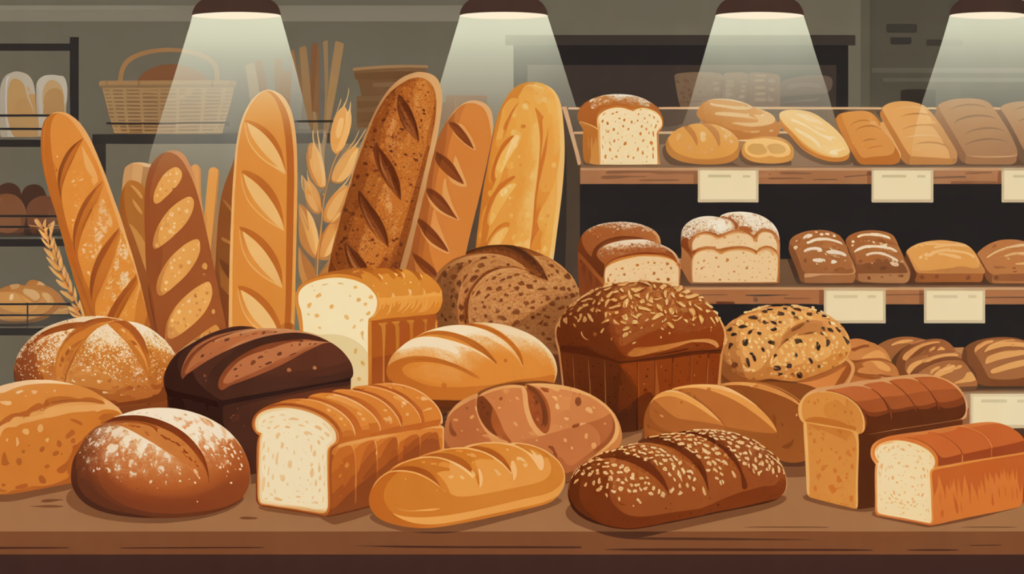
So the real question isn’t whether one bread is “better”. It’s what you’re actually paying for when you pick one type over another.
This guide explains bread choices the way a shopper experiences them: texture, taste, label meaning, convenience, and value.
The five things you’re really selecting when you pick a loaf
Every bread type in a UK supermarket is a different combination of:
- Softness vs chew (how it feels in the mouth)
- Crust vs convenience (tear-and-share or neat sandwiches)
- Staying power (how long it keeps its best texture)
- Flavour strength (neutral or bold)
- Routine fit (lunchbox, toast, soup nights, weekend meals)
Once you see bread through those five lenses, the aisle makes sense.
1) White sliced bread: you’re buying speed and predictability
White sliced bread is built for everyday use. It’s consistent, easy to bite, and forgiving with fillings.
What you’re paying for:
- uniform slices that stack neatly
- mild taste that doesn’t dominate fillings
- soft texture that works for kids and quick meals
This is why many households keep something like a dependable white loaf as the “default bread”.
2) Brown bread: you’re buying a “middle” loaf, but the label can be vague
Brown bread often sits between white and wholemeal in texture and flavour. But in UK supermarkets, “brown” can mean different recipes.
What you’re paying for:
- slightly stronger flavour than white
- a firmer slice that can feel more substantial
- an everyday loaf that still works for lunches
Because brown varies so much, it’s worth using a shortlist like these brown bread options in the UK to avoid loaves that look right but eat oddly.
3) Wholemeal bread: you’re buying a clearer identity and a firmer slice
Wholemeal is usually a more straightforward label than brown. It signals that wholemeal flour is the foundation, which often changes both taste and texture.
What you’re paying for:
- a wheaty, slightly nutty flavour
- a firmer crumb that holds its shape
- a loaf that feels more “bread-like” in a meal
If you want that steadier wholemeal style, wholemeal loaves in the UK are typically more consistent than “brown” as a category.
4) Multigrain bread: you’re buying variety (flavour + texture), not a single standard
Multigrain means more than one grain is included, but the base flour can still vary. That’s why multigrain is more about the loaf’s character than one strict definition.
What you’re paying for:
- a more interesting bite than plain sliced bread
- flavour notes that can be oat-y, malty, or slightly sweet
- texture that ranges from soft-slice to rustic and dense
That range is exactly why multigrain bread options need comparing by “how they eat”, not just the front word.
5) Seeded bread: you’re buying crunch and richness
Seeded bread adds texture and a toasted aroma. For some people, it makes even plain butter feel more satisfying.
What you’re paying for:
- crunch and bite
- a more savoury, nutty feel
- toast that tastes “bigger” even with simple toppings
Seeded loaves can also be more delicate when sliced thin, so storage matters, especially if you don’t finish bread quickly.
6) Sourdough: you’re buying chew, flavour depth, and great toast potential
Sourdough is chosen less for convenience and more for the eating experience. In supermarkets, sourdough can be mild or tangy depending on the style.
What you’re paying for:
- a chew that feels bakery-like
- a flavour that stands up to cheese, eggs, soup
- toast that feels crisp outside and satisfying inside
If sourdough is your chosen style, sourdough breads in the UK vary enough that picking by texture is often smarter than picking by brand.
7) Artisan loaves: you’re buying a crusty “meal bread” with a shorter perfect window
Artisan-style bread often feels best fresh. It’s chosen for evenings, sharing, soup, and weekends.
What you’re paying for:
- crust and aroma
- a rustic crumb
- a loaf that feels like a “proper” part of dinner
But the trade-off is that artisan loaves often change quickly after cutting, which ties directly into why bread stales at different speeds and how you store it.
8) Sandwich loaves: you’re buying neatness
Some breads are designed specifically for sandwiches. They don’t just taste mild, they stay tidy.
What you’re paying for:
- consistent slice size
- easy folding and stacking
- predictable lunches
This is the “workhorse loaf” for packed-lunch homes.
9) Gluten-free bread: you’re buying a different bread experience altogether
Gluten-free bread isn’t a simple swap. It behaves differently when sliced, stored, and toasted.
What you’re paying for:
- a loaf made to work without gluten’s structure
- texture that often improves with toasting
- a bread that benefits from freezer-first storage
This connects naturally with your upcoming article on how gluten-free bread is different, and it also links to proper bread storage, because gluten-free loaves often need a different approach.
The “right loaf” is usually a two-loaf system
Many UK homes end up with a simple pattern:
- Weekday loaf (soft sliced for lunches)
- Flavour loaf (sourdough / artisan / multigrain for toast and dinners)
That keeps the routine easy without making bread boring.
The key takeaway
When you pick bread in a UK supermarket, you’re not just buying “a loaf”. You’re buying a set of behaviours: softness, crust, toast performance, slice consistency, and how long it stays enjoyable.
Once you shop for how the loaf fits your week, it becomes far easier to choose quickly, and far less likely you’ll end up with a loaf that feels wrong after two days.