
GroceriesReview.co.uk provides independent reviews and recommendations. Some pages contain affiliate links to Amazon.co.uk, and we may earn a commission when you make a qualifying purchase at no extra cost to you.
Walking down the tea aisle in a UK supermarket can feel oddly crowded: hundreds of boxes, familiar brands, “breakfast” blends, herbal infusions, and trendy powders all competing for the same kettle.
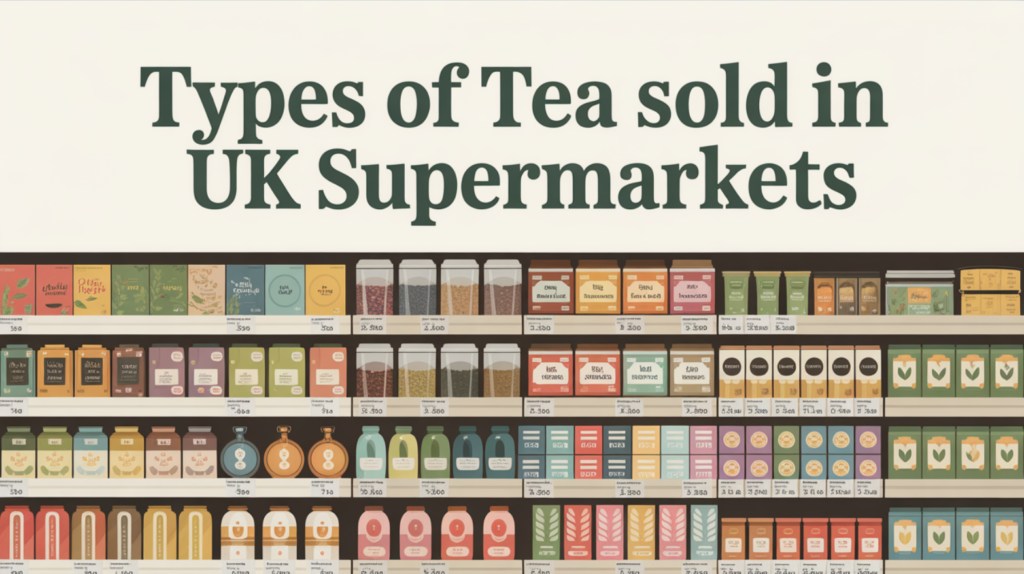
Yet most of what you see falls into a handful of predictable categories. Once you recognise them, choosing tea becomes less about guessing and more about matching a style to the moment you’re buying for, morning strength, evening calm, something fragrant, or something that tastes “clean”.
Tea sold in UK supermarkets usually splits into two broad families:
- True tea made from the tea plant (black, green, oolong, white)
- Herbal infusions made from other plants (peppermint, ginger, rooibos, chamomile, and blends)
That distinction matters because it affects flavour, caffeine, and how the drink behaves in a mug.
A supermarket shelf map (so you know what you’re looking at)
| Shelf category (common in UK stores) | What it usually contains | What it tastes like | Good for |
|---|---|---|---|
| Everyday black tea | Breakfast tea, English breakfast, strong blends | Brisk, bold, familiar | Morning cups, milk tea |
| Green tea | Plain green, flavoured green, jasmine green | Fresh, light, sometimes grassy | Lighter routines, post-meal cups |
| Speciality black tea | Earl Grey, Assam, Darjeeling-style blends | Fragrant or malty, more character | Sipping without milk (often) |
| Herbal & caffeine-free | Peppermint, rooibos, ginger, fruit blends | Minty, sweet, spicy, or fruity | Evenings, caffeine-free habits |
| Chai & spiced blends | Masala chai, spiced black tea blends | Warming, aromatic, often creamy | Cosy drinks, milk-based cups |
| “Functional” teas | Sleep blends, digestion blends, detox-style | Mild, blend-driven | People who like gentle flavours |
| Matcha and powders | Matcha powder, matcha sachets, latte blends | Creamy-green, vivid, sometimes bitter | Lattes, smoothies, modern routines |
| Pods & convenience formats | Tea pods, quick-brew sachets | Similar to bagged tea, fast | Speed and consistency |
1) Black tea (the backbone of the UK aisle)
Black tea dominates UK supermarket shelves because it fits the daily routine: strong flavour, takes milk well, and still tastes like “proper tea” even when brewed quickly.
Most supermarket black tea falls into:
- Breakfast blends (built for strength and milk)
- Everyday value blends (quick, consistent)
- Premium bagged black tea (a bit smoother, less harsh)
If you’re building an affiliate page around this category, the most natural next step is browsing black tea teabags that hold their flavour rather than buying blindly based on a familiar logo.
2) Green tea (lighter, fresher, and often misunderstood)
Green tea sits on a different part of the taste spectrum. Instead of that malty depth, green tea leans fresh and bright. Some people love it immediately; others only enjoy it once they brew it more gently.
Supermarkets usually stock:
- plain green tea
- flavoured green (lemon, mint blends)
- jasmine green tea
- decaf green tea options
For a straightforward shopping shortlist, green tea teabags that taste clean helps narrow down the “too many boxes” problem quickly.
3) Earl Grey and other scented black teas
Earl Grey is so common in UK supermarkets that it almost deserves its own aisle label. It’s technically black tea, but it behaves differently because the aroma becomes the headline.
Anyone curious about that “perfumed citrus” profile usually benefits from understanding what gives Earl Grey its signature scent before choosing a brand.
And if you’re buying purely for flavour (not tradition), it’s helpful to know how Earl Grey actually tastes in the cup when brewed strong versus brewed lightly.
4) Herbal teas and caffeine-free infusions
Supermarkets often group these as “herbal”, but the shelf includes several very different drink experiences:
- mint-based infusions (clean and cooling)
- ginger-based blends (warm, spicy)
- fruit teas (sweet, acidic, often caffeine-free)
- calming blends (often chamomile-led)
- rooibos (smooth, naturally sweet, not from the tea plant)
A reliable shortcut when choosing from this section is to think in “mood”, not ingredient: refreshing, warming, soft, or cosy.
For example, peppermint tea often earns its place because it feels like a reset, and peppermint blends that taste properly minty are very different from ones that brew weak and watery.
Rooibos is a different kind of comfort, mellow and gently sweet, which is why many people rotate it with other evening cups, especially when rooibos options that stay smooth are on hand.
If the aisle feels overwhelming, a well-chosen herbal tea shortlist can be useful, but this time, it’s not the only link we lean on.
5) Chai and spiced tea blends (the “warming” shelf)
Chai in UK supermarkets appears in two common forms:
- spiced tea bags (easy, mild-to-medium spice)
- stronger blends intended for milk
Chai works well for people who find plain black tea too plain and herbal tea too light. When you want warmth and aroma in one mug, chai blends that feel properly spiced is a natural next step.
6) Loose leaf tea (less common, but still present)
Loose leaf is less dominant in mainstream supermarkets, but it’s not rare, especially in larger stores and higher-end ranges. You’ll usually find it in:
- premium black tea tins or pouches
- loose leaf green tea
- speciality teas near giftable items
Loose leaf tends to suit people who enjoy slowing the process down, and it’s often chosen because the flavour feels more layered. If you’re comparing styles, loose leaf black tea options and loose leaf green tea picks can make the difference between “trying loose leaf once” and actually keeping it in rotation.
7) Matcha and modern formats
Matcha is now common enough in UK supermarkets that it’s not just a niche health-shop item. You’ll see:
- ceremonial-style powders (smaller tins)
- “everyday” matcha for lattes
- sachets and matcha latte blends
Matcha has its own taste world, and people often wonder what they’re meant to be enjoying. That’s why having matcha powders worth buying on hand makes the whole category easier to explore without wasting money on dull, bitter tins.
Why the same leaf turns into different teas
Many shoppers assume green tea and black tea come from different plants. They don’t. The difference is what happens after harvest.
For a simple explanation of the transformation, how tea is made from leaf to cup clears up why one tea tastes fresh and another tastes malty.
A simple way to shop the tea aisle without second-guessing
Instead of picking by branding alone, match the tea type to the moment:
- Morning strength: black tea blends
- Midday lighter cup: green tea
- Fragrant sipping: Earl Grey and scented black teas
- Evening calm: rooibos or mint infusions
- Cosy comfort: chai
- Modern routine: matcha for lattes and smoothies
- Exploration: loose leaf tins and speciality packs