
GroceriesReview.co.uk provides independent reviews and recommendations. Some pages contain affiliate links to Amazon.co.uk, and we may earn a commission when you make a qualifying purchase at no extra cost to you.
Beans and pulses in UK supermarkets cover a much wider range than many shoppers first expect. They are sold dried, tinned, in pouches, and sometimes in chilled prepared ranges, with different types suited to different meals, textures, and cupboard habits. On supermarket shelves in Britain, the category usually includes beans such as kidney beans, black beans, cannellini beans, butter beans, and borlotti beans, along with pulses such as chickpeas, red lentils, and green lentils.
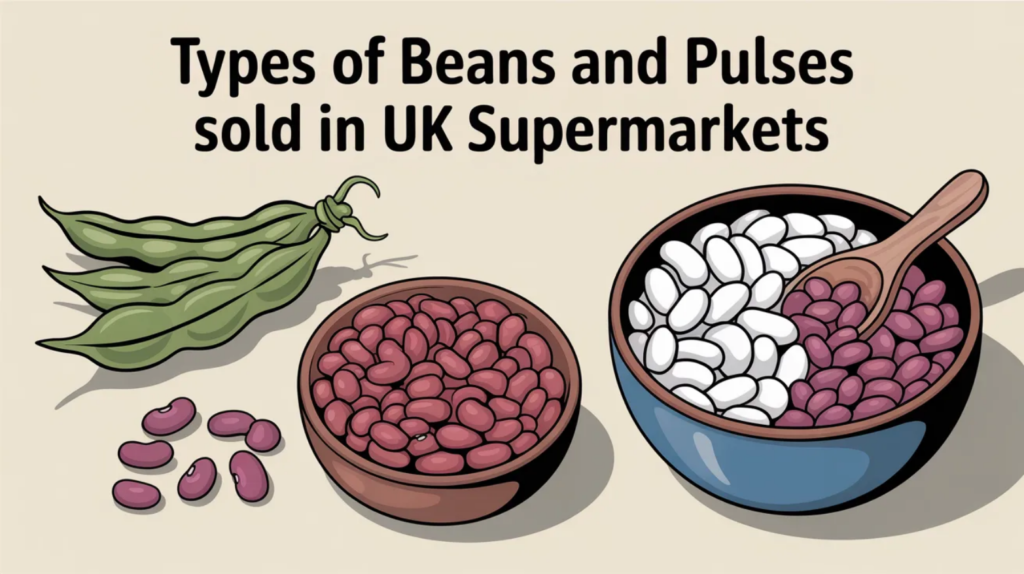
For UK shoppers, the easiest way to understand the category is to look at both the type of pulse and the format in which it is sold. That matters because a bean’s size, skin, and starch content affect how it cooks and what it is usually used for, while the packaging affects convenience, shelf life, and preparation time.
What counts as beans and pulses?
Pulses are the dried edible seeds of legumes, and beans are one part of that wider pulse category. In practical supermarket terms, shoppers often use “beans and pulses” to describe everything from chickpeas and lentils to haricot-style beans and larger white beans.
The difference matters mainly for clarity. Lentils and chickpeas are pulses, but they are not the same as beans in shape or cooking behaviour. In UK supermarkets, though, they are often grouped close together because shoppers use them in similar ways: soups, stews, curries, salads, casseroles, and cupboard-based meals.
The main types sold in UK supermarkets
Most UK supermarkets organise beans and pulses around a core group of familiar products, with a few wider lines in larger branches and online grocery ranges.
Chickpeas
Chickpeas are one of the most widely stocked pulses in Britain. They are usually sold dried, tinned, and sometimes in microwave pouches. Their firm texture and round shape make them useful in curries, salads, traybakes, and blended dishes such as houmous. In UK supermarkets, chickpeas are often one of the easiest pulses to find across value, own-label, and branded ranges.
Kidney beans
Kidney beans are recognised by their dark red colour and curved shape. They are strongly associated with chilli, bean stews, and mixed bean dishes, which is why they are commonly sold in tins for convenience. On supermarket shelves, kidney beans are usually one of the standard tinned lines in both budget and mainstream ranges.
Black beans
Black beans are still less universal than kidney beans in some smaller UK shops, but they are now a normal part of larger supermarket ranges. They are darker, smaller, and often slightly firmer in texture. Shoppers typically buy them for soups, rice dishes, burrito fillings, and Latin American-style meals.
Cannellini beans
Cannellini beans are white beans with a smooth surface and a fairly soft, creamy interior when cooked. In UK supermarkets, they are commonly sold tinned and are often used in soups, stews, tomato-based dishes, and bean salads. Their mild flavour makes them one of the more adaptable bean types on the shelf.
Butter beans
Butter beans are larger than cannellini beans and have a broader, flatter shape. They are usually sold cooked in tins or jars, although dried versions can sometimes be found in larger stores. Their size and creamy texture make them stand out in casseroles, traybakes, and warm salads.
Borlotti beans
Borlotti beans are commonly found in tinned mixed bean ranges and in some Italian-style grocery lines. They have a speckled appearance before cooking, although that pattern often fades after processing. In British supermarkets, borlotti beans are more common in larger stores and are often chosen for soups, stews, and tomato-based dishes.
Lentils
Lentils are one of the biggest pulse categories in UK supermarkets, but they are usually split by type because each one behaves differently in cooking. Red lentils are widely used in soups, dhal, and blended dishes because they soften and break down quickly. Green lentils hold their shape better, which makes them more suitable for salads, side dishes, and recipes where a firmer texture matters.
Some supermarkets also sell ready-to-use tinned lentils, which appeal to shoppers who want the convenience of cooked lentils without the preparation time of dried packs.
Mixed beans
Mixed beans are a supermarket format rather than a single bean variety. These tins or pouches usually combine several types, often including kidney beans, cannellini beans, borlotti beans, and chickpeas. They are sold for convenience, especially for salads, quick stews, and side dishes where variety of shape and colour matters.
How beans and pulses are usually sold in the UK
In UK supermarkets, beans and pulses are usually sold in three main formats: dried, tinned, and pouch-packed.
Dried packs
Dried beans and pulses are usually sold in plastic bags or sometimes paper-style packs in the world foods, rice, or pulses section. This format gives shoppers the raw ingredient, which means longer cooking times but also greater control over texture. Dried lentils are especially common, while dried larger beans are more likely to appear in bigger stores or specialist ranges.
Tins
Tinned beans are the standard format for convenience in Britain. Most shoppers buying kidney beans, black beans, cannellini beans, butter beans, and chickpeas are buying them cooked and preserved in tins. That format suits quick weekday meals because the beans usually only need draining, rinsing, or reheating.
Pouches and prepared formats
Pouches have become more common in UK supermarkets, especially for lentils, mixed beans, and seasoned pulse products. These are usually aimed at convenience-led shoppers who want faster meal assembly and easier storage once opened.
How the different types compare on texture and use
The differences between beans and pulses become clearer once you look at texture rather than just appearance.
Chickpeas are usually firmer and more structured than most tinned beans, which is why they work well in salads and roasted dishes. Kidney beans are soft but still hold their shape, making them useful in chilli and stews. Black beans often feel denser and smoother, while cannellini beans are softer and creamier. Butter beans are larger and more velvety inside, so they often feel more substantial on the plate.
Lentils behave differently again. Red lentils break down quickly and are often chosen when a softer, thicker result is wanted. Green lentils keep more of their shape, which makes them better for dishes where the pulse needs to stay distinct rather than disappear into the sauce.
What UK shoppers are most likely to see on shelves
The exact range depends on the size of the shop, but most UK supermarkets will usually stock chickpeas, kidney beans, butter beans, cannellini beans, red lentils, and green lentils in at least one format. Black beans, borlotti beans, and mixed bean tins are now also common in larger branches.
Smaller convenience-format shops often carry only the fastest-selling lines, usually chickpeas, kidney beans, baked beans, red lentils, and one or two white bean options. By contrast, larger Tesco, Sainsbury’s, Asda, Morrisons, Waitrose, and Ocado ranges often include more specialist pulse products, world food pack sizes, and premium own-label formats.
What matters when buying beans and pulses
For UK shoppers, the right choice usually comes down to four things: format, texture, intended use, and label information.
Format matters because dried products need more preparation, while tins and pouches are quicker. Texture matters because not every bean suits every dish. Intended use matters because a soft butter bean works differently from a firmer chickpea, and red lentils behave very differently from green lentils. Label information matters because supermarket packaging often shows whether the product is in water, brine, sauce, or a seasoned dressing.
This is where the category becomes easier to shop. A shopper planning a chilli may naturally reach for kidney beans. Someone making a bean salad may prefer cannellini beans, mixed beans, or chickpeas. Someone cooking a soup may choose red lentils because they break down quickly, while someone making a warm salad may prefer green lentils because they stay more intact.
Why the category keeps expanding
Beans and pulses now take up more space in UK supermarkets than they once did because they fit several shopping habits at once. They work for pantry cooking, budget meals, vegetarian dishes, batch cooking, and quick convenience meals. That is why the category now includes both plain staples and more ready-to-use formats.
In practice, that means shoppers are no longer choosing only between one tin of beans and one bag of lentils. They are choosing between multiple bean types, multiple lentil types, mixed options, and different packaging formats depending on how they cook and store food at home.
Conclusion
The types of beans and pulses sold in UK supermarkets are easiest to understand when grouped by both product type and supermarket format. Beans such as kidney beans, black beans, cannellini beans, butter beans, and borlotti beans sit alongside chickpeas, lentils, and mixed pulse products because they serve related roles in everyday cooking, even though their textures and uses differ.
For shoppers in Britain, the main distinctions are practical ones: whether the product is dried or ready cooked, whether it stays firm or softens easily, and whether it suits soups, salads, stews, curries, or cupboard-based meal planning. Once those differences are clear, the beans and pulses section becomes far easier to navigate.