
GroceriesReview.co.uk provides independent reviews and recommendations. Some pages contain affiliate links to Amazon.co.uk, and we may earn a commission when you make a qualifying purchase at no extra cost to you.
Spaghetti and penne are both everyday pasta staples in UK supermarkets, but they behave very differently once they leave the packet. One is long and strand-like, the other is short and tube-shaped. That basic difference changes how each pasta cooks, how it carries sauce, what dishes it suits, and even how shoppers tend to buy it.
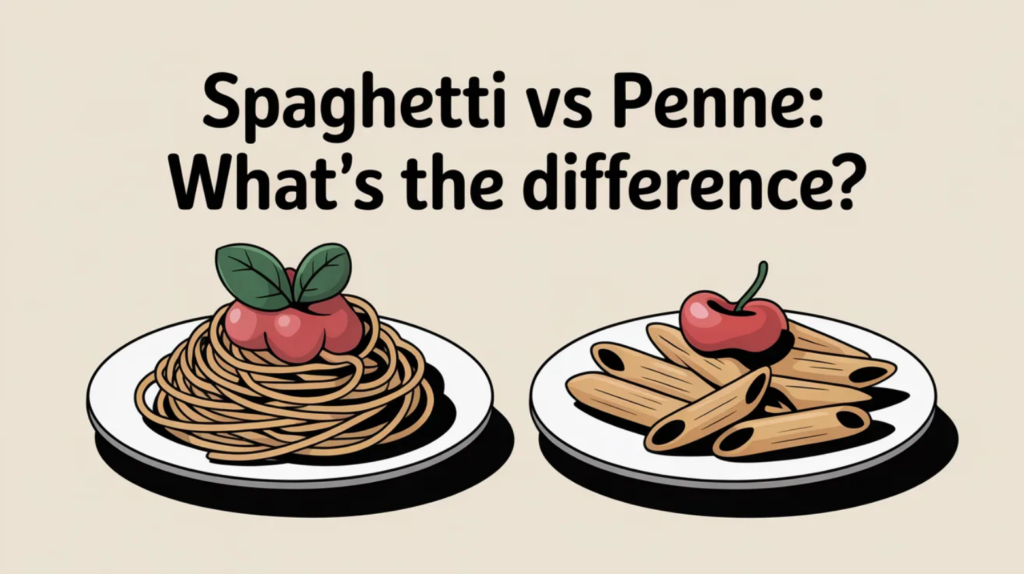
Put simply, spaghetti is usually chosen for twirlable pasta dishes where the sauce coats the strands, while penne is more often picked for chunkier sauces, pasta bakes, and meals where the pasta needs to hold its shape clearly.
The most obvious difference is the shape
Spaghetti is a long, thin pasta sold in straight dried strands, usually in plastic packs or cardboard boxes. It is one of the most recognisable products in the pasta aisle and is closely associated with simple tomato sauces, oil-based dishes, and classic midweek pasta meals.
Penne looks completely different. It is short, hollow, and cut at an angle, which gives each piece its familiar pointed ends. Many versions are ridged as well, and that textured outer surface changes how sauce sits on the pasta.
Shape is not just appearance. It affects how the pasta is eaten, how it feels in the mouth, and which ingredients work best with it.
They hold sauce in different ways
This is where the practical gap between spaghetti and penne really shows.
Spaghetti is coated from the outside. The sauce wraps around the strands, so it works best with smoother sauces that can cling evenly. Tomato sauces, olive oil-based sauces, butter-based sauces, and thinner meat sauces all suit spaghetti because the strands can be lifted and twirled with the sauce already attached.
Penne handles sauce more like a container. Sauce clings to the outside, especially if the pasta is ridged, but some also slips into the hollow centre. That makes penne especially useful for thicker sauces with visible pieces of onion, vegetables, cheese, or meat. In a creamy sauce or a bake, penne often feels sturdier and more structured than spaghetti.
The eating experience is not the same
Spaghetti creates a softer, more flowing kind of pasta dish. The strands gather together on the fork, and the meal feels built around coating and twirling. Even when the ingredients are simple, spaghetti can make the dish feel more continuous because every bite pulls the sauce along the strands.
Penne is more separate and piece-based. Each tube stays distinct, which gives the dish a more chunky, forkable feel. You do not twirl it. You scoop and lift it. That changes the pace of the meal and the way the ingredients are noticed.
In practice, spaghetti often feels more suited to a bowl-and-sauce format, while penne feels more adaptable in mixed dishes where pasta, sauce, and added ingredients need to stay visually distinct.
Spaghetti and penne are often used for different meals
In many UK households, spaghetti is the default choice for a quick tomato-based dinner. It is commonly used for spaghetti bolognese-style meals, even though the sauce itself may vary from brand to brand or home to home. It also appears in simpler cupboard meals where olive oil, garlic, or a jarred sauce are doing most of the work.
Penne appears more often in pasta bakes, creamy sauces, and family dishes where the pasta needs to be easy to portion. Because it is short and sturdy, it also travels well from pan to oven dish. That makes it especially practical for weeknight meals, batch cooking, and packed leftovers.
The distinction is not absolute, but the pattern is consistent. Spaghetti is usually chosen for plated pasta dishes. Penne is more often chosen for built-up pasta meals.
Both are sold widely, but the shelf role is slightly different
On UK supermarket shelves, both shapes are standard lines. You will usually find them in value, own-label, branded, and premium ranges. Even so, they do not always serve the same role in a shopper’s basket.
Spaghetti is often treated as a classic staple, bought because it is familiar and versatile. Penne is just as common, but it is frequently chosen with a more specific use in mind, especially for bakes or thicker sauces.
Pack sizes can reflect that. Larger bags of penne often suit family cooking and meal prep, while spaghetti is bought both in regular packs and in larger stock-up formats because it is such a routine cupboard item.
The ingredients are usually similar, but the use still differs
Standard dried spaghetti and standard dried penne are both commonly made from durum wheat semolina and water. From an ingredient point of view, they may be very close. The main difference is not what they are made from but how the shape changes the result on the plate.
You may also find wholewheat and gluten-free versions of both. Even then, the basic divide stays the same. Wholewheat spaghetti is still a long strand pasta. Gluten-free penne is still a short tube pasta. The ingredient base may shift, but the structure still guides the way the pasta works with sauce and in different dishes.
Which one is easier to cook and serve?
Neither is especially difficult, but they are handled differently in the kitchen.
Spaghetti needs enough space in the pan for the strands to soften and sink properly into boiling water. It also benefits from being stirred early so it does not clump together. Serving it can be slightly messier, especially for younger children or for casual meals where long strands are less convenient.
Penne is simpler to portion and easier to stir through thicker sauces. It also transfers more neatly into lunchboxes, baking dishes, and storage tubs. For households that want less fuss at serving time, penne often feels more practical.
That is one reason penne appears so often in family-focused supermarket meal ideas, while spaghetti remains more tied to classic pasta plates.
Which should you buy?
If the meal is centred on a smooth sauce and you want the pasta to feel light, coated, and easy to twirl, spaghetti usually makes more sense. If the dish includes thicker sauce, visible ingredients, or an oven stage, penne is often the better fit.
Some shoppers simply prefer one over the other, and there is nothing wrong with that. Still, the choice is not arbitrary. These two shapes behave differently enough that swapping one for the other can noticeably change the finished meal.
Conclusion
Spaghetti and penne may sit only a few shelves apart in UK supermarkets, but they are built for different kinds of pasta dishes. Spaghetti is long, strand-based, and best with smoother sauces that coat evenly. Penne is short, hollow, and better suited to thicker sauces, baked dishes, and meals with more texture and structure.
So the real difference is not just shape on the shelf. It is how that shape affects sauce, serving, texture, and the kind of meal you want to make.