
GroceriesReview.co.uk provides independent reviews and recommendations. Some pages contain affiliate links to Amazon.co.uk, and we may earn a commission when you make a qualifying purchase at no extra cost to you.
A jar of pickled onions and a jar of gherkins may end up in the same trolley, but they bring very different things to the table. One is all about sharp onion bite and a more traditional British pickle feel. The other is built around cucumber crunch, with a flavour range that can go from sweet to tangy to dill-led depending on the brand.
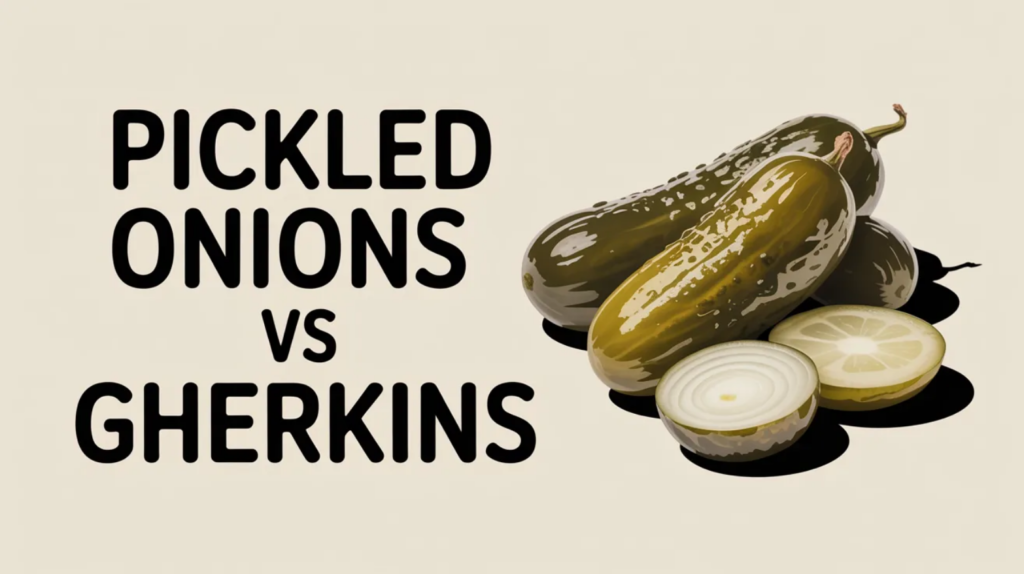
For everyday supermarket shopping in the UK, the clearest distinction is simple: pickled onions are onions preserved in vinegar, while gherkins are small cucumbers pickled for crunch and tang.
They start with completely different vegetables
This is the biggest difference, and it shapes everything else. Pickled onions are made from onions, usually small whole onions packed in clear, malt or seasoned vinegar. Gherkins are made from cucumbers picked while still small, then preserved in a pickling liquid that may be sweet, sharp or herb-flavoured.
Because onion and cucumber behave differently, the eating experience changes immediately. Onion has more pungency and depth, while cucumber keeps a fresher, cleaner bite even after pickling. So even before looking at the liquid or seasoning, these are two distinct pickle styles rather than close substitutes.
The flavour profile is not remotely the same
Pickled onions tend to taste bolder and more assertive. The vinegar usually hits first, then the onion’s savoury sharpness comes through underneath. In UK supermarkets, some jars lean very tart, while others use malt vinegar for a darker, rounder flavour that feels especially familiar in British buffet and pub-style food.
Gherkins are usually brighter and lighter. They still bring acidity, but the cucumber base gives them a fresher edge. Some are sweetened, some are dill-flavoured, and some are simply sharp and crunchy. That wider flavour range makes gherkins more flexible, whereas pickled onions usually stay within a narrower, more recognisable profile.
Texture changes how they are used
Pickled onions are firmer, denser and more substantial in the mouth. Even small ones feel like a distinct side item rather than just a topping. They are often eaten alongside cheese, cold meats or buffet foods where a strong, punchy pickle makes sense.
Gherkins are usually more adaptable because they can be served whole, sliced lengthways, cut into rounds or chopped into sandwiches and burgers. Their crunch is still noticeable, but it is less dominating than a whole pickled onion. In practical terms, that makes gherkins easier to fit into a wider range of lunches and quick meals.
Where they usually fit in British food
Pickled onions feel more rooted in classic British picking-and-nibbling habits. They suit ploughman’s lunches, pork pies, cheddar, cold cuts and party food. A jar in the cupboard often belongs to the sort of meal where several bits are laid out on a plate rather than stacked into a bun.
Gherkins are more likely to appear in burgers, sandwiches, wraps and side salads. They also show up on sharing boards, but in the UK they are especially common as a sandwich and burger pickle. So while both products are used with savoury food, their most typical roles are not identical.
Supermarket labels give useful clues
With pickled onions, the variation often comes from the vinegar. Labels may point to malt vinegar, spirit vinegar, sweet pickling vinegar or extra seasoning. Size can vary too, from small silver-skinned onions to larger onions with a heavier bite.
With gherkins, the front of the jar often tells you more about sweetness and style. In UK supermarkets you may see sweet gherkins, dill gherkins, crunchy gherkins or simply pickled gherkins. That naming matters because “gherkin” covers more flavour territory than “pickled onion” usually does.
Can they be swapped?
Only loosely. They both add acidity, but they do not solve the same problem in a meal. Replacing gherkins with pickled onions in a burger changes the texture and pushes the onion flavour to the front. Replacing pickled onions with gherkins on a cheese plate makes the result milder and less robust.
So while they belong to the same broad pickle category, they are better thought of as different tools rather than direct alternatives.
Which one is better for everyday shopping?
That depends on what you are trying to build around them. For burgers, sandwiches and general lunch use, gherkins are usually the more versatile buy. For cheese, buffet spreads and stronger cold foods, pickled onions often make more sense.
Many UK shoppers keep both for that reason. One jar covers crisp, cucumber-based tang. The other brings a sharper, more old-fashioned pickled onion bite.
Conclusion
Pickled onions and gherkins are both staple pickle products in UK supermarkets, but they differ in base ingredient, flavour strength, texture and use. Pickled onions are stronger, weightier and more traditional in feel. Gherkins are crunchier, lighter and usually easier to work into sandwiches and burgers.
The easiest way to choose is to think about the role on the plate. If you want a bold side pickle, pickled onions are often the better fit. If you want a more flexible, cucumber-based topping, gherkins usually do the job better.