
GroceriesReview.co.uk provides independent reviews and recommendations. Some pages contain affiliate links to Amazon.co.uk, and we may earn a commission when you make a qualifying purchase at no extra cost to you.
Pickles and relishes cover a wider range of products on UK supermarket shelves than many shoppers expect. Some are whole or sliced vegetables preserved in vinegar or brine, while others are chopped, sweetened, spiced or turned into a spoonable condiment for burgers, sandwiches and cold meats. That matters because products that sit near each other in the condiments aisle can taste very different and suit completely different uses.
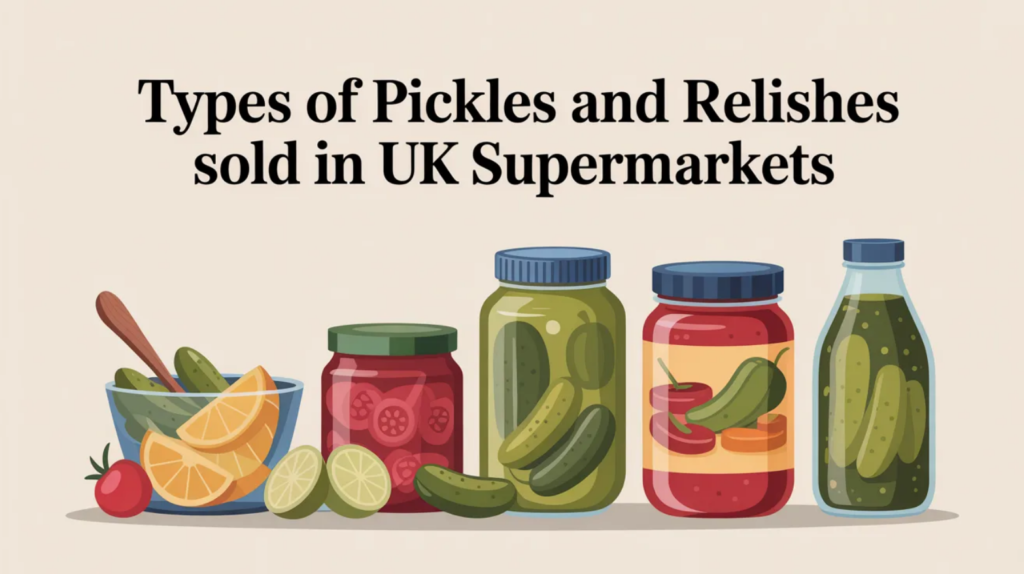
In practice, the main difference is this: pickles are usually identifiable pieces of vegetable or fruit preserved in a pickling liquid, while relishes are usually chopped or finely cut mixtures designed to be spread, spooned or layered into food. Once you start looking at the labels, textures and typical uses, the distinction becomes much clearer.
What counts as a pickle or relish in UK supermarkets?
In UK supermarkets, the pickle and relish category usually includes gherkins, dill pickles, sweet pickles, pickled onions, cornichons, burger relish, sandwich relish, piccalilli, mixed pickles and cucumber relish. These products may be sold in jars, squeezy bottles or plastic tubs, depending on how they are meant to be used.
The difference becomes clearer when you look at form and purpose. Pickles tend to be sold whole, sliced, speared or chunked, often suspended in vinegar or brine. Relishes are more often finely chopped and mixed with sugar, spices, mustard or thickened sauce so they can be spooned straight onto food. For shoppers in the UK, that usually means pickles are chosen for crunch and acidity, while relishes are chosen for texture, sweetness or easy spreading.
Gherkins
Gherkins are small cucumbers, which are pickled in vinegar, brine or a seasoned solution and sold whole or sliced in jars. In UK supermarkets, they are one of the most familiar pickle types and are commonly placed near burger toppings, sandwich condiments and deli-style jars.
They can range from sharp and vinegary to mildly sweet, depending on the recipe. Some are simply pickled cucumbers, while others include herbs, mustard seeds, peppercorns or sugar. This is where label reading matters, because a jar labelled gherkins does not always taste the same from one brand to another. Some are made for burgers and sandwiches, while others are milder and intended for salads or grazing boards.
Dill pickles
Dill pickles are cucumber pickles flavoured with dill, usually giving them a more savoury, herbal taste than standard sweetened gherkins. Although dill pickles are more strongly associated with North American supermarket ranges, they are now widely available in the UK through both mainstream supermarkets and world food selections.
Their flavour profile is usually less sugary and more briny, with garlic, dill and spice notes often more noticeable than sweetness. In practice, they appeal to shoppers who want a sharper, less sweet cucumber pickle for burgers, hot dogs and sandwiches. If a jar is labelled as dill rather than simply pickled cucumbers, the herb flavour is usually a major part of the product rather than a minor seasoning.
Sweet pickles
Sweet pickles are pickled vegetables with a noticeably sweeter balance, usually created by adding sugar to the pickling liquid. In UK supermarkets, this sweetness is often paired with cucumber, though sweet pickled mixes and sweet gherkin-style products are also common.
That sweetness changes how the product works in food. Rather than adding only acidity and crunch, sweet pickles also soften sharper flavours and create a more rounded burger or sandwich filling. By contrast with dill pickles or cornichons, sweet pickles usually feel less aggressive and more accessible to shoppers who do not want a strongly vinegary bite. The label may mention sweetened vinegar, sugar or a sweet pickling recipe, which is a useful sign of what to expect.
Pickled onions
Pickled onions are onions preserved in vinegar, usually sold whole in jars and often associated with pub-style snacks, ploughman’s lunches and British buffet tables. In the UK, they are one of the most traditional pickled products and are usually found in the ambient condiments section rather than chilled aisles.
Their flavour depends heavily on the type of onion and strength of vinegar used. Some are very sharp and punchy, while others are sweeter or darker if malt vinegar is used. This is where British supermarket choice becomes especially visible, because pickled onions can vary from classic silver-skinned onions in clear vinegar to larger onions in darker, more robust pickling liquor. Texture also matters, with some jars offering a firm crunch and others a softer bite.
Cornichons
Cornichons are very small, tart pickled cucumbers, usually less sweet than standard gherkins and often associated with French-style charcuterie, pâté and cheese boards. On UK packaging, they are usually labelled as cornichons rather than simply mini gherkins, which signals a more specific style.
The difference between cornichons and ordinary gherkins is not just size. Cornichons are typically sharper, more acidic and less sweet, with a cleaner, brisker flavour that works well alongside rich foods. For shoppers in Britain, they are often a better fit for deli boards, smoked meats and continental-style lunches than sweeter burger-style pickles. They are also commonly sold in smaller jars, reflecting the fact that they are often used in smaller quantities.
Burger relish
Burger relish is a chopped pickle-style condiment made to sit easily inside burgers without adding large crunchy pieces. In UK supermarkets, it is often sold in jars or squeezy bottles and may contain cucumber, onion, peppers, vinegar, sugar and spices.
Its purpose is convenience as much as flavour. Instead of layering sliced pickles and chopped onion separately, burger relish combines tang, sweetness and soft texture in one spoonful. That matters for shoppers who want a neater topping that spreads evenly across a bun. Burger relish is usually sweeter and more sauce-like than whole pickles, and the ingredient list often shows a blended vegetable base rather than one single pickled item.
Sandwich relish
Sandwich relish is a chopped condiment designed to add moisture, acidity and texture to sandwiches, wraps and cold fillings. It overlaps with burger relish, but it is often broader in flavour and may include more visible chopped vegetables or a sharper, more savoury edge.
In practice, sandwich relish is chosen for easy layering in lunch foods rather than just hot burgers. On supermarket shelves in the UK, it may be marketed as a ploughman’s-style, pickle-style or vegetable relish depending on the brand. The texture is usually important here: it needs to be spoonable and spreadable without making bread overly wet. That makes it different from whole pickles, which add crunch but are less evenly distributed across a sandwich.
Piccalilli
Piccalilli is a mustard-yellow mixed pickle made with chopped vegetables, vinegar and spices, and it remains one of the most recognisable British pickle types. In UK supermarkets, it is often sold in jars alongside chutneys, pickles and sandwich accompaniments.
The defining feature of piccalilli is not just that it contains mixed vegetables, but that it is bound together by a mustard-based sauce. Cauliflower, gherkin, onion and other vegetables are common, though recipes vary by brand. This gives it a stronger, spiced and more distinctive flavour than many plain pickles. For shoppers in the UK, piccalilli is often chosen for ham, cold meats, pork pies and cheese, where the mustardy sharpness can stand up to richer foods.
Mixed pickles
Mixed pickles are combinations of different vegetables preserved together in one jar, often in a vinegary or spiced liquid. In UK supermarkets, this can mean anything from a traditional British pickled vegetable mix to products influenced by South Asian or continental pickling styles.
Because the name is broad, mixed pickles vary more than many other products in the category. Some are chunky and sharp, some are sweetened, and some are heavily spiced. This is where the label becomes especially important. A mixed pickle jar may include cauliflower, onion, gherkin, carrot or other vegetables, but the seasoning and intended use can differ widely. Some are made for cold platters and buffet foods, while others are stronger and better suited to being used in small amounts alongside meals.
Cucumber relish
Cucumber relish is a finely chopped cucumber-based condiment that sits somewhere between a pickle and a sauce. In UK supermarkets, it is usually sold as a smoother, softer alternative to sliced cucumber pickles, with a sweet-sharp balance that works well in sandwiches, burgers and salads.
The main distinction is texture. Instead of whole or sliced cucumber pieces standing out on their own, cucumber relish is made to spread more evenly across food. It often includes onion, vinegar, sugar and seasoning, which gives it more body than a plain jar of pickled cucumber slices. For shoppers in Britain, it can be a practical choice when the flavour of pickled cucumber is wanted without the bulk of larger pickle pieces.
How these products differ on the shelf
Although all of these products belong to the same broad category, the differences usually come down to five things: the base ingredient, the cut, the liquid or sauce, the sweetness level and the intended use.
A jar of cornichons, for example, may be based on small cucumbers but taste much sharper and less sweet than a jar of sweet pickles. Piccalilli may contain multiple vegetables, but its mustard sauce makes it very different from a clear pickling liquor. Burger relish and sandwich relish may both contain pickled vegetables, yet their chopped consistency means they function more like condiments than side pickles. In UK supermarkets, shoppers often get the clearest clue from the front label, but the ingredients list usually confirms whether the product is brined, sweetened, mustard-based or sauce-led.
How pickles and relishes are usually sold in UK supermarkets
Most pickles and relishes in the UK are sold ambient in glass jars, though some relishes also appear in plastic squeeze bottles or tubs. Glass jars are common because they suit acidic products well and allow shoppers to see the cut, colour and texture before buying.
Pack size often reflects intended use. Whole pickled onions and gherkins may come in larger jars because they are served piece by piece over time, while cornichons are often sold in smaller jars. Relishes designed for regular sandwich or burger use may come in bottles that are easier to portion quickly. This is where shelf placement can help too: some products sit with table sauces, while others are shelved beside chutneys, pickles or world food condiments depending on the supermarket format.
What to look for when buying
For shoppers in the UK, the most useful buying clues are the ingredient list, sweetness level, cut size and serving purpose. A product that looks similar through the jar may behave very differently once opened.
If you want crunch and distinct pieces, whole or sliced pickles usually make more sense than relish. If you want something easier to spread into sandwiches, a relish is usually the better buy. It is also worth checking whether the product is made with vinegar, brine, mustard sauce or added sugar, because these details affect both flavour and how the product pairs with food. Brand variation matters as well, especially in piccalilli, mixed pickles and relish styles where recipes can vary significantly.
Storage and everyday use
Most jarred pickles and relishes are stored in the cupboard before opening and then kept in the fridge once opened, though shoppers should always follow the storage instructions on the label. The vinegar, salt and sugar content help with preservation, but refrigeration after opening is standard for most supermarket products in the UK.
In everyday use, pickles are often added as a side, garnish or crunchy layer, while relishes are used more like a built-in condiment. That makes pickles better for platters, salad additions and burger stacking, while relishes are often easier for lunchboxes, sandwiches and quick assembled meals. The packaging reflects that difference, with jars suiting piece-based products and squeezable or spoonable containers suiting softer condiments.
Conclusion
Pickles and relishes sold in UK supermarkets include several distinct product types rather than one interchangeable category. Gherkins, dill pickles, sweet pickles, pickled onions and cornichons are all pickled vegetables, but they differ in sweetness, sharpness, size and use. Burger relish, sandwich relish and cucumber relish are softer, more spreadable condiments, while piccalilli and mixed pickles sit in between, combining vegetables with stronger sauces or mixed pickling styles.
For UK shoppers, the clearest way to choose is to think about flavour, texture and how the product will be used. A sharp cornichon, a sweet pickle, a mustardy piccalilli and a spoonable burger relish may all belong in the same aisle, but they serve very different purposes once they reach the plate.