
GroceriesReview.co.uk provides independent reviews and recommendations. Some pages contain affiliate links to Amazon.co.uk, and we may earn a commission when you make a qualifying purchase at no extra cost to you.
Black tea and green tea come from the same plant, yet they feel like two different drinks. One tends to taste bold and comforting with milk; the other often tastes fresh, light, and cleaner on the tongue. The gap between them isn’t the leaf itself, it’s what happens to the leaf after picking.
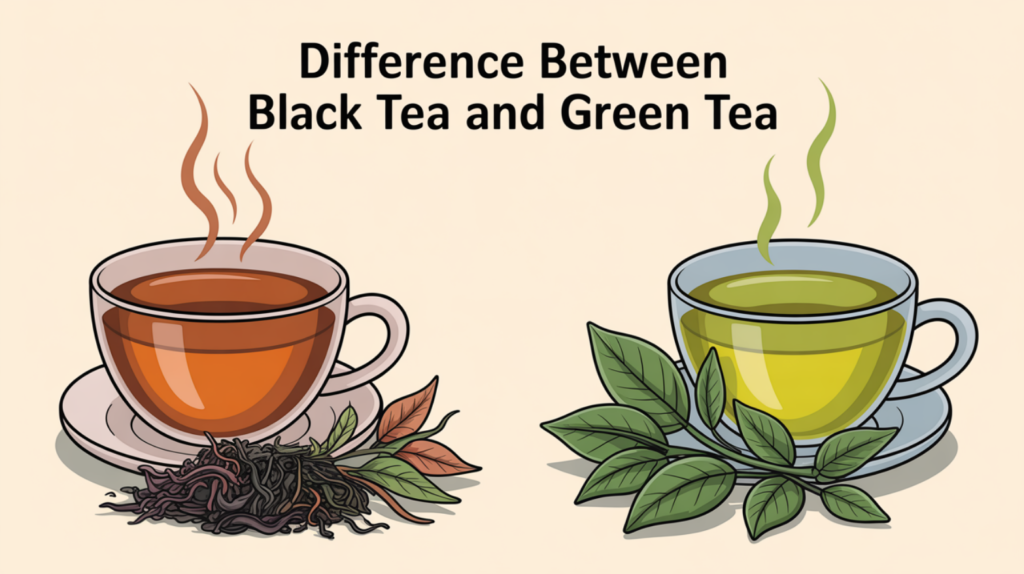
Once tea leaves are harvested, they begin changing almost immediately. The key difference is how much the leaf is allowed to darken through natural reactions with oxygen. Black tea is made to develop that darker, richer character, while green tea is protected so it keeps its greener, brighter personality.
If you’ve ever wondered why a strong morning brew feels so different from a delicate green cup, the explanation sits in processing, flavour compounds, and how each tea is usually brewed.
The core difference in one sentence
- Black tea is processed to become deeper and darker in flavour.
- Green tea is processed to stay lighter and greener in flavour.
That single choice changes aroma, colour, mouthfeel, and how forgiving the tea is in hot water.
What they taste like (real-world, not poetic)
Black tea in the cup
Black tea usually tastes:
- malty or brisk
- fuller-bodied
- easier to drink with milk
- more forgiving if brewed a bit strong
This is why many people keep a staple box of everyday black teabags that hold up well for mornings and guests.
Green tea in the cup
Green tea often tastes:
- fresh, grassy, or lightly sweet
- lighter in body
- more sensitive to over-steeping
- better without milk for most people
If you’ve tried green tea and found it bitter, it’s often not “you”, it’s the brew. Choosing a green tea that stays clean rather than harsh makes a noticeable difference.
Side-by-side comparison that actually helps you choose
| Feature | Black Tea | Green Tea |
|---|---|---|
| Colour | Deep amber to brown | Pale yellow-green to bright green |
| Flavour direction | Malty, brisk, sometimes fruity | Fresh, vegetal, sometimes lightly sweet |
| Brewing forgiveness | High (harder to ruin) | Lower (can turn bitter easily) |
| Common UK habit | Often with milk | Often plain or lightly sweetened |
| Typical “best moment” | Morning, afternoon breaks | Mid-morning, after meals, lighter routines |
The processing difference (without turning it into a science lecture)
Both teas begin the same way: leaves are picked and then handled to shape flavour.
For black tea, the leaf is allowed to develop its darker taste before drying. For green tea, the leaf is stabilised early so it keeps its green character.
If you want the full story of how a leaf becomes different teas, the leaf-to-cup process explains the steps in plain language.
Caffeine: is one stronger than the other?
People often assume black tea always has more caffeine. In practice, it depends on:
- the tea type and grade
- how much leaf is used
- how long it steeps
- the serving size
A strong mug of green tea can sometimes feel more stimulating than a weak black tea. That said, black tea is often brewed stronger in UK homes, which is why it seems higher in caffeine in everyday life.
Which one is “healthier”?
Both are widely enjoyed as part of healthy routines, and both contain natural compounds that people value. The more practical question is:
Which one helps you drink tea consistently in a way you enjoy?
If green tea tastes unpleasant to you, forcing it daily rarely lasts. If black tea only tastes good with three sugars, it might not suit your preferences long-term. The best choice is the one that fits your palate and habits.
Common misunderstandings (quick myth checks)
“Green tea is always gentle.”
Not necessarily. Brew it too hot or too long, and it can taste sharp.
“Black tea is always bitter.”
Not necessarily. A good blend brewed properly can taste smooth and rounded.
“They come from different plants.”
They don’t. The tea plant is the same; the leaf handling differs.
Practical buying guidance (UK supermarket reality)
If your goal is a dependable daily cup:
- black tea is the safer pick because it’s hard to mess up
If your goal is a lighter cup that feels fresh:
- green tea is great, but it rewards gentler brewing
And if you’re choosing based on flavour “character”, you might also enjoy something fragrant like Earl Grey, understanding how Earl Grey comes across in the mug can help you decide whether that citrus aroma is your style.
The simplest way to decide
Choose black tea if you want a strong, familiar cup that works with milk and feels satisfying in the morning.
Choose green tea if you want a lighter, fresher drink that suits calmer sipping and gentler brewing.
And if you like the comfort ritual of a warm mug at night without caffeine, many people alternate green tea earlier in the day with rooibos that stays mellow in the evening.