
GroceriesReview.co.uk provides independent reviews and recommendations. Some pages contain affiliate links to Amazon.co.uk, and we may earn a commission when you make a qualifying purchase at no extra cost to you.
When standing in a UK supermarket rice aisle, one of the most common decisions shoppers face is choosing between white rice and brown rice. While both come from the same grain, the way they are processed creates meaningful differences in texture, cooking behaviour, storage, and everyday usability.
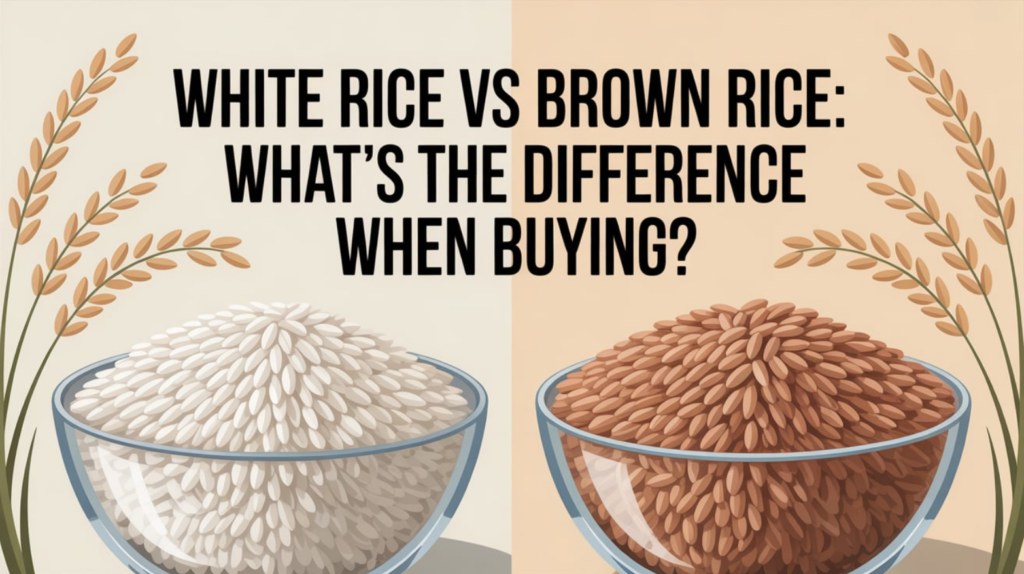
Understanding these differences helps shoppers choose the right rice for their kitchen rather than simply defaulting to habit or price.
How White Rice and Brown Rice Are Made
Both white rice and brown rice begin as the same harvested grain. The difference lies in what is removed during milling.
White rice has the bran and germ layers removed, leaving the starchy core.
Brown rice keeps the bran layer intact, which gives it a firmer structure and deeper grain character.
This single processing difference explains most of the practical differences shoppers experience.
Texture & Cooking Behaviour
| Feature | White Rice | Brown Rice |
|---|---|---|
| Texture | Soft, light, fluffy | Firm, slightly chewy |
| Cooking time | Faster | Slower |
| Water absorption | Lower | Higher |
| Grain separation | Very good | Moderate |
| Tolerance to overcooking | Higher | Lower |
White rice cooks more quickly and tolerates timing errors better. Brown rice requires more attention but offers a firmer bite.
Related buying guides:
Best White Rice in the UK
Best Brown Rice in the UK
Storage & Shelf Life Differences
Because brown rice retains its natural oils in the bran layer, it is more sensitive to heat, light, and air exposure. Proper storage extends its quality significantly.
| Storage Factor | White Rice | Brown Rice |
|---|---|---|
| Shelf life (sealed) | Very long | Shorter |
| Storage sensitivity | Low | Higher |
| Aroma retention | Stable | More fragile |
| Ideal storage | Cool, dry cupboard | Cool, dry, airtight container |
Households that buy rice in bulk often choose white rice for longer storage reliability, while brown rice works best when purchased in smaller quantities.
Practical Buying Considerations
When choosing between white and brown rice, shoppers should consider:
- How often rice is used
- Preferred texture
- Storage conditions at home
- Cooking habits and time availability
Some households keep both on hand — white rice for everyday flexibility and brown rice for meals where firmer texture is desired.
Where These Fit Among Other Rice Types
White and brown rice form the foundation of the rice category, but many shoppers also rotate between:
- Basmati rice for fragrance and presentation
- Jasmine rice for soft aromatic dishes
- Long grain rice for neutral everyday meals
Understanding how white and brown rice differ makes it easier to choose among these specialised types.
Final Buying Perspective
White rice offers convenience, long storage life, and cooking forgiveness. Brown rice provides firmer texture and a more pronounced grain character. Neither is universally better — each serves a different role in everyday UK kitchens.
Knowing these differences allows shoppers to choose based on their actual cooking needs rather than packaging labels.