
GroceriesReview.co.uk provides independent reviews and recommendations. Some pages contain affiliate links to Amazon.co.uk, and we may earn a commission when you make a qualifying purchase at no extra cost to you.
Thick sauces need a pasta shape with some grip, some structure, and enough surface area to carry weight properly. A thin sauce can coat almost any pasta if it is stirred through well enough. A heavy sauce is less forgiving. It needs a shape that can catch pieces of meat, vegetables, cheese, or slow-cooked tomato rather than letting them slide to the bottom of the bowl.
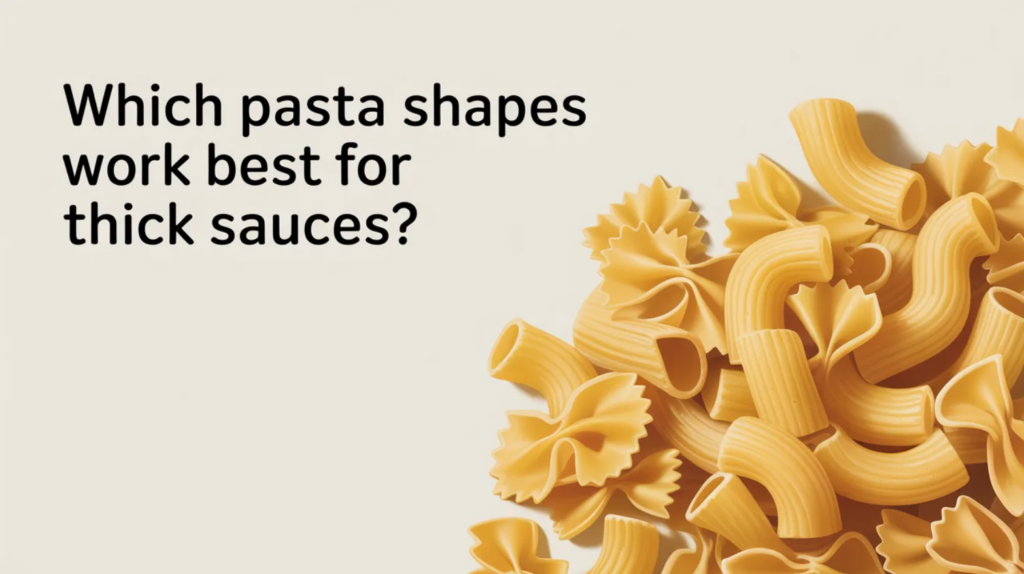
The best pasta shapes for thick sauces are usually short, sturdy shapes with ridges, hollows, folds, or curves. Penne, rigatoni, fusilli, conchiglie, and similar shapes tend to perform better than very fine strands because they can hold the sauce rather than simply sit underneath it.
Start with what a thick sauce actually does
A thick sauce behaves differently from a smooth one. It is heavier, often chunkier, and more likely to contain visible ingredients rather than just liquid coating. Think of a rich beef ragù, a creamy mushroom sauce, a vegetable-packed tomato sauce, or a cheese-heavy bake sauce. These do not just need pasta underneath them. They need pasta that can support the sauce across the whole dish.
That is why the best shapes are rarely the most delicate ones. A thick sauce usually works best with pasta that has edges, ridges, tubes, twists, or scooping space.
Tube shapes are among the strongest choices
If the goal is to handle a dense sauce well, tube-shaped pasta is usually near the top of the list.
Penne
Penne works well because it gives sauce more than one place to sit. It can cling to the ridged outside, gather around the angled ends, and slip slightly into the centre. That makes it especially reliable with creamy sauces, chunky tomato sauces, and pasta bakes.
It is also easy to portion, easy to stir, and easy to serve, which is one reason it appears so often in supermarket meal ideas built around heavier sauces.
Rigatoni
Rigatoni is even better suited to thick sauces than penne in many cases because the tubes are larger and more substantial. A rich sauce has more space to catch on the outside and more room to gather inside. With slow-cooked meat sauces or thick vegetable sauces, rigatoni can feel fuller and more balanced than smaller shapes.
This is one of the clearest examples of how shape changes the meal. A thicker sauce can seem better distributed simply because the pasta has more structure to carry it.
Twisted shapes are excellent when the sauce needs grip
Not every thick sauce needs a hollow pasta. Some are better matched with shapes that trap sauce in folds and curves rather than in tubes.
Fusilli
Fusilli is one of the most dependable supermarket options for thick sauces because the spirals give the sauce plenty to cling to. A chunky tomato sauce, pesto with texture, or creamy sauce with bits of vegetables can all catch in the twists.
The advantage here is spread. Fusilli helps distribute the sauce evenly through the dish, so the meal feels consistently coated rather than patchy.
Rotini and similar twists
Where stocked, similar spiral or corkscrew shapes behave much like fusilli. The key feature is not the exact name on the pack but the twisted structure. It helps hold both the sauce itself and the small pieces within it.
Shells and scooping shapes are built for chunkier sauces
Some pasta shapes do not just hold sauce on the outside. They almost scoop it.
Conchiglie
Shell-shaped pasta is particularly useful with thick sauces because each shell can catch both sauce and ingredients in its curve. That makes it a good match for thicker cheese sauces, vegetable sauces, or meatier tomato-based dishes.
The eating experience also feels different. Instead of just coating the pasta, the sauce becomes part of each individual piece.
Orecchiette
Orecchiette is less common in every supermarket, but where it is available it can work very well with thicker sauces. Its cup-like shape helps gather sauce and small ingredients together. That makes it useful for dishes where the sauce is not completely smooth and where smaller pieces need to stay attached to the pasta.
Large surfaces help when the sauce is rich rather than chunky
Some thick sauces are heavy and creamy rather than obviously chunky. In those cases, wide pasta can work well too, though it needs enough body to avoid disappearing under the weight.
Tagliatelle and pappardelle
Ribbon pasta can suit thick sauces if the sauce is rich and coating rather than full of large chunks. A slow-cooked meat sauce, creamy mushroom sauce, or buttery, reduced sauce can sit well on broad ribbons because the wider surface gives the sauce room to cling.
The difference is that ribbon pasta handles thick coating better than heavy lumpiness. Once the sauce becomes very dense and piece-heavy, a short shape often becomes easier to eat and more practical overall.
Ridged surfaces usually help
When comparing two similar pasta shapes, the ridged one often suits thick sauce better than the smooth one.
Ridges create extra texture on the outer surface, which helps the sauce grip rather than slide away. On UK supermarket shelves, this is most obvious with shapes such as penne and rigatoni. Smooth versions can still work, but thick sauces usually pair more naturally with the ridged kind.
This is especially noticeable in tomato-based sauces with cheese, cream sauces, and baked pasta dishes where the sauce needs to stay attached as the dish is stirred, served, and eaten.
Shapes that are less suited to thick sauces
Not every pasta shape handles weight well.
Spaghetti can work with some rich sauces, especially when they are smooth enough to coat the strands evenly, but it is usually less effective with very chunky or heavy sauces. The sauce can end up falling away from the strands or collecting at the bottom of the bowl.
Very small pasta shapes are also less suitable when the sauce is dense and substantial. They can be overwhelmed too easily, especially if the meal needs to feel clearly structured rather than spooned together.
That does not mean these shapes can never be used. It simply means they are not usually the easiest or most balanced choice when the sauce is thick.
What works best in pasta bakes
For bakes, the best shapes are usually the ones that can keep their structure under heat and still hold sauce once the dish is cut or spooned out.
Penne, rigatoni, and fusilli are among the strongest choices here. They are sturdy, easy to mix with a thick sauce, and reliable once cheese, cream, or tomato-based bake sauce goes into the oven. Shells can also work well, especially in richer baked dishes.
This is one area where very delicate pasta shapes usually lose their advantage. A bake needs durability as much as sauce grip.
What UK shoppers are most likely to find
In most UK supermarkets, the easiest shapes to buy for thick sauces are penne, fusilli, rigatoni, and macaroni, with shells and some larger ribbons available depending on store size. Out of those, penne and fusilli are usually the safest all-round choices because they are widely stocked, familiar, and versatile with everything from creamy sauces to rich tomato-based dishes.
Rigatoni is often an excellent option when available, especially for heartier sauces. Shells and more specialist shapes can be useful too, but they are less consistently stocked across smaller branches.
Final answer
The pasta shapes that work best for thick sauces are usually penne, rigatoni, fusilli, and conchiglie because they have the structure, texture, and shape needed to hold heavier sauces properly. Tube shapes are especially good for dense and chunky sauces, while twists are strong all-rounders for spreading thick sauce evenly through a dish.
So if the sauce is rich, weighty, or full of pieces, short ridged pasta is usually the best place to start.