
GroceriesReview.co.uk provides independent reviews and recommendations. Some pages contain affiliate links to Amazon.co.uk, and we may earn a commission when you make a qualifying purchase at no extra cost to you.
Jam, jelly, and marmalade are often grouped together in the same part of the supermarket, but they are not the same product with different names. In the UK, the difference mainly comes down to what part of the fruit is used, what the final texture is like, and how the spread is expected to taste.
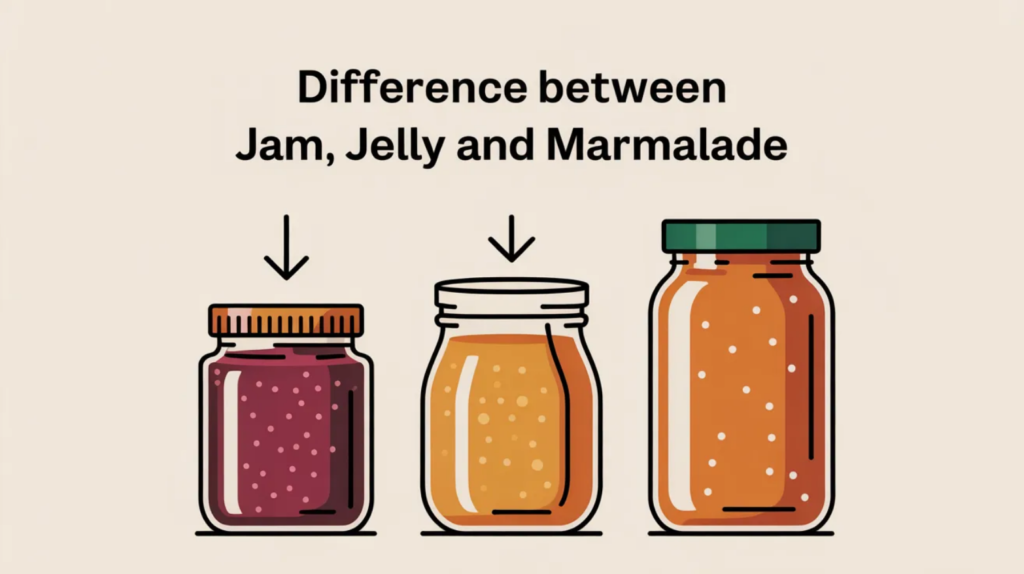
For shoppers, this matters because the three products behave differently on toast, in baking, and on the shelf. A jar may look similar from a distance, but once you understand the category properly, the distinctions are quite clear.
The simple difference
Jam is made from crushed or chopped fruit cooked with sugar, so it usually has a soft, thick, spreadable texture.
Jelly is made from fruit juice rather than whole fruit, which gives it a clearer, smoother, more uniform finish.
Marmalade is a citrus preserve made with juice, pulp, and peel, so it has a sharper flavour and often a slightly bitter edge.
That is the clearest way to separate the three. Jam keeps fruit texture, jelly strips that back to a smooth set, and marmalade adds citrus peel into the picture.
What jam is
Jam is the version most UK shoppers know best. It is the standard fruit spread sold in flavours such as strawberry, raspberry, blackcurrant, and apricot, and it is usually the broadest part of the shelf.
Because jam is made with actual fruit pieces or crushed fruit, it tends to look dense and opaque in the jar. A classic strawberry jam gives a good sense of what the category is meant to be: sweet, fruity, thick, and easy to spread across toast, crumpets, or sponge cake.
Within jam, there is still variation. Some jars are smoother, some are chunkier, and some sit closer to preserve style, but the category itself is built around fruit flesh rather than clear fruit juice.
What jelly is
Jelly is smoother than jam because it is made from strained fruit juice rather than crushed fruit or fruit pieces. That gives it a more even texture and a clearer appearance.
In British supermarket shopping, jelly is less dominant than jam, especially in the everyday breakfast aisle, but the distinction is still useful. If jam feels fruity and textured, jelly feels neat, polished, and uniform.
This is why jelly can suit shoppers who do not want seeds, fruit bits, or a chunky texture. In practical terms, it sits closer to a very smooth spread, with less obvious fruit structure than jam.
What marmalade is
Marmalade belongs beside jam and jelly, but it stands apart because it is based on citrus. Most often, that means orange.
A jar of marmalade usually includes juice, pulp, and visible peel, which immediately changes both the appearance and flavour. It is often more translucent than jam, and the peel gives it a sharper, sometimes bitter note that berry spreads do not usually have.
This is why marmalade tastes so different from jam even when both are sweet. Jam is usually soft-fruit led and rounded. Marmalade is citrus-led, sharper, and more structured in flavour.
Texture is one of the quickest ways to tell them apart
If you are looking at jars side by side, texture is often the easiest clue.
Jam usually looks:
- thick
- opaque
- fruit-led
- sometimes slightly pulpy or seeded
Jelly usually looks:
- smooth
- clear or clearer
- firm and uniform
- free from fruit pieces
Marmalade usually looks:
- glossy or translucent
- filled with peel shreds or strips
- more structured than jam
- visibly citrus-based
That means the visual difference on the shelf can tell you quite a lot before you even read the full label.
The fruit base changes the flavour profile
The reason these products taste different is not only texture. It is also the kind of fruit material being used.
Jam usually tastes fuller and more rounded because it is made from the fruit itself. Berry jams and stone-fruit jams often read as sweet and familiar.
Jelly tastes cleaner and more streamlined because it is based on fruit juice. The fruit flavour may still be strong, but it is not carried by pulp or pieces.
Marmalade tastes brighter, sharper, and more bitter because citrus peel and oils are part of the finished product. That is what gives it a more distinctive breakfast character.
How they tend to be used at home
These products overlap, but they are not always bought for quite the same reasons.
Jam is usually the all-rounder. It works for toast, sandwiches, scones, sponge fillings, and general family use. A jar such as raspberry jam fits naturally into everyday breakfasts as well as baking.
Jelly is often chosen when a smoother finish matters more than fruit texture. It can suit neat spreading and shoppers who prefer a more refined, seed-free result.
Marmalade is more specific. It is strongly associated with toast and breakfast, and it tends to appeal to shoppers who enjoy citrus flavour and some bitterness rather than straightforward sweetness.
Why the labels matter
In UK supermarkets, these words are useful because they do signal genuine category differences.
If a jar says jam, you can usually expect a fruit-based spread with body and texture.
If it says jelly, the expectation is a smooth, strained product.
If it says marmalade, you should expect citrus, peel, and a more complex flavour profile.
That makes these terms more helpful than some softer marketing phrases on packaging. They are not just decorative labels. They tell you what kind of spread you are actually buying.
Which one is best for different shoppers
For shoppers who want a familiar, versatile cupboard staple, jam is usually the easiest choice.
For those who prefer a smoother texture without fruit pieces, jelly makes more sense.
For those who like a sharper breakfast spread with a distinctive citrus taste, marmalade is the stronger option.
So the categories are less about which one is best overall and more about what kind of texture and flavour you want in the jar.
Conclusion
The difference between jam, jelly, and marmalade comes down to fruit structure, texture, and flavour. Jam is made from crushed or chopped fruit, jelly is made from fruit juice, and marmalade is a citrus preserve made with peel as well as juice and pulp.
On UK supermarket shelves, those differences affect how each product looks, tastes, and gets used at home. Jam is the broad everyday fruit spread, jelly is the smoother and clearer option, and marmalade is the citrus one with peel and a more bitter edge.