
GroceriesReview.co.uk provides independent reviews and recommendations. Some pages contain affiliate links to Amazon.co.uk, and we may earn a commission when you make a qualifying purchase at no extra cost to you.
Basmati rice and jasmine rice are two of the most recognised aromatic rice types sold in UK supermarkets. Although they are often grouped together on shelves and sometimes treated as interchangeable, they differ in grain structure, aroma profile, cooking behaviour, and the role they play in everyday meals.
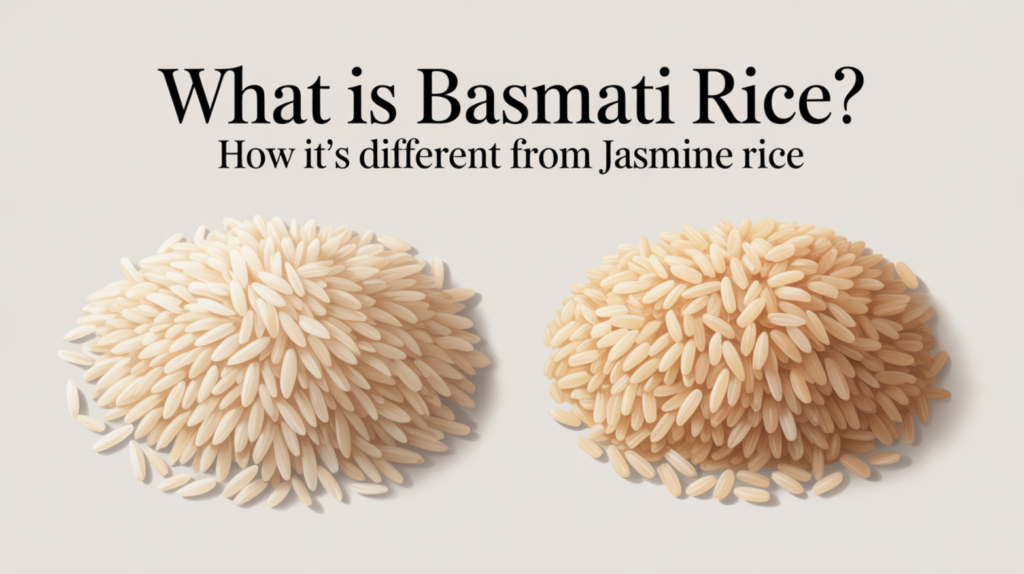
Understanding these distinctions allows shoppers to choose the right rice deliberately rather than relying on brand names or habit.
Understanding Basmati Rice
Basmati rice is traditionally cultivated in the Himalayan regions of India and Pakistan. What makes basmati distinctive is its extra-long slender grain and the way the grain elongates dramatically during cooking while remaining separate. High-quality basmati is usually aged before packaging, a process that reduces moisture content and enhances both aroma and cooking performance.
When cooked, basmati rice produces:
- Long, elegant grains
- A dry, non-sticky texture
- A subtle nut-like fragrance
This behaviour makes basmati especially valued when visual presentation and grain separation matter.
Related buying guide:
Best Basmati Rice in the UK
Understanding Jasmine Rice
Jasmine rice is grown primarily in Thailand and is also an aromatic long grain variety, but its structure and behaviour are notably different. Jasmine grains are shorter and slightly plumper than basmati and contain more surface starch, which produces a softer, gently cohesive texture after cooking.
When cooked, jasmine rice offers:
- Tender grains
- A light floral fragrance
- Slight natural stickiness that helps the rice hold together
Jasmine rice is often chosen for meals where softness and moisture retention improve the overall eating experience.
Related buying guide:
Best Jasmine Rice in the UK
Side-by-Side Comparison
| Feature | Basmati Rice | Jasmine Rice |
|---|---|---|
| Grain shape | Extra-long, slender | Long but shorter and plumper |
| Aroma | Nut-like, dry fragrance | Soft floral fragrance |
| Texture after cooking | Dry, separate | Soft, lightly sticky |
| Grain elongation | Significant | Minimal |
| Moisture retention | Low | Higher |
| Presentation | Elegant, distinct grains | Gentle, cohesive appearance |
| Storage stability | Very good | Good but aroma fades sooner |
How These Differences Affect Everyday Cooking
Basmati rice excels when meals require clearly defined grains and visual appeal, such as pilaf-style dishes and spice-forward recipes. Jasmine rice is more forgiving when cooking and naturally complements meals where the rice absorbs sauces and moisture.
Many UK households keep both types in the cupboard and choose between them depending on the dish rather than brand loyalty.
How They Compare with Other Rice Types
Understanding basmati and jasmine makes it easier to navigate the wider rice category, including:
- White rice for everyday flexibility
- Brown rice for firmer texture and storage considerations
- Long grain rice for neutral flavour and broad usability
Final Buying Perspective
Basmati rice and jasmine rice are not interchangeable; they simply serve different purposes. Basmati prioritises grain definition, aroma control, and refined presentation. Jasmine prioritises tenderness, fragrance, and comfort-style texture. Recognising these differences allows shoppers to make consistent, confident choices across the entire rice aisle.