
GroceriesReview.co.uk provides independent reviews and recommendations. Some pages contain affiliate links to Amazon.co.uk, and we may earn a commission when you make a qualifying purchase at no extra cost to you.
“Bronze-cut” is not a pasta shape. It is a production term. When a pack says bronze-cut pasta, it means the dough was pushed through bronze dies, sometimes also described as bronze draw-plates, to form the pasta shape. Producers and retailers also use closely related wording such as bronze-die or bronze-drawn.
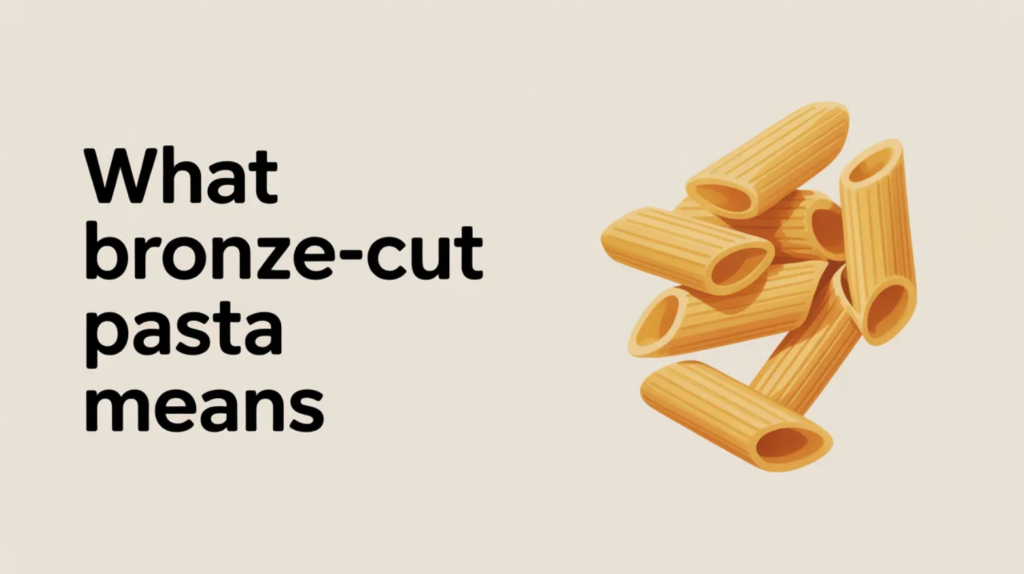
For shoppers in the UK, the point of that wording is usually texture. Barilla describes bronze-cut pasta as having a rough, textured surface, while De Cecco says bronze draw-plates make pasta rough and porous, and retailer descriptions for brands such as Garofalo and La Molisana make the same link between bronze dies and a rougher finish.
It is really about how the pasta is shaped
Before dried pasta becomes spaghetti, penne, fusilli, or another shape, the dough has to be extruded through a die. De Cecco explains that this “drawing” stage is what gives pasta its form, and Barilla describes bronze-cut pasta in the same way: dough is extruded through a bronze die or form to create the shape. So bronze-cut refers to one specific step in manufacture rather than to a separate pasta category in its own right.
That matters because the phrase can sound more mysterious than it is. Bronze-cut pasta is still ordinary dried pasta in the sense that it may still be made from the familiar supermarket base of durum wheat semolina and water. What the label is highlighting is the shaping method, not a completely different product family.
What changes on the pasta itself
The easiest way to picture bronze-cut pasta is to think about surface feel rather than ingredient list. Multiple producers describe the result as rough, porous, or textured. De Cecco says bronze draw-plates are what make pasta “naturally rough” and able to absorb sauce, while Barilla says bronze dies create a rough and textured surface. Ocado product descriptions for Garofalo and La Molisana make the same point, describing bronze-die pasta as rougher and more porous.
That roughness is the main selling point. A smoother pasta surface tends to feel more polished in the packet, while a rougher one gives sauce more to catch on to. This is why bronze-cut pasta is often presented as better for “sauce grip” or for absorbing condiments more effectively.
Why brands talk about sauce grip
When pasta brands mention bronze-cut on the front of a pack, they are usually trying to tell the shopper something about performance on the plate rather than just tradition. Barilla says the textured surface gives its pasta more sauce grip. De Cecco says rough, porous pasta is better able to absorb sauce, and retailer descriptions for bronze-die products repeat the same idea, linking porosity with better sauce adhesion.
In practical UK shopping terms, that means the label is most useful when you are comparing dried pasta lines that look similar in shape but may behave slightly differently once cooked. Bronze-cut is meant to signal a rougher finish and a more sauce-friendly surface, not a different pasta aisle altogether. That is an inference from how producers describe the claim: they keep pointing back to the die, the surface, and the way sauce clings.
The wording on packs is not always identical
One reason shoppers can miss the meaning is that brands do not all use the same phrase. Barilla uses “bronze cut”, Garofalo product listings describe pasta as formed through a bronze die, and De Cecco refers to bronze draw-plates or rough bronze drawing. These are variations around the same idea: the dough has been shaped through bronze tooling to create a rougher surface.
So if one supermarket pack says bronze-cut, another says bronze-drawn, and another mentions bronze dies, the shopper does not need to treat those as three unrelated claims. The wording changes, but the message is broadly the same.
What bronze-cut does not tell you on its own
A bronze-cut claim tells you something real about shaping and surface texture, but not everything about the pasta. It does not, by itself, tell you the wheat quality, the drying method, the protein level, or whether the pasta will suit every sauce equally. De Cecco, for example, presents bronze drawing as one part of a wider method that also includes wheat selection and drying.
That is useful for shoppers because it stops the term being overread. Bronze-cut can be a worthwhile clue on the pack, especially if you care about surface texture, but it is still only one detail among several. Shape, ingredients, drying, and price can still matter just as much depending on what you are buying. This is an inference from the way manufacturers describe bronze drawing as one stage within the wider pasta-making process.
How to read it on a UK supermarket shelf
If you see “bronze-cut” on a dried pasta pack in the UK, the simplest interpretation is this: the brand is pointing to a rougher, more porous finish created during extrusion through bronze dies, and the intended benefit is better sauce grip. That is the core meaning behind the phrase across the producer and retailer descriptions reviewed here.
So bronze-cut pasta means shaped through bronze dies, resulting in a rougher surface than smoother alternatives. On the shelf, it is less a mystery term than a texture signal. For shoppers, that is the useful takeaway.