
GroceriesReview.co.uk provides independent reviews and recommendations. Some pages contain affiliate links to Amazon.co.uk, and we may earn a commission when you make a qualifying purchase at no extra cost to you.
UK supermarkets typically stock a mix of everyday salts (table and cooking salt) plus “speciality” salts (sea salt flakes, rock salt, low-sodium blends, and flavoured salts like garlic or celery).
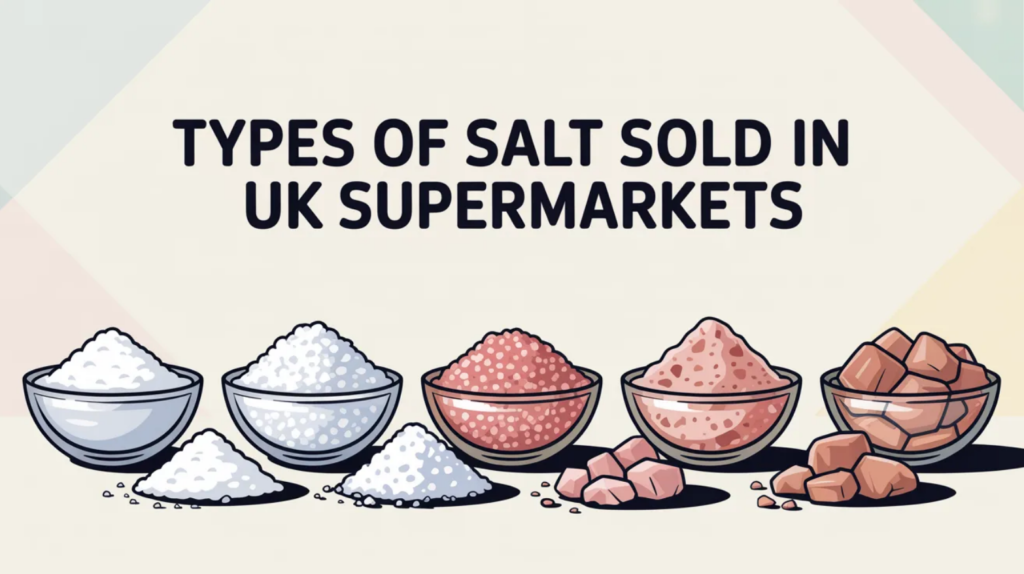
The best choice depends on whether you’re seasoning at the table, cooking, baking, or finishing a dish.
1. Table salt
Table salt is the classic, fine-grained salt designed to dissolve quickly and season evenly.
You’ll use it for:
- ✅ Everyday seasoning (chips, eggs, sandwiches)
- ✅ Baking (where even distribution matters)
- ✅ Soups, sauces, pasta water
What to look for on the label:
- “Fine” or “extra fine”
- “Free-flowing” (often includes anti-caking agents so it doesn’t clump)
If you’re building your salt cluster, you can link out naturally like:
- For a deep dive and product picks, see our guide to the best table salt in the UK.
2. Iodised salt
Iodised salt is regular salt with iodine added. It tastes the same as normal table salt, but it’s purchased specifically for the iodine content.
Common uses:
- ✅ Same as table salt (it behaves similarly)
- ✅ Handy for households that prefer iodised salt for routine cooking
If you’re writing a dedicated buying guide, reference it with a contextual link:
- If you specifically want this type, read our best iodised salt in the UK shortlist.
3. Sea salt (fine)
Fine sea salt is usually less processed than standard table salt, and it’s still small enough to dissolve easily.
Best for:
- ✅ Everyday cooking when you prefer sea salt
- ✅ Seasoning vegetables, meats, sauces
Quick note: fine sea salt and table salt can measure differently by volume (because crystals vary), so for baking it’s safest to weigh if you want consistent results.
4. Sea salt flakes
Flakes are light, crunchy pieces used to finish food, not to disappear into it.
Why people love flakes:
- ✅ You get a gentle crunch
- ✅ Flakes melt on the tongue differently than fine salt
- ✅ Great control for final seasoning
Best for finishing:
- Steaks, roasted potatoes, salads
- Chocolate, caramel, brownies (a tiny pinch on top)
You can also link your flake-specific page:
- For flakes specifically, see the best sea salt flakes in the UK.
5. Rock salt
Rock salt comes in big crystals. In UK supermarkets it shows up for grinders, cooking methods that need slow dissolving, and sometimes non-food purposes (like de-icing) depending on the store/season.
Food-safe rock salt is used for:
- ✅ Grinders (you control the grain size)
- ✅ Salt crusts for roasting
- ✅ Making ice-cream in old-school churn methods (where applicable)
When you write product-led content, just keep it strictly food-focused and skip anything non-food.
6. Kosher-style coarse salt
You’ll see “kosher salt” or “coarse salt” options online and sometimes in larger stores. It’s popular because it’s easy to pinch and sprinkle, and it coats food well.
Best for:
- ✅ Dry brining chicken
- ✅ Salting pasta water
- ✅ Seasoning by hand while cooking
7. Low-sodium salts and salt substitutes
These products reduce sodium compared to regular salt. Some are blends (part salt, part potassium chloride), and some are seasoning mixes designed to replace saltiness with herbs.
Common reasons people buy them:
- ✅ They want a “lighter” salt option
- ✅ They like herb-forward flavour with less saltiness
Cooking tip: they can taste slightly different from standard salt, so start small and adjust.
If you’re building that internal link network:
- Explore options in our guide to low-sodium salt alternatives in the UK.
8. Smoked salt
Smoked salt tastes like gentle barbecue smoke. In supermarkets it’s usually in flakes or small crystals.
Best for:
- ✅ Eggs, avocado toast, mushrooms
- ✅ Roasted veg, beans, lentils
- ✅ Adding “BBQ vibes” without a smoker
A dedicated page can sit neatly in your cluster:
- Try the best smoked salt in the UK if you want strong flavour options.
9. Garlic salt
Garlic salt is a seasoning blend, not pure salt. It typically combines salt with dried garlic (and sometimes anti-caking agents).
Best for quick wins:
- ✅ Garlic bread, chips, wedges
- ✅ Chicken, roasted veg
- ✅ Simple marinades (oil + garlic salt + pepper)
Because it’s a blend, it’s easier to over-salt if you treat it like normal salt. Add gradually.
Internal link idea:
- If you use it often, see our best garlic salt picks in the UK.
10. Celery salt
Celery salt is another blend, usually salt plus ground celery seed. It’s famous for a particular flavour profile.
Typical uses:
- ✅ Bloody Mary-style flavour (even in mocktails)
- ✅ Coleslaw, potato salad
- ✅ Seasoning chicken or rubs where you want a savoury edge
Cluster link:
- For a focused roundup, see the best celery salt in the UK.
11. Black salt
In UK shops and online listings, black salt may refer to:
- Himalayan black salt (Kala Namak) used in South Asian cooking (egg-like sulphur notes), or
- Black lava-style sea salt (dark, dramatic finishing salt)
Where it fits:
- ✅ Kala Namak: chutneys, chaat-style snacks, fruit salads, and vegan “egg” flavour
- ✅ Black lava salt: finishing salt for colour and crunch (not for everyday cooking)
If you want UK-friendly wording, you can mention Kala Namak once and immediately clarify it as “Himalayan black salt”, then keep the rest of the article in plain British English.
(And yes, UK shoppers do use the term Kala Namak, especially in Asian grocery contexts, but in mainstream supermarket language, “Himalayan black salt” is often clearer.)
12. Celtic salt and French grey sea salt
These are mineral-rich sea salts often sold as grey salt or sel gris. They’re slightly moist and can taste more complex than plain fine salt.
Best for:
- ✅ Cooking where you want depth (soups, stews, roasted veg)
- ✅ People who enjoy a softer, less “sharp” salt taste
You can keep them distinct in the cluster:
- See <a href=”/best-celtic-salt-uk/”>best Celtic salt in the UK</a> for a curated selection.
13. Cornish sea salt
Cornish sea salt is commonly sold as flakes or crystals, and it’s used both for cooking and finishing depending on the grain.
Best for:
- ✅ Flakes on roast potatoes, fish, salads
- ✅ Crystals in a grinder or for general cooking
If you’re doing a buying guide page, keep it product-led and simple:
- Explore the best Cornish sea salt in the UK.
Quick “Which salt should I buy?” table
| If you’re doing this… | Pick this type | Why it works |
|---|---|---|
| Everyday seasoning + baking | Table salt (fine) | Even, predictable, dissolves fast |
| Want iodine-added option | Iodised salt | Same cooking use, different label purpose |
| Cooking with sea salt | Fine sea salt | Good dissolve, clean flavour |
| Finishing a dish | Sea salt flakes | Crunch + easy final control |
| Grinder use | Rock salt / coarse sea salt crystals | Feeds a mill well |
| Want smoky flavour | Smoked salt | Adds smoke without extra ingredients |
| Fast garlic seasoning | Garlic salt | One-step seasoning |
| Classic savoury “celery” note | Celery salt | Distinct flavour profile |
| Reduced sodium approach | Low-sodium blends | Different saltiness, start small |
FAQs
Is sea salt “better” than table salt?
Not automatically. Sea salt is often chosen for flavour and texture (especially flakes). Table salt is great for consistency, baking, and everyday use.
Can I swap flakes for table salt in recipes?
You can, but it’s easier to overshoot if you measure by spoon. If precision matters, weigh it.