
GroceriesReview.co.uk provides independent reviews and recommendations. Some pages contain affiliate links to Amazon.co.uk, and we may earn a commission when you make a qualifying purchase at no extra cost to you.
Sweet pickles and dill pickles may both start with cucumbers, but they head in different directions once they are pickled. One leans towards sugar and a softer, rounder flavour. The other is built around dill, brine and a sharper savoury edge. On UK supermarket shelves, that makes them useful for different meals rather than interchangeable versions of the same jar.
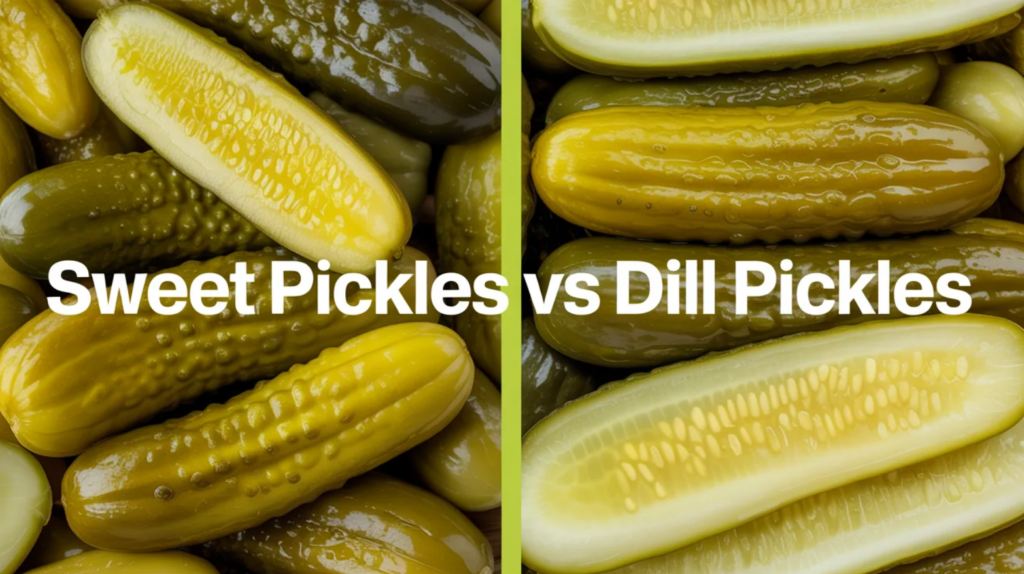
A simple way to separate them is by flavour balance. Sweet pickles are made to taste noticeably sweeter and milder, while dill pickles are flavoured with dill and usually taste more savoury and tangy.
Why they taste so different
The split starts in the liquid. Sweet pickles usually contain enough sugar to soften the vinegar and create a sweeter overall profile. Dill pickles rely more on brine, vinegar, dill and often garlic or spices, so the result feels cleaner and less sugary.
That changes the whole impression of the jar. A sweet pickle tends to feel friendlier and more rounded from the first bite. A dill pickle is more likely to taste brisk, herbal and distinctly pickle-led.
The flavour is not just sweet versus sour
It would be easy to describe this as sugar against acidity, but there is more going on than that. Sweet pickles often come across as slightly softer and gentler because the sugar blends the sharper edges. They can still be vinegary, but the sweetness sits alongside that acidity and changes how it lands.
Dill pickles, by contrast, carry a more savoury identity. Dill has a fresh, slightly grassy, almost feathery herb character that gives the cucumber a sharper direction. Garlic, mustard seeds or peppercorns may also appear, pushing the jar further away from anything sweet.
They suit different kinds of food
This is where the distinction matters in practice. Sweet pickles tend to work well in burgers, simple sandwiches and lunch fillings where a mild sweet-sharp note helps balance salty meat, cheese or sauce. They often fit the flavour profile people expect from classic burger toppings.
Dill pickles are usually better with richer beef burgers, deli sandwiches, hot dogs and cold meats where a more savoury bite is wanted. They can also work better on platters because they cut through fatty foods more firmly.
So the question is not which is better in general. It is which one does the right job for the meal in front of you.
What they usually look like in UK supermarkets
A jar of sweet pickles may be labelled quite clearly, but sometimes the sweetness is only obvious once you check the wording or ingredients. Terms such as sweet gherkins, sweet pickled cucumbers or sweet pickle chips are useful clues. The sugar content often shows up both in the ingredients list and the nutrition panel.
Dill pickles are usually labelled more directly. If dill is the main flavour point, brands tend to say so on the front. In UK supermarkets, they may also appear as dill gherkins, dill cucumbers or burger dill pickles, depending on whether the product is positioned as a deli pickle or a burger topping.
Texture can differ too
Although both types can be sold whole, sliced or in rounds, dill pickles often feel a little firmer and more straightforward in texture, especially when the recipe is less syrupy or sweetened. Sweet pickles can sometimes seem slightly softer, particularly in jars where the liquid is built for a gentler eating experience.
That is not a hard rule for every brand, but it is a pattern shoppers often notice. The sweeter the style, the more the jar may be aiming for balance rather than a hard, sharp snap.
Which one is more versatile?
For general household use in the UK, sweet pickles are often the easier option for people who want an accessible burger or sandwich pickle without too much punch. They tend to please a wider range of tastes, especially in family lunches.
Dill pickles are more distinctive. They are not difficult, but they do make a clearer statement. For shoppers who actively want a savoury, deli-style or American-style pickle flavour, dill usually feels more satisfying and more specific.
So versatility depends on the household. If the aim is broad appeal, sweet pickles often win. If the aim is stronger pickle character, dill pickles usually come out ahead.
Can one replace the other?
Only loosely. A sweet pickle can stand in for a dill pickle if all you need is cucumber, acidity and some crunch, but it will shift the balance towards sweetness. A dill pickle can replace a sweet pickle too, but the result will taste less rounded and more assertive.
That is why recipes and supermarket ranges keep them separate. They solve different flavour problems.
The easiest way to choose
Think about the food first.
Choose sweet pickles when:
- the meal already has ketchup, burger sauce or mild cheese
- you want a softer, more familiar flavour
- the pickle is for everyday sandwiches and burgers
Choose dill pickles when:
- the food is rich and needs a cleaner contrast
- you want less sugar and more savoury flavour
- the pickle is for deli-style sandwiches, hot dogs or beef burgers
Conclusion
Sweet pickles and dill pickles may begin with the same kind of vegetable, but they are built for different results. Sweet pickles are rounder, milder and more sugar-led. Dill pickles are sharper, herb-led and more savoury in character.
For UK shoppers, the decision usually comes down to the role the pickle needs to play. If you want a softer burger or sandwich topping, sweet pickles make sense. If you want a more pronounced pickle bite, dill pickles are usually the better fit.