
GroceriesReview.co.uk provides independent reviews and recommendations. Some pages contain affiliate links to Amazon.co.uk, and we may earn a commission when you make a qualifying purchase at no extra cost to you.
Seedless jam and regular jam may look like a small variation within the same shelf section, but they suit noticeably different preferences. In UK supermarkets, both products are usually sold as fruit spreads for toast, sandwiches, baking, and desserts, yet the presence or absence of seeds changes texture, appearance, and how the jam behaves in use.
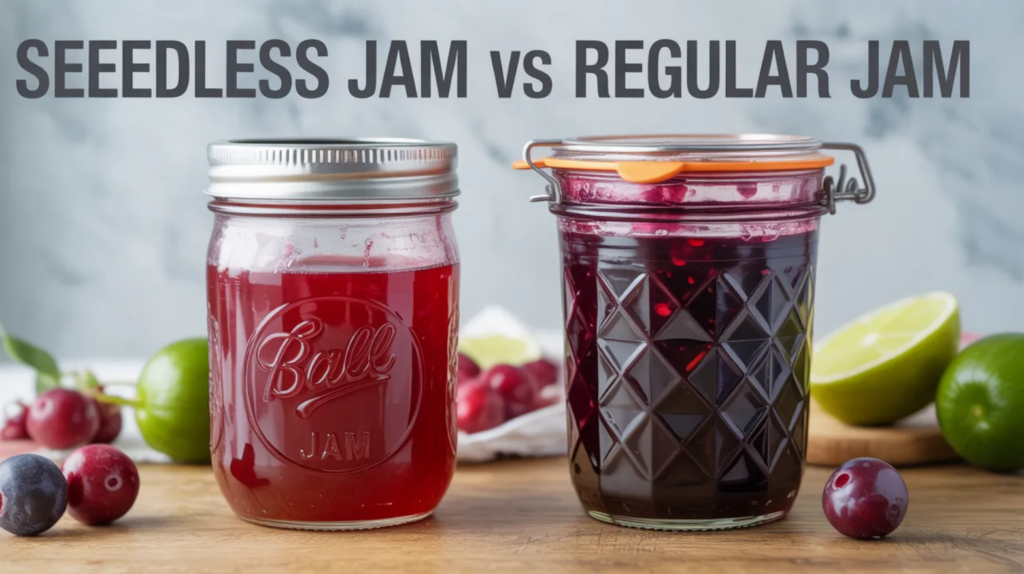
For shoppers comparing jars side by side, the decision is usually less about which one is “better” and more about which one feels right for the job.
The key difference
Regular jam contains the natural seeds that come with certain fruits, most commonly raspberry, blackberry, or strawberry to some extent. Seedless jam has those seeds removed, giving it a smoother and more even texture.
That sounds simple, but it has practical effects. A regular jam can feel more traditional and fruit-led, while a seedless jam often feels neater, softer, and easier to spread evenly.
Why seedless jam exists at all
Seedless jam is not just a niche version of ordinary jam. It solves a very specific texture issue.
Some shoppers dislike the slight crunch or graininess that seeds create, especially in raspberry jam. Others do not mind seeds on toast but prefer a smoother finish in sponge cakes, biscuits, or filled pastries. In those cases, seedless jam is less about changing the flavour and more about removing interruption from the texture.
This is why seedless varieties often appeal to households buying jam for both breakfast and baking.
What regular jam offers that seedless jam does not
Regular jam usually feels closer to the original fruit. The seeds are part of that natural structure, so leaving them in can make the product seem less processed and more traditional.
On UK supermarket shelves, regular jams also tend to dominate the category because they are the standard format for many flavours. A classic raspberry or blackberry jam with seeds often gives a stronger sense of fruit character, even when the recipe is otherwise similar.
For some shoppers, that slightly textured mouthfeel is part of what jam should be.
Texture is where the choice really happens
The biggest difference shows up once the jar is opened.
Seedless jam:
- smoother on the knife
- more even across bread or sponge
- easier for neat fillings and glazes
Regular jam:
- more textured on the palate
- often feels more rustic or traditional
- may suit toast and scones better if you like visible fruit character
This matters because a jam can be perfectly good in flavour yet still feel wrong for the way you want to use it.
Which fruits are most often sold as seedless
Seedless jam is most commonly associated with raspberry, because raspberry seeds are especially noticeable. Some blackcurrant and blackberry products may also appear in smoother forms, although they are less consistently labelled this way.
By contrast, regular versions remain the default in many fruit categories. Strawberry jam may contain fewer noticeable seeds anyway, so the difference there is often less dramatic than it is with raspberry.
For shoppers in Britain, seedless usually becomes most relevant when buying berry jams rather than stone-fruit options such as apricot.
Baking changes the decision
A lot of the difference becomes clearer in baking rather than at breakfast.
For Victoria sponge, jam tarts, biscuits, doughnuts, or traybakes, seedless jam usually gives a cleaner layer and a more polished finish. It spreads without catching, and it does not leave a seedy texture in an otherwise smooth bake.
Regular jam can still work perfectly well in many recipes, but it brings more texture into the final result. That can be welcome in rustic bakes, though less ideal where a smooth centre is the goal.
So if the jar is mainly being bought for baking, seedless often has the advantage.
Breakfast use is more about preference
On toast, crumpets, croissants, or scones, the choice becomes more personal.
Some people want the soft, uninterrupted spread of seedless jam, especially if they dislike seeds getting caught in the teeth or simply prefer a smoother breakfast spread. Others feel regular jam tastes more authentic and enjoy that slight texture as part of the product.
Neither preference is unusual. They are just different ways of reading quality.
Shelf labels can be misleading if you do not look closely
In UK supermarkets, not every smooth jam is clearly labelled seedless, and not every standard jam makes a point of mentioning seeds. Sometimes the clearest clue is the product name. Sometimes it is the jar itself.
A label that says “seedless raspberry jam” is straightforward. But in other cases, wording such as “smooth”, “extra fine”, or even some premium preserve descriptions may signal texture differences without using the word seedless prominently.
That is why it helps to read beyond the front of the jar when comparing options.
Price and range differences
Regular jam usually offers more choice across value, mid-range, and premium lines because it is the standard version stocked in larger numbers. Seedless jam is common enough to be easy to find, but the range is often narrower.
A supermarket may carry several standard raspberry jams, for example, but only one or two seedless versions. This means shoppers looking specifically for seedless often have fewer brand and price options.
Even so, seedless jam is not necessarily a premium-only product. It is widely available in ordinary supermarket ranges, especially in popular fruit flavours.
Which one should you buy?
Choose seedless jam if you want:
- a smoother texture
- a neater baking ingredient
- an easier spread for sandwiches or cakes
Choose regular jam if you want:
- a more traditional texture
- visible fruit character
- the standard version stocked in the widest range
For many shoppers, the answer depends on use rather than loyalty to one type. A household may keep regular jam for toast and buy seedless for baking.
Conclusion
Seedless jam and regular jam belong to the same category, but they create different eating experiences. Seedless jam is smoother, cleaner, and often better suited to baking or shoppers who dislike texture from seeds. Regular jam keeps that natural fruit texture and often feels more traditional on toast or scones.
In UK supermarkets, the better choice depends on what matters more to you: a perfectly smooth spread or a more classic fruit-led finish.