
GroceriesReview.co.uk provides independent reviews and recommendations. Some pages contain affiliate links to Amazon.co.uk, and we may earn a commission when you make a qualifying purchase at no extra cost to you.
A jar of reduced sugar jam can sit only a few centimetres away from a standard jam on a UK supermarket shelf, yet the two products are not aiming for exactly the same result. Both are fruit spreads. Both can go on toast, into cakes, or onto scones. But once you look past the similar packaging, the recipe balance changes quite a bit.
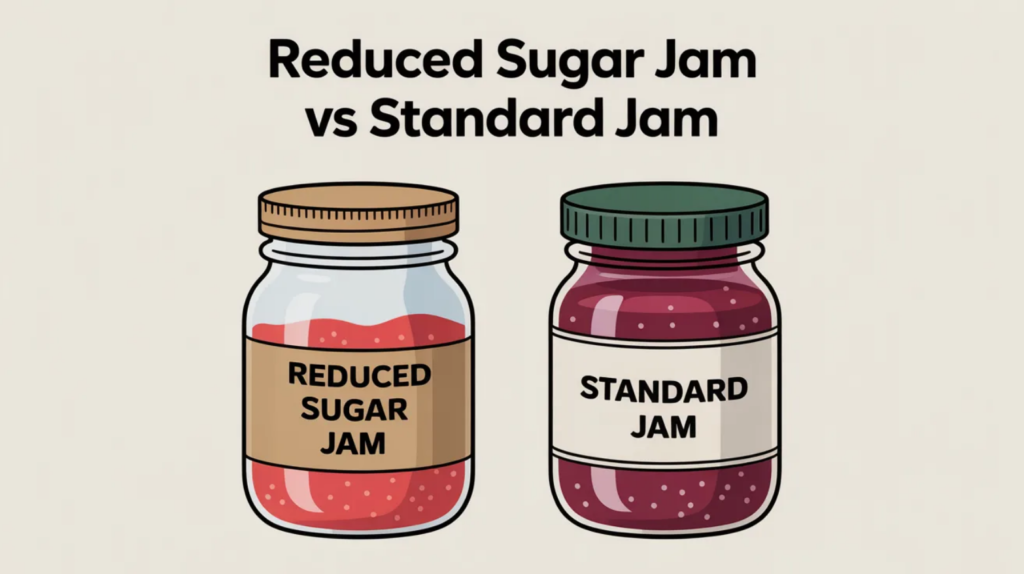
Sugar does more than make jam taste sweet. It also affects how the jam sets, how glossy it looks, how long it keeps once opened, and how strongly the fruit comes through. That is why the choice between reduced sugar and standard jam is really a choice about texture, flavour balance, and purpose.
The core distinction
Standard jam follows the more familiar formula: fruit, sugar, and a set that feels rich, thick, and sweet in the way most shoppers expect.
Reduced sugar jam lowers that sugar level, which usually makes the fruit taste more prominent but can also alter the consistency. A jar of reduced sugar jam may therefore feel slightly softer, less sticky, or less traditionally “jammy” than a classic version beside it.
So although both products belong in the same category, they do not always deliver the same eating experience.
Why standard jam still defines the category
Standard jam remains the benchmark in UK supermarkets because it matches what many shoppers grew up with. The flavour is usually fuller on sweetness, the set is dependable, and the product behaves predictably whether it is spread on toast or spooned into baking.
This matters because people often want familiarity from jam. For everyday breakfasts, packed lunches, and general household use, standard jam is the version most likely to meet that expectation without surprises.
Its wider shelf presence reflects that. Standard recipes usually appear in more flavours, more jar sizes, and more price tiers than reduced sugar alternatives.
What reduced sugar jam changes in practice
Reduced sugar jam often shifts the emphasis from sweetness towards fruit flavour. That can make strawberry taste fresher, raspberry taste sharper, or blackcurrant feel deeper and less sugary.
The trade-off is that the texture may change too. Because sugar helps create the classic jam structure, a reduced sugar recipe can be:
- softer set
- slightly less glossy
- less sticky on the spoon
- more obviously fruit-led in taste
For some shoppers, those are advantages. For others, they make the jam feel less satisfying or less familiar.
The label matters more here than in some other jam comparisons
When buying reduced sugar jam, the front of the jar only tells part of the story. Two products can both make a lower-sugar claim while still tasting quite different.
One may rely on fruit concentration for flavour. Another may use sweeteners or recipe adjustments to maintain sweetness. A third may simply reduce sugar moderately while keeping a texture close to standard jam.
That is why this category rewards label reading more than many others. The wording can indicate whether the jar is trying to taste lighter, fruitier, or simply less sweet than the usual version.
Texture can decide the winner before flavour does
For some households, the biggest difference is not sweetness at all. It is spreadability.
Standard jam usually gives a firmer, more cohesive layer. It sits neatly in a sandwich, holds well in a cake filling, and delivers the thick set many shoppers associate with value and quality.
Reduced sugar jam may feel looser or a little less uniform, depending on the recipe. On toast, that may not matter much. In baking, it can matter more. A softer jam may seep differently into sponge or behave less neatly in thumbprint biscuits and pastries.
So the better option depends partly on what you expect the jam to do, not just how sweet you want it to taste.
The sweetness gap is not always huge
One of the more interesting things about this shelf comparison is that reduced sugar jam does not always taste dramatically less sweet. In some products, the reduction is noticeable straight away. In others, the fruit flavour simply becomes more balanced, without making the jam taste austere or sharp.
That makes reduced sugar jam a practical choice for shoppers who still want a familiar breakfast spread but find some standard jams overly sugary.
By contrast, anyone who wants the classic sweet-shop style richness of a traditional strawberry or raspberry jam may still prefer the standard version.
Different households buy for different reasons
A family buying one large jar for everyday toast may prioritise consistency, value, and broad appeal. Standard jam usually performs well here because it suits the widest range of tastes.
A shopper buying for personal preference may approach the shelf differently. They may want a jam that feels less sugary in the morning, one that lets the fruit come through more clearly, or one that fits better with the rest of their cupboard choices.
Neither buying pattern is more correct. They simply reflect different expectations from the same product category.
Range and availability are usually wider for standard jam
In most UK supermarkets, standard jam still dominates the shelf. There are more flavours, more own-brand tiers, and more branded options. Reduced sugar jam is widely available, but the selection is normally narrower.
That can affect the decision in a practical way. A shopper happy with reduced sugar strawberry may not find the same breadth of choice in apricot, blackcurrant, or mixed fruit. Standard jam, on the other hand, usually offers easier comparison across multiple flavour types and price points.
So even before taste comes into it, standard jam often wins on availability alone.
Which one makes more sense for baking?
Standard jam is generally the safer baking ingredient if you want a firm, reliable filling with the texture most recipes assume.
Reduced sugar jam can still work perfectly well, especially in cakes or as a breakfast table option served alongside baking. But if the recipe needs a classic set, standard jam often behaves more predictably.
This does not mean reduced sugar jam is unsuitable. It just means the result may feel a little softer or less polished, depending on the product.
A simple way to choose on the shelf
Choose reduced sugar jam if you want a spread that tastes less overtly sweet and allows the fruit to stand out more clearly.
Choose standard jam if you want the familiar thickness, sweetness, and all-purpose reliability that define the category in most UK households.
That distinction is usually more useful than treating one as automatically better than the other.
Conclusion
Reduced sugar jam and standard jam may share the same aisle, but they answer slightly different shopper needs. Standard jam offers the classic sweet taste and firm set most people recognise straight away. Reduced sugar jam shifts the balance towards fruit flavour, often with a lighter sweetness and a different texture.
In UK supermarkets, the right choice depends on whether you value familiarity and structure or a less sugary, more fruit-forward finish.