
GroceriesReview.co.uk provides independent reviews and recommendations. Some pages contain affiliate links to Amazon.co.uk, and we may earn a commission when you make a qualifying purchase at no extra cost to you.
Pink salt and sea salt can both work brilliantly in a UK kitchen, but they shine in different ways. Pink salt is usually bought for its gentle mineral-style taste and attractive colour, while sea salt is often chosen for its texture options (fine, crystals, flakes) and how easily it seasons food from pan to plate.
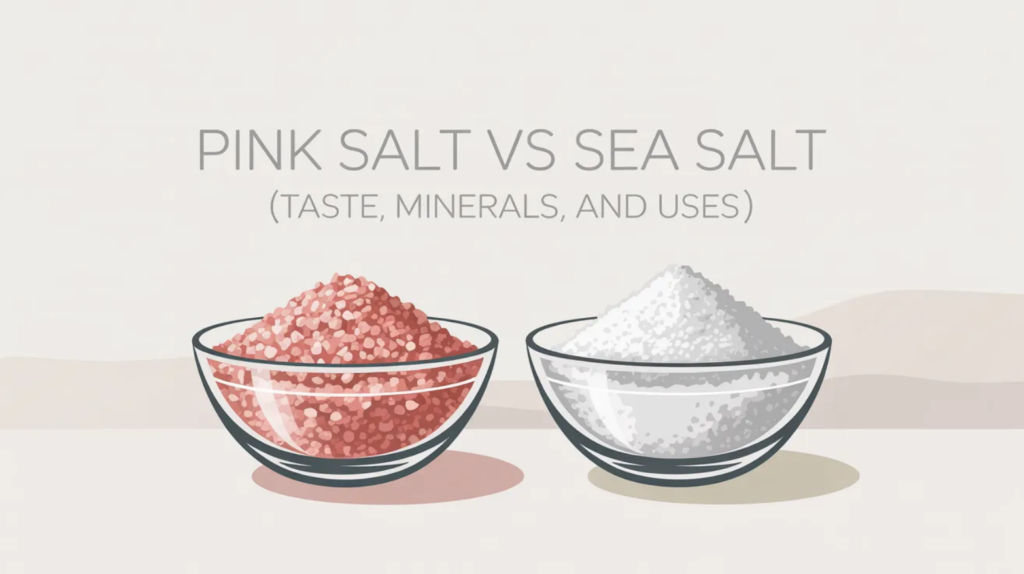
At a glance
| What matters most to you | Choose | Why it fits |
|---|---|---|
| A clean “salty” baseline for everyday cooking | Sea salt (fine) | Dissolves easily and seasons evenly |
| A crisp finishing texture | Sea salt flakes | Adds crunch and quick flavour on the surface |
| A mild, rounded salt for simple dishes | Pink salt (fine) | Pleasant flavour, easy to sprinkle |
| Using a grinder | Either, but pick crystals | Crystals feed mills better than flakes |
| Consistency in baking | Fine salt (either) | Uniform grain is the main factor |
| Iodine specifically | Iodised salt | That’s a separate category from pink vs sea |
If you want shopping shortlists alongside this guide, you can jump to pink salt options that work well in UK kitchens or compare formats in our sea salt picks.
1) What pink salt is, in plain terms
Most “pink salt” sold in the UK is a rock salt mined from underground deposits and sold as:
- fine grains (easy for cooking)
- crystals (great for mills)
- chunky pieces (less common for daily use)
It’s pink because of trace minerals and natural colouring within the salt deposit. In day-to-day cooking, that colour matters more for presentation than for flavour.
If you’re deciding what to buy, the practical difference usually comes down to format. A quick look at which pink salts are easiest to cook with can save you from ending up with a bag that only works in a grinder.
2) What sea salt is (and why it varies so much)
Sea salt comes from evaporated seawater. In UK supermarkets and online, the same “sea salt” label can mean very different textures:
- fine sea salt for cooking
- sea salt crystals for grinders
- flakes for finishing
That texture difference changes how salty it tastes when you sprinkle it and how it behaves in recipes. If you’re choosing for texture rather than price, it helps to start with sea salt formats that match real cooking uses.
3) Taste and mouthfeel: what you’ll actually notice
Pink salt
Pink salt tends to taste:
- clean and rounded
- slightly “soft” in salinity (especially in fine form)
- pleasant for simple food where salt is noticeable (eggs, tomatoes, cucumber salad)
It’s rarely dramatic. It’s more of a calm background salt that doesn’t shout.
Sea salt
Sea salt taste depends heavily on the texture:
- fine sea salt is clean and straightforward
- flakes feel lighter and more “sparkly” on the tongue
- crystals give firmer bursts and are easy to control with a grinder
In other words, sea salt can behave like three different products, even before you get into brands.
4) Minerals: the honest, useful view
Both salts are mostly sodium chloride. Pink salt and many sea salts can contain trace minerals, but the difference most people notice is still texture, not nutrition.
If your goal is an iodine-containing salt, don’t rely on pink salt or sea salt by default. Choose an iodised product deliberately, and keep it separate in your cupboard. If you already have that page live, it fits naturally here: iodised salt choices for everyday use.
5) Best uses in the kitchen
Everyday cooking
For soups, sauces, pasta water, curries, rice, and general seasoning, what matters most is that it dissolves quickly and measures predictably.
- Fine sea salt is a strong everyday option.
- Fine pink salt also works well if you like its flavour.
If you want a “no drama, always works” baseline, many households keep a standard table-style salt around too, particularly for baking and measured recipes. That’s the role of a dependable table salt.
Finishing food
This is where sea salt often wins because flakes are hard to beat:
- roast potatoes, chips, salads, steaks
- sliced tomatoes with olive oil
- chocolate brownies or caramel desserts (a small pinch on top)
Pink salt can finish food too, but sea salt flakes usually deliver a more satisfying texture.
Grinders
For mills, crystals matter:
- sea salt crystals work well
- pink salt crystals work well
- flakes are usually a poor fit for grinders
If you mainly want a grinder salt, choose “crystals” on the label rather than guessing.
Baking
Baking is about consistency, not romance. Use a fine salt and keep it consistent from recipe to recipe.
If you measure by spoon, table-style fine grains tend to be the most predictable. If you bake often, it’s worth keeping one reliable fine salt just for that job.
6) A simple way to choose without overthinking
Choose pink salt if:
- you like a gentle mineral-style taste
- you want a salt that looks good on the table
- you mostly cook simple meals where seasoning is noticeable
Start with a pink salt that comes in a practical grind so it’s easy to use daily.
Choose sea salt if:
- you want flakes for finishing
- you like using a grinder while cooking
- you want one salt that covers multiple textures (fine + flakes)
If you want one place to compare types, this sea salt guide is the easiest companion page.
7) Storage tips that keep both tasting fresh
Salt doesn’t “go off” in the usual sense, but it can pick up moisture and kitchen smells.
- Keep it in a dry cupboard, away from the hob steam
- Use a tub or jar with a good lid for flakes and crystals
- If your salt clumps, it’s almost always moisture, not quality
FAQs
Is pink salt better than sea salt?
Not automatically. Pink salt is often chosen for flavour preference and appearance. Sea salt is often chosen for texture options, especially flakes.
Does sea salt taste saltier than pink salt?
By weight, they’re similar. In practice, grain size changes how much you sprinkle and how fast it hits the tongue, so flakes and fine grains can feel very different.
Should I use pink salt for iodine?
No, not as a default. If iodine is the goal, choose an iodised salt on purpose, such as the options in this iodised salt guide.