
GroceriesReview.co.uk provides independent reviews and recommendations. Some pages contain affiliate links to Amazon.co.uk, and we may earn a commission when you make a qualifying purchase at no extra cost to you.
On UK supermarket shelves, “jam” and “preserve” are often placed side by side, sometimes even within the same brand range. While they look similar in the jar and are used in much the same way, the difference comes down to fruit texture, consistency, and how the product is made.
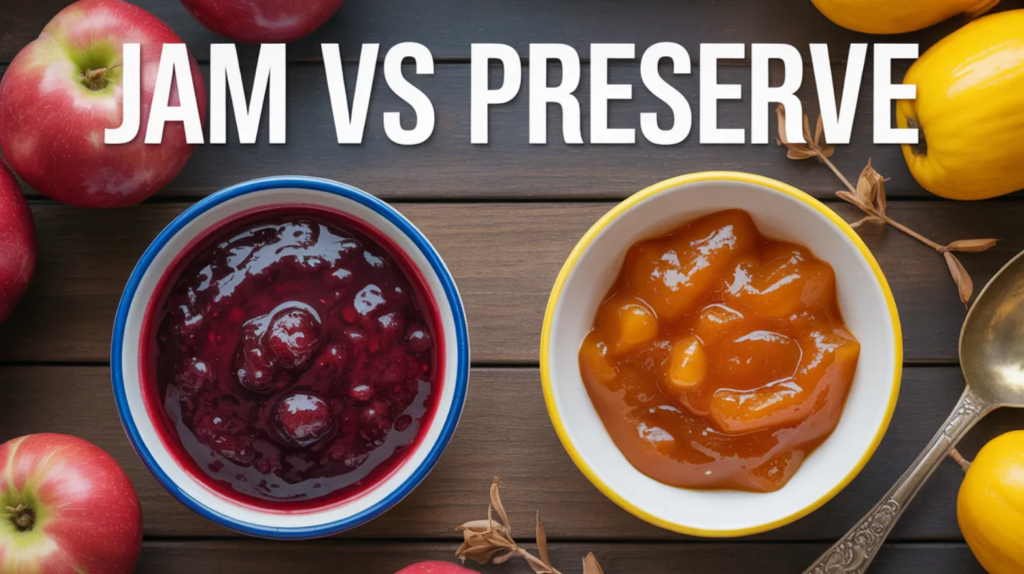
Understanding that difference helps shoppers choose the right spread for toast, baking, or serving with scones.
The Simple Answer
Jam is made from crushed or chopped fruit cooked with sugar into a smooth, spreadable consistency.
Preserve is made using whole fruit or larger chunks of fruit, resulting in a thicker, more textured product.
That core distinction, mashed fruit versus whole pieces, is what defines how each product looks, feels, and spreads.
What Is Jam?
In UK supermarkets, jam is the more common and widely used product.
It is typically made by cooking fruit that has been mashed or finely chopped, combined with sugar and pectin to create a thick, cohesive spread. The texture is usually even, with small soft fruit pieces rather than large chunks.
The strawberry jam is a good example of this style. It spreads easily across toast, melts slightly when warm, and works well in sandwiches or sponge cakes.
That matters because jam is designed for consistency. Shoppers choosing jam are usually prioritising:
- easy spreading
- smooth texture
- even flavour in every bite
In practice, this makes jam the default choice for everyday use in UK households.
What Is a Preserve?
Preserve refers to a fruit spread where the fruit remains in larger pieces or whole segments.
Instead of being fully mashed, the fruit is gently cooked so it holds its shape, suspended in a thick syrup or gel. This creates a chunkier texture and often a more pronounced fruit presence.
For example, a apricot jam may also be labelled as an apricot preserve when it contains visible pieces of apricot.
The difference becomes clearer when spreading it: preserves can feel thicker and less uniform, sometimes with whole berries or noticeable fruit chunks.
This is where preserves appeal to shoppers who want:
- visible fruit pieces
- a more natural, fruit-forward texture
- a slightly less uniform spread
Texture and Consistency: The Key Difference
The most noticeable difference between jam and preserve is how they behave on the knife and on the plate.
Jam:
- smoother and more uniform
- spreads evenly
- softer set
Preserve:
- chunkier with larger fruit pieces
- can be slightly firmer or uneven
- may require a bit more effort to spread
That matters especially in baking. Jam works better for fillings where a smooth layer is needed, while preserves are often preferred for toppings or serving alongside scones, where texture adds interest.
How UK Supermarkets Label Them
In UK supermarkets, labelling is not always strictly separated, which can cause confusion.
You may see:
- “Strawberry Jam”
- “Strawberry Preserve”
- “Extra Jam” or “Extra Fruity”
Sometimes “preserve” is used more loosely as a premium signal, suggesting higher fruit content or larger fruit pieces, rather than a completely different product category.
This is where reading the jar — or even looking through the glass — becomes useful. The visible texture often tells you more than the name alone.
Can You Use Them Interchangeably?
In most everyday situations, jam and preserves can be used in the same way.
Both are commonly used for:
- toast and crumpets
- scones and cream teas
- cake fillings
- breakfast spreads
However, the difference becomes clearer in specific uses:
- Jam is better for smooth cake layers (such as Victoria sponge)
- Preserves are better when you want visible fruit or texture on top
Which Should You Choose?
For shoppers in the UK, the choice usually comes down to preference rather than strict rules.
Choose jam if you want:
- a smooth, easy-spread texture
- consistent sweetness
- a reliable baking ingredient
Choose preserve if you prefer:
- larger fruit pieces
- a more traditional or rustic feel
- stronger fruit texture
Conclusion
Jam and preserves are closely related, but they are not identical. Jam is made from crushed fruit and offers a smoother, more uniform spread, while preserves contain larger pieces of fruit and deliver a chunkier texture.