
GroceriesReview.co.uk provides independent reviews and recommendations. Some pages contain affiliate links to Amazon.co.uk, and we may earn a commission when you make a qualifying purchase at no extra cost to you.
Jam and marmalade often sit close together in UK supermarkets, but they do not present the same choice to shoppers. One usually centres on soft fruit such as strawberry, raspberry, or blackcurrant. The other is built around citrus, most commonly orange, with peel playing a major part in the final texture and taste.
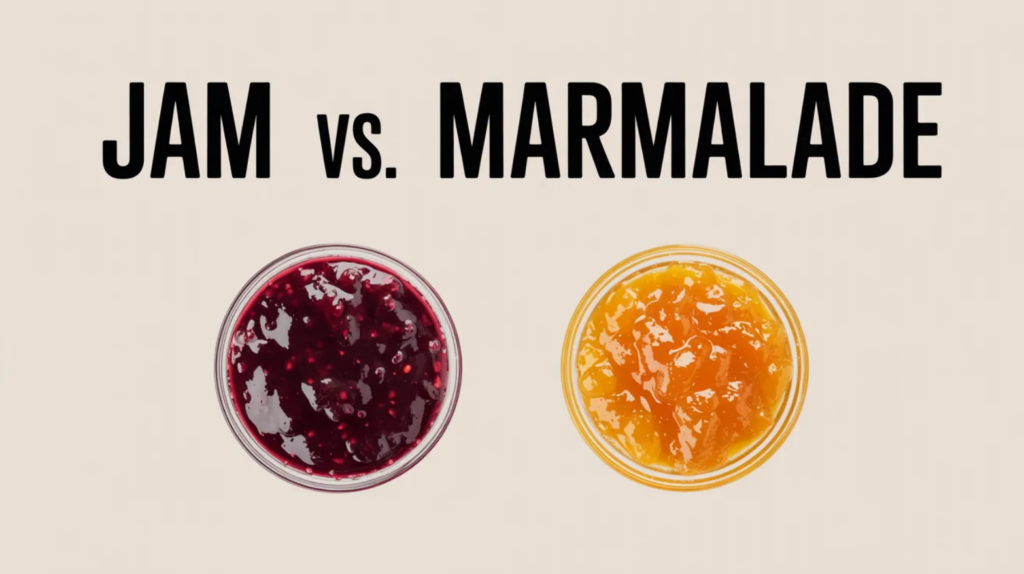
That difference shows up immediately on the shelf. The jars look different, the labels highlight different features, and the products suit different preferences at breakfast and beyond.
The short answer
Jam is a sweet fruit spread made from fruit and sugar, usually with a soft, thick, fairly even texture.
Marmalade is a citrus preserve made with juice, pulp, and peel, so it usually tastes sharper and may also bring a noticeable bitter edge.
For UK shoppers, the contrast is not only about flavour. It changes what the jar looks like, how the product is described on the label, and what sort of household it is likely to appeal to.
What jam looks like on supermarket shelves
Jam usually takes up more space than marmalade in the spreads aisle. That is because it covers a wider range of fruits and a broader set of shopper preferences.
In most UK supermarkets, the most visible lines are built around strawberry jam, raspberry, blackcurrant, and apricot. From there, the category often branches into seedless versions, reduced sugar recipes, organic jars, and more premium preserve-style options.
Visually, jam tends to look dense and opaque in the jar. The colour usually reflects the fruit directly, whether that is bright red, deep purple, or orange-gold in the case of apricot. Labels often focus on fruit type, sweetness, or fruit content.
This makes jam feel like the broader everyday category. It suits toast, crumpets, cake fillings, and children’s sandwiches, so supermarkets usually give it more room and more variety.
What changes when the product is marmalade
Marmalade stands apart because the fruit base changes completely. Instead of soft fruit, it uses citrus. In UK supermarkets, that usually means orange, although lemon or mixed citrus versions do appear in some ranges.
A jar of marmalade often looks clearer and more translucent than jam. Strands or shreds of peel are usually visible through the glass, and that gives the product a very different shelf presence before the lid is even opened.
The labels also emphasise different details. Rather than focusing mainly on fruit flavour, marmalade jars often highlight peel cut, bitterness, or style, such as fine cut, medium cut, or thick cut. So the shopper is not simply choosing “orange” as a flavour. They are also choosing how much peel they want and how strong or bitter the spread may taste.
Fruit type changes the whole buying decision
Jam shelves are built around flavour choice. A shopper might compare strawberry against raspberry, or blackcurrant against apricot, depending on sweetness, familiarity, and how the jar will be used at home.
Marmalade is a narrower category, but the decision within it can be more specific. Instead of asking which fruit to buy, shoppers often ask whether they want a smoother marmalade, one with lots of peel, or one with a sweeter or more traditional bitter profile.
That matters because jam usually appeals on familiarity and softness, while marmalade appeals on character. Jam is often the easier all-rounder. Marmalade tends to be the more distinctive choice.
Texture is one of the clearest shelf differences
Texture is one of the fastest ways to tell the two apart.
Jam usually looks thick, smooth, and uniform, even when it contains small fruit pieces. It gives the impression of an easy, consistent spread.
Marmalade usually looks looser and more structured, with peel suspended through the gel. That peel changes not just the appearance but the eating experience as well. A shopper expecting a smooth layer on toast may react differently to visible strips of citrus peel than to a familiar berry jam.
In practice, this means jam often feels more versatile for general family use, while marmalade has a more defined audience.
Labels and packaging signal different things
On jam jars, the front label often answers simple shopper questions: what fruit is inside, whether it is reduced sugar, whether it is seedless, or whether it belongs to a premium or organic range.
On marmalade jars, the emphasis often shifts. The label is more likely to mention peel thickness, orange type, or whether the recipe is traditional. So even when the packaging style is similar, the selling points are not.
For shoppers in Britain, that difference is useful. Jam packaging tends to guide by fruit and sweetness. Marmalade packaging tends to guide by citrus style and peel character.
They are used differently in many homes
Jam is usually the more flexible household staple. It works for breakfast, baking, lunchboxes, and simple desserts. Because the flavour is generally sweeter and softer, it often suits a wider age range.
Marmalade is more specialised. It is strongly associated with breakfast toast and with shoppers who enjoy a less purely sweet spread. It is less often chosen for sponge fillings or children’s sandwiches, and more often bought for a particular taste preference.
This difference in use helps explain why jam shelves usually offer more fruit variety, while marmalade shelves offer more style variation within a smaller range.
Price tiers and shelf space often reflect this too
In UK supermarkets, jam usually appears across every level of the category: value jars, standard own-brand lines, premium preserves, organic options, and branded favourites.
Marmalade is also sold across value and premium tiers, but the category is often tighter. A supermarket may carry several different jams in multiple fruit types, while offering only a few marmalades split mainly by cut or bitterness.
So the change on the shelf is not only about taste. It also affects how much space each category gets and how many ways supermarkets can expand the range.
Which one feels easier to shop?
Jam is usually more straightforward because most shoppers begin with fruit preference. If someone likes strawberry or raspberry, they can narrow the choice quickly.
Marmalade takes a little more attention. Two jars may both be orange marmalade, yet taste quite different because of the peel content and overall bitterness. For that reason, marmalade shopping often depends more on reading the label carefully.
That does not make marmalade more complicated in a negative sense. It simply means the category is shaped by different deciding factors.
Conclusion
Jam and marmalade may share shelf space, but they change the shopping decision in different ways. Jam is usually a soft-fruit spread with a thicker, sweeter, more familiar profile. Marmalade is a citrus preserve with peel, bringing a sharper taste and a more distinctive texture.
In UK supermarkets, jam usually offers more fruit variety and broader everyday use, while marmalade offers a more defined citrus choice shaped by peel and bitterness. For most shoppers, the simplest way to think about it is this: jam is the wider fruit-spread category, while marmalade stands out as the citrus option with its own clear identity.