
GroceriesReview.co.uk provides independent reviews and recommendations. Some pages contain affiliate links to Amazon.co.uk, and we may earn a commission when you make a qualifying purchase at no extra cost to you.
Tea doesn’t usually “go off” in a dramatic way, it quietly fades. One week it smells lively and tastes bright, and then you realise the next mug feels dull and flat. That change often has nothing to do with the brand and everything to do with storage.
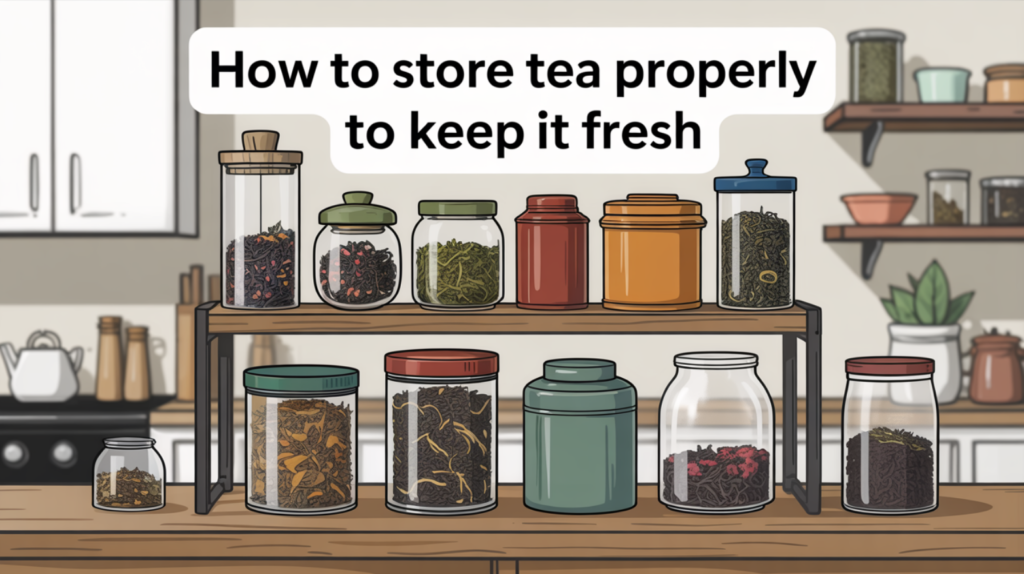
Tea leaves (and tea bags) hold delicate aromatic compounds. Those aromas escape when tea is exposed to air. Moisture softens flavour and invites staleness. Heat speeds up the loss. Light can nudge the tea in the wrong direction. Strong kitchen smells can even cling to the leaf and show up in the cup.
So the goal of storage is simple: protect tea from air, moisture, heat, light, and odours.
The five enemies of fresh tea
Air (oxygen)
Air pulls aroma out of tea over time. The more often a container is opened, the faster the aroma slips away.
Moisture
Steam from cooking, damp cupboards, or even a wet spoon can make tea taste stale.
Heat
Warmth accelerates flavour loss. Keeping tea above the kettle or near the cooker is a common mistake.
Light
Sunlight and bright kitchen light can degrade delicate teas, especially lighter styles.
Odours
Tea behaves like a sponge for smell. Store it next to spices and it may start tasting like your spice rack.
A practical storage guide you can follow
| Tea format | Best container | Best place in the kitchen | What to avoid | Freshness clue |
|---|---|---|---|---|
| Black tea bags | Original box inside an airtight tin (optional) | Cool cupboard away from cooker | Humid drawers, open baskets | Aroma still smells “tea-like”, not cardboard |
| Loose leaf black tea | Airtight tin or resealable pouch inside a tin | Dark cupboard, stable temperature | Clear jars near sunlight | Leaf still smells rich when you open the lid |
| Green tea bags | Airtight container is helpful | Cool, dark cupboard | Heat + light exposure | Fresh, clean scent (not “hay-like”) |
| Loose leaf green tea | Airtight tin (small is better) | Dark, cool cupboard | Frequent opening of large tins | Colour and aroma stay lively |
| Matcha powder | Tightly sealed tin, kept cool | Cool cupboard; fridge if sealed and dry | Warm shelves, loose lids | Bright green colour and a sweet, fresh aroma |
| Herbal / peppermint | Airtight tin or well-sealed box | Away from spices | Storing beside curry powders | Mint still smells sharp and fresh |
| Rooibos | Airtight container | Cool cupboard | Steam exposure | Still smells warm and naturally sweet |
Where tea should not live (common UK kitchen habits)
Tea often ends up in places that feel convenient but ruin freshness:
- Above the kettle (constant warmth + steam)
- Near the hob (heat + food smells)
- Next to spice jars (odour transfer)
- In a sunny window (light exposure)
A boring cupboard away from heat is usually the best answer.
Tea bags vs loose leaf: which is easier to keep fresh?
Loose leaf can stay fragrant for a long time if it’s sealed well, but it’s also easier to damage because it’s often stored in containers that get opened frequently.
Tea bags are simple to store, yet they can still go stale when:
- the box is left open
- the kitchen is humid
- the box sits near cooking heat
Matcha needs special care
Matcha is finely ground, which gives it a vivid taste, and also makes it more sensitive to air and heat. A loose lid or warm shelf can flatten matcha quickly.
If matcha is part of your routine, sealing matters more than almost anything else. When it’s stored properly, the flavour stays vibrant and creamy, which is exactly what you want from a matcha powder that’s worth buying.
How to tell if tea has lost freshness
Tea doesn’t always become unsafe; it becomes disappointing.
Look for these signs:
- the aroma smells weak when you open the container
- the brewed cup tastes “paper-ish” or dull
- flavour disappears quickly after the first sip
- mint infusions smell faint rather than crisp
- green tea tastes more bitter and less fresh than usual
Storing different teas separately is not fussy – it’s sensible
Some teas have strong personalities. Earl Grey, for example, carries a distinctive aroma that can easily perfume nearby teas. If you store it right next to delicate green tea, you may end up with a “mystery citrus” cup.
If you keep scented teas, it helps to understand what creates Earl Grey’s fragrance so you treat it like the aromatic tea it is.
A simple storage routine that works in real life
- Keep teas in a cool cupboard, away from steam and heat.
- Seal containers properly after every use.
- Use smaller tins for delicate teas so they aren’t opened for months.
- Don’t mix different teas in one container.
- Keep strong-smelling teas away from subtle ones.
None of this is complicated, it just protects the taste you paid for.
Closing note
Tea stays fresh when it’s protected from air, moisture, heat, light, and kitchen odours. Do that consistently, and your black tea keeps its comforting depth, your green tea keeps its clean brightness, and even gentler cups like rooibos and peppermint tea keep the character that makes them worth brewing in the first place.