
GroceriesReview.co.uk provides independent reviews and recommendations. Some pages contain affiliate links to Amazon.co.uk, and we may earn a commission when you make a qualifying purchase at no extra cost to you.
Salt doesn’t “go off”, but it can become annoying fast. One week it pours like sand, the next it turns into a damp brick that refuses to shake.
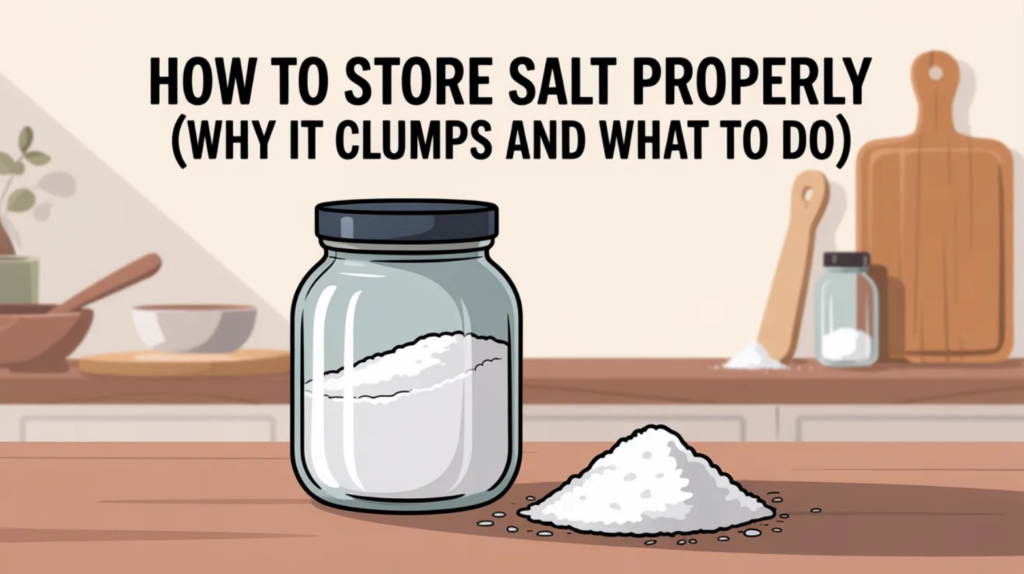
The good news is clumping is usually caused by everyday kitchen conditions, not a bad product.
If your salt is clumping, this is almost always why
Salt clumps when it pulls moisture from:
- steam from boiling pans and kettles
- humid kitchens (especially near a hob or sink)
- a container that isn’t sealing properly
- damp fingers or a wet spoon going back into the tub
Some salts clump more than others because of texture and moisture level. That’s why one brand feels “fine forever” and another becomes lumpy after a few meals.
The salt types that clump the most (and why)
Sea salt flakes
Flakes are thin and airy, which makes them brilliant for sprinkling, but they also pick up humidity easily. If you keep flakes right next to steam, they soften and stick together. If you buy flakes often, it helps to choose a tub that suits finishing salt, which is why many people start from a format-based guide like Best Sea Salt in the UK.
Moist sea salts (often sold as Celtic-style)
Some salts are naturally a bit damp, by design. They can feel slightly “wet” in the jar and are more likely to compact. If you’re buying that style, expect a softer texture and store it like you would brown sugar (sealed well, away from heat). This is the kind of product category covered in Best Celtic Salt in the UK.
Fine table salt
Fine salt usually clumps less because it’s often made to stay free-flowing. If you want a reliable shaker salt for everyday use, your safest bet is typically the options in Best Table Salt in the UK.
Pink salt and rock salt crystals
Crystals for grinders don’t usually “brick up” the same way fine salts do, but they can still absorb moisture and stick if stored open. If you’re choosing pink salt for daily use, the grind you pick matters more than the colour. That’s where Best Pink Salt in the UK is useful.
The best place to store salt in a normal kitchen
A lot of people store salt next to the hob for convenience, then wonder why it clumps.
A better setup is:
- a dry cupboard or drawer away from the cooker
- not above a kettle, dishwasher, or sink
- not right beside a window that gets condensation
If you want salt within reach while cooking, decant a small amount into a well-sealed pinch pot and keep the main tub stored properly.
Containers that genuinely help (and ones that cause trouble)
Best options
- a jar or tub with a proper gasket seal
- a screw-top container that closes tightly
- a salt cellar with a snug-fitting lid (not a loose one)
Common clumping triggers
- cardboard boxes in a humid cupboard
- tubs with lids that don’t click shut firmly
- “open bowl” salt kept near steam
If you like to season by hand, a lidded salt cellar is great, but it has to close well. If it stays slightly open, it will behave like a humidity collector.
What to do when salt has already clumped
You don’t need to bin it.
Try these fixes:
- break it up with a clean spoon and move it to a dry container
- leave the lid off for a short time in a dry place (not near the hob) to let it air out
- add a food-safe moisture helper (see below) and shake occasionally
If the salt smells “kitchen-y” (it can happen if stored open), that’s usually odour absorption. In that case, replace it and store the next batch sealed.
Moisture helpers that work in real life
These are simple tricks people actually use at home:
Uncooked rice (a few grains)
Works well in a salt shaker. It helps absorb tiny amounts of moisture. Use dry rice only.
Food-safe desiccant packs
Some salts come with them. If yours did, that’s a hint the brand expects humidity to be a problem. Keep the pack in the container if it’s intended for food storage.
A terracotta “brown sugar” disc
Not necessary for most salts, but can help with naturally moist salts if you struggle with clumping.
Avoid anything scented, flavoured, or non-food-safe. Salt absorbs odours easily, and you don’t want that drifting into your cooking.
Why some salts clump more even when stored “the same way”
Two packs can behave differently because:
- crystal shape changes how air moves between grains
- some salts are dried more than others
- some salts include anti-caking agents and some don’t
- tubs and lids vary a lot in seal quality
That’s also why “a pinch” can taste different across salt types. Grain size and density change how much salt you actually add. If you ever want a clear explanation of why fine salt, flakes, and crystals behave differently in cooking, this helps: Sea Salt vs Table Salt (What’s the Real Difference?).
Small habits that stop clumping completely
- Don’t pinch salt directly over a steaming pot. Take a pinch away from the steam, then season.
- Keep a small cooking pot and refill it, instead of leaving the main tub open daily.
- Use dry spoons only.
- Close the lid immediately, even if you’ll be back in 30 seconds.
Quick FAQs
Is clumpy salt “bad”?
No. It’s almost always moisture. Break it up, dry it out, and store it better.
Should I keep salt in the fridge?
It usually makes clumping worse because fridges are humid and temperature changes cause condensation.
Does sea salt clump more than table salt?
Often, yes, especially flakes and some less-processed styles. Table salt is usually designed to stay free-flowing.
Can I dry salt in the oven?
You can, but most people don’t need to. A dry cupboard plus a sealed container fixes the issue for normal use.
The simple takeaway
Clumping is a storage problem, not a salt problem. Keep salt away from steam, seal it well, and treat flakes or naturally moist salts as “needs a lid” items rather than countertop staples. Once you set the container and location correctly, salt stays easy to use for months.