
GroceriesReview.co.uk provides independent reviews and recommendations. Some pages contain affiliate links to Amazon.co.uk, and we may earn a commission when you make a qualifying purchase at no extra cost to you.
Behind every great crisp is a carefully balanced flavour formula, built from chemistry, timing, and sensory design.
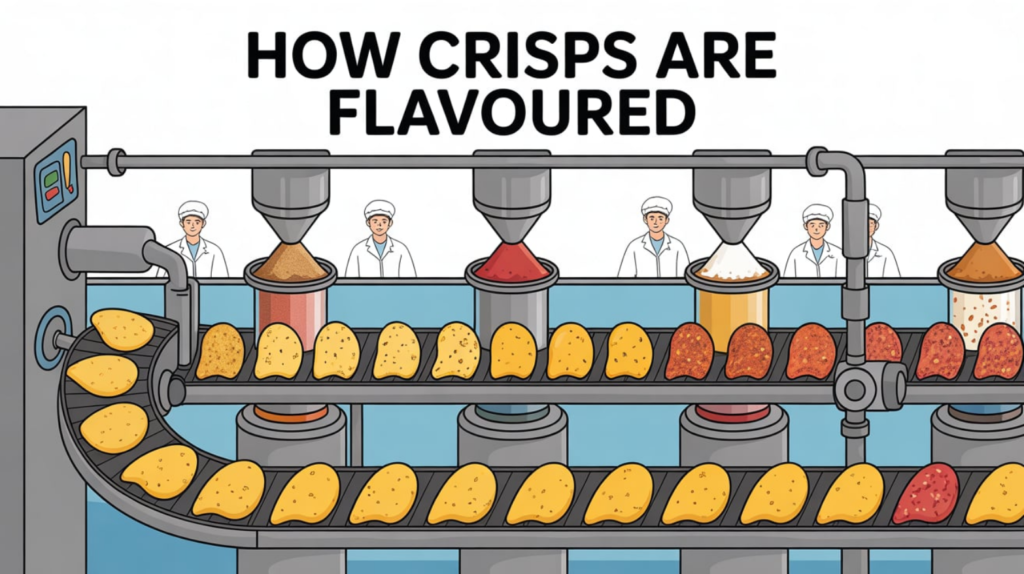
The moment a crisp touches your tongue, dozens of sensory reactions begin at once. Sweetness, salt, acidity, savouriness, aroma, and texture combine into what your brain registers as “flavour.” In modern crisp production, creating that experience is an exact science, and it starts long before the packet is sealed.
Flavour Starts With the Base Crisp
Before any seasoning is added, manufacturers must understand the natural taste of the crisp itself. Potatoes carry mild sweetness, corn delivers warmth and depth, lentils and chickpeas bring nuttiness, vegetables introduce natural sugars, and seaweed contributes its own umami character.
Because every base reacts differently with seasoning, the same flavour blend will taste noticeably different on potato, corn, or rice, which is why shoppers often notice huge contrasts when comparing traditional crisps with lighter formats such as popped varieties.
The Four Core Taste Builders
Nearly every crisp flavour is built using the same four foundational taste elements:
- Salt — enhances all other flavours and triggers immediate satisfaction
- Acidity — delivers sharpness and freshness (vinegar, citric acid, lactic acid)
- Sweetness — balances salt and acid, often from sugars or maltodextrin
- Umami — deep savoury notes from yeast extract, cheese powders, tomato, or seaweed
Every familiar flavour, from cheese & onion to prawn cocktail, is simply a carefully tuned ratio of these four elements layered with aromatic compounds.
How Flavour Powders Are Made
Flavour doesn’t come from single ingredients. It is engineered from blended powders containing herbs, spices, acids, sugars, salt, dairy components, vegetable extracts, and natural or nature-identical aroma compounds. These blends are milled into ultra-fine particles so they dissolve instantly on the warm surface of the crisp.
The powders must be stable, shelf-safe, and reactive at very low moisture levels, otherwise flavour would fade long before the packet is opened.
When the Flavour Is Applied
Timing is critical. Seasoning is applied within seconds of cooking, while the crisp surface is still warm and slightly porous. This allows flavour particles to bond tightly to microscopic oils on the surface.
That timing difference is why fried crisps often deliver a fuller flavour release compared with lighter baked versions, something many people notice when comparing them with traditional fried crisps.
Building Iconic UK Crisp Flavours
Here is how some classic UK favourites are constructed:
- Cheese & Onion — dairy powders + onion + umami boosters + mild sweetness
- Salt & Vinegar — salt + acetic acid + citric acid + subtle sugars
- Prawn Cocktail — tomato + vinegar + sugar + seafood aroma compounds
- Pickled Onion — intense acidity + onion extract + salt + aromatic spices
These formulas must remain consistent across millions of packets, which requires extreme precision in both mixing and application.
How Texture Affects Flavour Perception
Crunch amplifies flavour. A thicker, crunchier crisp fractures differently in the mouth, releasing seasoning more slowly and intensifying aroma. This is why many people feel that heavily textured crisps deliver “stronger” flavour even when the seasoning quantity is identical.
The effect becomes obvious when comparing light snacks with deep-crunch options such as extra crunchy styles.
Protecting the Flavour Until You Open the Bag
Once flavoured, crisps are sealed in nitrogen-filled packaging. Removing oxygen prevents oxidation of oils and flavour compounds, keeping the taste stable for months.
Without this final step, the carefully designed flavour profile would degrade rapidly, no matter how perfect the recipe.
Final Thoughts
Crisp flavour is not accidental. It is the result of chemical design, sensory psychology, precise timing, and controlled packaging. Every familiar taste you love has been engineered to activate your senses in a very specific order, and that is why the humble crisp remains one of the most powerful snack experiences ever created.