
GroceriesReview.co.uk provides independent reviews and recommendations. Some pages contain affiliate links to Amazon.co.uk, and we may earn a commission when you make a qualifying purchase at no extra cost to you.
Gherkins and cornichons often sit side by side on UK supermarket shelves, and at a glance they can look almost identical. Both are small pickled cucumbers, usually sold in jars, and both are used in sandwiches, salads and cold platters. However, the difference between them becomes clearer once you look at flavour, sweetness, and how they are typically used.
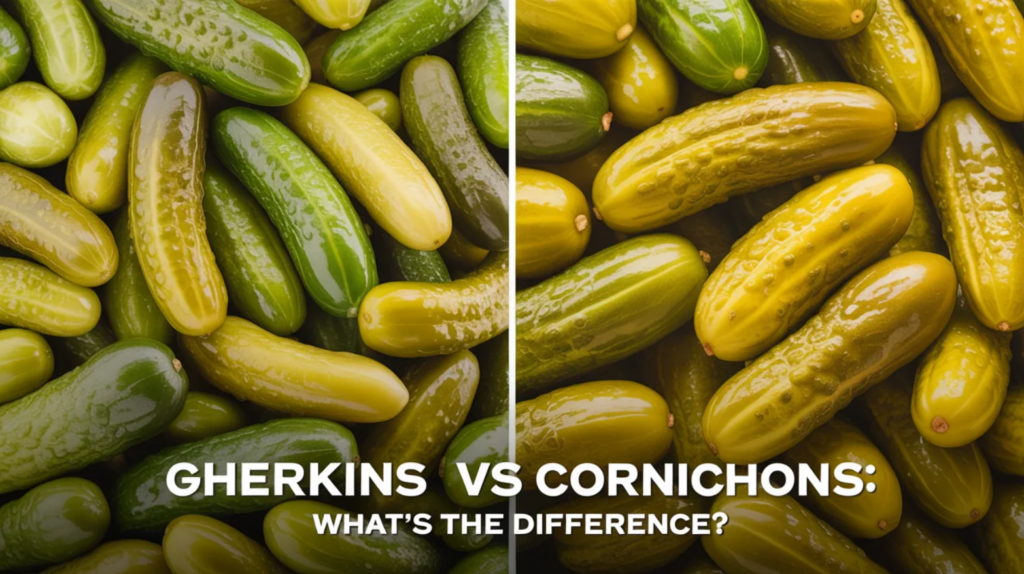
In simple terms, cornichons are a specific type of small, sharp, unsweetened pickled cucumber, while gherkins is a broader category that can include sweet, tangy or spiced versions.
What are gherkins?
Gherkins are small cucumbers that are pickled in vinegar or brine, and in UK supermarkets they come in a wide range of styles. Some are sweet, some are tangy, and others are flavoured with spices like mustard seeds, garlic or dill.
This flexibility is what defines gherkins. The label “gherkin” does not lock the product into one flavour profile. Instead, it simply tells you the size and type of cucumber used. That matters because two jars of gherkins can taste completely different depending on how they are pickled.
On UK packaging, you might see:
- Sweet gherkins
- Crunchy dill-style gherkins
- Spiced or pickled gherkins
For shoppers, that means gherkins are often the more general, everyday pickle used in burgers, sandwiches and salads.
What are cornichons?
Cornichons are very small, sharp pickled cucumbers with little to no sweetness, traditionally associated with French-style pickling. In UK supermarkets, they are usually labelled clearly as “cornichons” rather than gherkins.
The key difference is in the recipe. Cornichons are typically pickled in a vinegar solution with herbs such as tarragon and often include pearl onions. They are rarely sweetened, which gives them a cleaner, more acidic taste.
In practice, cornichons are chosen for:
- Cheese boards
- Charcuterie and pâté
- Cold meats
They are less commonly used in burgers compared to sweeter gherkins, because their sharper flavour stands out more strongly.
Key differences between gherkins and cornichons
The difference becomes clearer when you compare them directly:
- Flavour: Gherkins can be sweet, tangy or spiced, while cornichons are almost always sharp and unsweetened
- Sweetness: Many gherkins contain added sugar; cornichons typically do not
- Size: Both are small, but cornichons are usually picked earlier and are often smaller and firmer
- Use: Gherkins are common in burgers and sandwiches; cornichons are more often used with cheese and cured meats
- Labelling in the UK: “Gherkins” is a broad term, while “cornichons” signals a specific French-style product
How they are sold in UK supermarkets
In UK supermarkets, both products are usually found in the pickles and condiments aisle, often in glass jars. However, their packaging and positioning can differ slightly.
Gherkins are often sold in larger jars with a variety of flavour labels, reflecting their everyday use. You may find them near burger toppings and sandwich condiments.
Cornichons, by contrast, are often sold in smaller jars and sometimes placed near deli-style products or premium pickles. The labelling tends to emphasise their French style or use with charcuterie.
This is where the naming matters. If a jar is labelled “cornichons”, shoppers can usually expect a sharper, less sweet product. If it simply says “gherkins”, the flavour will depend on the specific variety.
Which should you choose?
For shoppers in the UK, the choice between gherkins and cornichons comes down to flavour and intended use.
If you want a pickle for burgers or sandwiches, gherkins are usually the more flexible option, especially if you prefer a slightly sweet or balanced taste. If you want something sharper to cut through rich foods like cheese or pâté, cornichons are typically the better choice.
Conclusion
Gherkins and cornichons are closely related, but they are not interchangeable. Gherkins is a broad category of small pickled cucumbers with varying flavours, while cornichons are a specific, sharper and usually unsweetened type.
On UK supermarket shelves, the label gives the clearest clue. Choosing between them is less about size and more about sweetness, acidity and how you plan to use them in everyday meals.