
GroceriesReview.co.uk provides independent reviews and recommendations. Some pages contain affiliate links to Amazon.co.uk, and we may earn a commission when you make a qualifying purchase at no extra cost to you.
Fresh pasta and dried pasta may sit in different parts of the supermarket, but the distinction is more than just shelf placement. They differ in texture, cooking time, storage, price, and the kind of meal they usually suit. For UK shoppers, that difference often shows up before the pack is even opened: one goes into the fridge at home, the other straight into the cupboard.
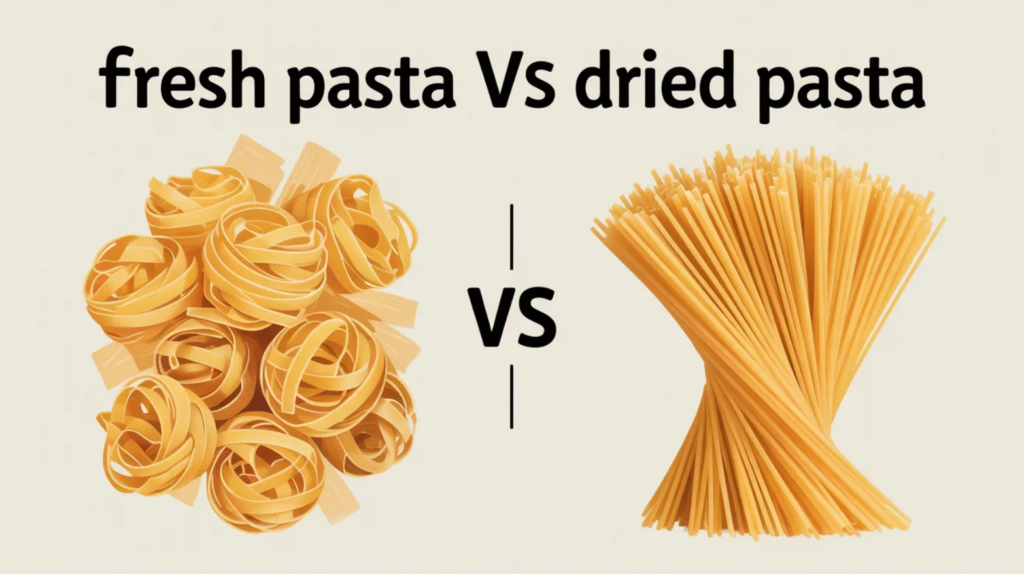
The easiest way to think about it is this: dried pasta is the long-keeping everyday staple, while fresh pasta is the quicker-cooking, shorter-life option that is often bought for a specific meal.
They are sold in different supermarket zones for a reason
Dried pasta belongs to the ambient grocery aisle. It is packed for long shelf life, easy storage, and stock-up shopping. This is where supermarkets place staples such as spaghetti, penne, fusilli, macaroni, and lasagne sheets, often in everything from single bags to pasta mutipacks for households that buy it regularly.
Fresh pasta is usually kept in the chilled section near sauces, filled pasta, pizza, or ready meals. That placement reflects how it is bought. Most shoppers pick up fresh pasta because they plan to cook it soon, not because they want a cupboard standby for later in the month.
Texture is where the difference becomes most noticeable
Once cooked, dried pasta and fresh pasta do not feel the same on the plate.
Dried pasta usually gives a firmer bite. Even when cooked properly, it tends to hold more structure, which is one reason it works so well in everyday meals, pasta bakes, and dishes where the shape needs to stay distinct in the sauce.
Fresh pasta is softer and more delicate. It often feels silkier, especially in ribbon shapes such as tagliatelle or pappardelle. The result is less chewy and more tender, which suits lighter sauces and quicker meals.
Neither texture is automatically better. The choice depends on what the meal needs. A robust baked dish may benefit from the firmness of dried pasta, while a chilled pack of fresh tagliatelle can feel more suitable for a fast, softer dinner.
Cooking time changes the way people buy it
One practical difference matters immediately in the kitchen: fresh pasta usually cooks much faster.
Dried pasta often takes around 8 to 12 minutes, depending on the shape and thickness. Fresh pasta can be ready in just a few minutes. That shorter cooking time is one of the main reasons fresh pasta appeals to shoppers looking for speed on a weeknight.
Even so, faster cooking does not always mean greater convenience overall. Dried pasta is convenient in a different way because it can sit in the cupboard until needed. Fresh pasta saves time at the pan, but dried pasta saves planning.
Ingredients can overlap, but the result still changes
Both fresh and dried pasta are often wheat-based, yet they are not interchangeable in how they eat.
Dried pasta is commonly made from durum wheat semolina and water. That relatively simple composition helps create its firmer texture and long shelf life.
Fresh pasta may also use wheat flour, but it often includes egg depending on the type. That can give the dough a richer feel and a softer texture. On UK packaging, this difference is not always dramatic from the front of the pack, but it becomes clearer in the ingredient list and in the final cooked result.
This is why two products with a similar shape can behave so differently. Fresh tagliatelle and dried tagliatelle may look related, but they deliver quite different textures and cooking experiences.
Storage is one of the clearest dividing lines
For everyday shopping, storage often decides the purchase before texture does.
Dried pasta is built for the cupboard. It suits bulk buying, backup meal planning, and households that want something reliable on hand. That is why it remains such a major part of the UK grocery shop.
Fresh pasta needs refrigeration and usually has a much shorter use-by window. It is less flexible once bought, but that shorter shelf life is part of the trade-off for its softer texture and quick cooking.
So while fresh pasta can feel convenient at dinner time, dried pasta is often more convenient over the course of the week.
Price usually follows the format
In most UK supermarkets, dried pasta is cheaper gram for gram than fresh pasta. It is also available in a much broader range of value tiers, from budget own-label lines to premium bronze-die products.
Fresh pasta is commonly priced as a more premium or convenience-led option. The smaller shelf life, chilled distribution, and softer product format all shape that price difference.
For many shoppers, that means dried pasta stays the regular weekly purchase, while fresh pasta is more occasional or meal-specific.
The shapes on offer are not quite the same
Dried pasta gives the widest choice of shapes in most supermarkets. The standard aisle covers the family staples first, then expands into specialist shapes depending on store size.
Fresh pasta ranges are narrower. Supermarkets tend to focus on ribbon shapes, filled pasta, and fresh lasagne sheets rather than building out a huge selection of short dried-style shapes. That tells you something about how fresh pasta is positioned. It is not there to replace the entire pasta aisle. It fills a smaller, more targeted role.
Which one works better with sauce?
The answer depends on the dish.
Dried pasta often performs better when the sauce is heavy, chunky, or destined for the oven. Its firmer structure makes it dependable in pasta bakes and hearty family meals.
Fresh pasta is often at its best with sauces that suit a softer, more delicate finish. Butter-based sauces, creamy sauces, and lighter coated dishes usually pair naturally with chilled ribbon pasta.
That does not mean you cannot swap one for the other, but the meal will feel different. The sauce may cling differently, the texture may soften more than expected, and the overall balance of the dish can change.
Which one should UK shoppers choose?
A useful way to frame it is by shopping style rather than by culinary theory.
Choose dried pasta when you want long shelf life, value, broader shape choice, and a dependable cupboard staple for regular meals.
Choose fresh pasta when speed matters, refrigeration is not a problem, and the meal is being bought with a specific dinner in mind.
Most households in Britain end up using both, but for different reasons. Dried pasta handles the everyday stock-up role. Fresh pasta fills the gap when the aim is a quick, softer, more immediate meal.
Final thoughts
Fresh pasta and dried pasta belong to the same category, but they solve different shopping and cooking needs. Dried pasta offers firmness, flexibility, and cupboard life. Fresh pasta offers speed, tenderness, and a more chilled-meal style of convenience.
That is why the real difference is not just fresh versus dried. It is also planned meal versus backup staple, fridge product versus cupboard product, and soft texture versus firmer bite. For UK shoppers, those are the distinctions that make the choice much easier on the shelf.