
GroceriesReview.co.uk provides independent reviews and recommendations. Some pages contain affiliate links to Amazon.co.uk, and we may earn a commission when you make a qualifying purchase at no extra cost to you.
In the UK, “crisps” and “chips” are two completely different foods, and the difference goes far beyond the name.
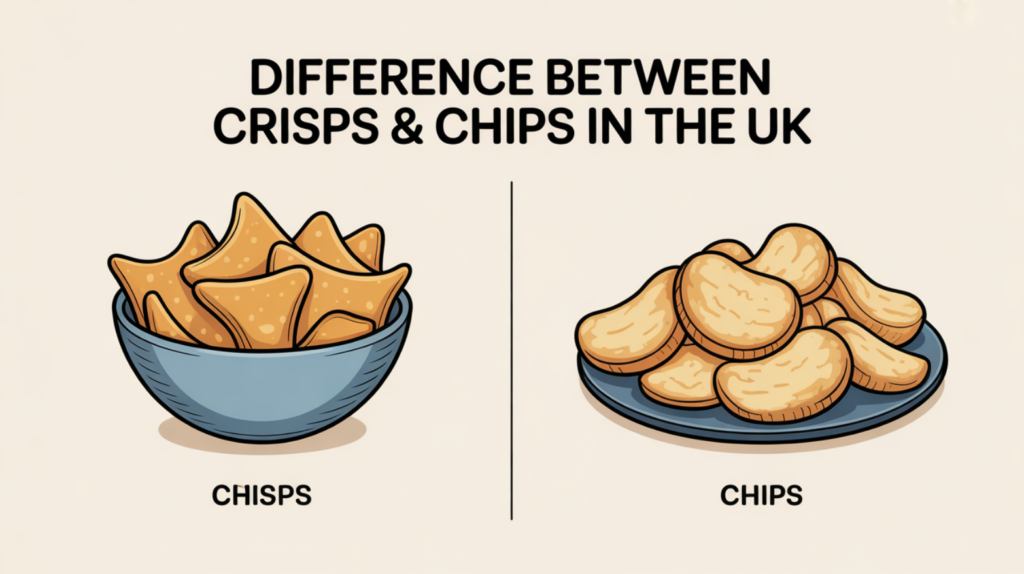
Visitors to Britain often get confused when they hear locals talking about crisps and chips. What Americans call “chips,” Brits call “crisps.” Meanwhile, British “chips” are thick-cut pieces of potato, freshly cooked and served hot. But the distinction is not just linguistic, it is cultural, culinary, and structural.
What Are Crisps?
Crisps are thin slices of potato (or other base ingredients such as corn, rice, lentils, vegetables, chickpeas, or seaweed) that are cooked until dry and crunchy, then seasoned and sealed in packets for long shelf life.
They are designed for snacking, not meals. Their structure is dry, rigid, and engineered to deliver a sharp “crack” when bitten, the experience people associate with traditional snack foods.
Because of this controlled crunch and flavour delivery, many snack lovers end up comparing everything from classic potato options to modern formats such as light popped snacks when choosing what to buy.
What Are Chips?
Chips in the UK are thick-cut potatoes cooked fresh in oil and served hot. They are soft on the inside, golden on the outside, and always eaten immediately. Chips absorb moisture and oil quickly, which is why they cannot be packaged and stored like crisps.
Chips are part of a meal: fish and chips, chip butties, and pub dishes. Crisps are not meals, they are snack engineering.
The Real Differences: Structure, Purpose & Experience
| Feature | Crisps | Chips |
|---|---|---|
| Thickness | Very thin or moulded | Thick cut |
| Texture | Dry, rigid, crunchy | Soft inside, crisp outside |
| Serving | Cold, packaged | Hot, fresh |
| Shelf life | Months | Minutes |
| Purpose | Snack | Meal component |
Why Crisp Variety Is So Much Wider Than Chips
Crisps can be engineered from almost any starch-based ingredient. This allows supermarkets to offer corn snacks, tortilla chips, rice crisps, vegetable crisps, lentil crisps, chickpea crisps, and seaweed snacks, something impossible with traditional chips.
This enormous range is why many shoppers move beyond potatoes and explore categories such as lentil-based snacks or vegetable alternatives when browsing the crisp aisle.
Flavour Culture: Where Crisps Dominate
Chips are seasoned simply: salt, vinegar, gravy, curry sauce. Crisps, however, are flavour laboratories. From cheese & onion and salt & vinegar to prawn cocktail and pickled onion, crisps carry layered flavour systems that would overwhelm hot chips.
That intensity is why certain profiles, especially tangy and savoury blends like those found in strong vinegar styles, simply do not translate to traditional chips.
Final Thoughts
Crisps and chips may share a potato origin, but they serve entirely different purposes. Chips satisfy hunger. Crisps satisfy craving. Once you understand their design, texture, and flavour roles, the British distinction between them becomes perfectly logical, and impossible to confuse.