
GroceriesReview.co.uk provides independent reviews and recommendations. Some pages contain affiliate links to Amazon.co.uk, and we may earn a commission when you make a qualifying purchase at no extra cost to you.
Salt does two jobs in cooking. It builds flavour inside food and it adds flavour on the surface. The type you choose decides which job it does best. Fine salt disappears into a dish quickly, flaked salt sits on top with texture, and coarse salt gives slower, controlled seasoning, often through a grinder or by pinching.
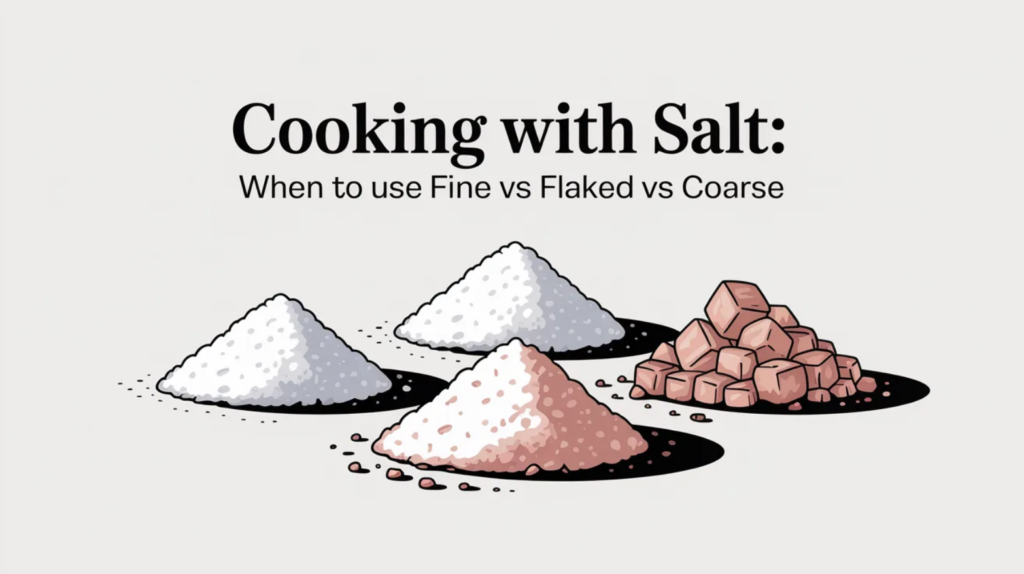
This guide shows exactly when each format makes sense in a normal UK kitchen, without turning it into a “one salt fits all” debate.
Fine salt: the one that seasons evenly
Fine salt is the best choice when you want salt to dissolve, distribute, and stay invisible.
Use fine salt for:
- Soups and broths (it melts fast and spreads through the pot)
- Sauces and gravy (no gritty bits, no uneven patches)
- Pasta water and rice water (quick dissolve, consistent salinity)
- Baking (predictable measuring and even mixing)
- Marinades and brines (works efficiently without waiting)
What fine salt does well
Fine grains spread through food quickly, so the dish tastes balanced rather than “salty in one bite, flat in the next”.
If you’re picking a dependable everyday option, a table-salt style product is usually the most consistent for cooking and measuring: <a href=”/best-table-salt-in-the-uk/”>Best Table Salt in the UK</a>.
Flaked salt: the finishing tool
Flaked salt is about texture and instant surface flavour. It’s not meant to disappear; it’s meant to be noticed lightly.
Use flaked salt for:
- Roast potatoes and chips (crunchy finish that hits first)
- Eggs (scrambled, fried, poached, especially right at the end)
- Sliced tomatoes, cucumbers, salads (fast flavour without “over-salting” the whole bowl)
- Steak, fish, grilled veg (surface seasoning that stays crisp)
- Chocolate desserts (a small pinch gives contrast rather than “saltiness”)
What flaked salt does well
Flakes break on the tongue. That gives a clean, bright “pop” without needing much.
If your reader is shopping specifically for flakes or wants a sea salt that includes flake formats, this page supports the product choice: <a href=”/best-sea-salt-in-the-uk/”>Best Sea Salt in the UK</a>.
Coarse salt: controlled seasoning and grinder-friendly salt
Coarse salt is about slower dissolving and more control. It’s often sold as crystals or coarse grains.
Use coarse salt for:
- Grinders (the classic use, crystals feed mills properly)
- Roasting and tray bakes (steady seasoning that doesn’t vanish instantly)
- Pasta water (especially if you’re salting a big pot and stirring well)
- Salt crusts (rare at home, but coarse works if you do it)
- Pinch seasoning (when you like feeling the grains between fingers)
What coarse salt does well
It lets you season gradually. You can taste and adjust without the salt melting away immediately.
If you want a sea-salt-based coarse option, look for “crystals” on the label rather than guessing from photos.
A quick “food-to-salt” guide
| What you’re cooking | Best salt format | Why it works |
|---|---|---|
| Soup, stew, curry | Fine | Dissolves fast and seasons evenly |
| Gravy and sauces | Fine | No grit, easy control |
| Pasta water | Fine or coarse | Fine dissolves instantly; coarse works in big pots with stirring |
| Bread, cakes, baking | Fine | Predictable measuring |
| Roast potatoes | Flaked (finish) + fine (cook) | Fine seasons inside; flakes give surface crunch |
| Steak or fish | Fine (before) + flakes (after) | Early seasoning penetrates; finishing adds texture |
| Salad | Flaked | Light surface seasoning without heavy salting |
| Avocado toast / eggs | Flaked | Crisp, clean “top note” flavour |
The “two-salt setup” that covers most UK kitchens
Most people end up happiest with:
- One fine salt for cooking and baking
- One flake salt for finishing
Coarse salt becomes optional unless you love a grinder or cook in ways that suit crystals.
The measuring trap: why a teaspoon isn’t always a teaspoon
Different formats fill a spoon differently:
- Fine salt packs tightly
- Flakes sit airy
- Coarse grains leave gaps
So “1 teaspoon salt” can turn into very different saltiness if you swap formats without thinking. In recipes, use the format the recipe expects, or convert by taste carefully.
If you want a clear explanation of why formats behave differently (without going nutritional), this comparison supports it well: <a href=”/sea-salt-vs-table-salt-whats-the-real-difference/”>Sea Salt vs Table Salt (What’s the Real Difference?)</a>.
When to add salt (timing matters more than people think)
Early salt: builds flavour
Add salt early in:
- soups, stews, sauces
- rice, pasta water
- minced meat, burger mixes
Early salt dissolves and spreads, so the flavour tastes “rounded” rather than sharp.
Late salt: adds sparkle
Add salt late in:
- roast potatoes, chips, fried eggs
- grilled meat and fish
- salads and sliced veg
Late salt stays on the surface and feels brighter.
Choosing the right salt for your cupboard
If you want predictable everyday results, start with a fine salt you like using daily and a flake salt for finishing. Once those are in place, crystals become a “nice to have” rather than a requirement.
For shopping shortlists that match those roles:
- <a href=”/best-table-salt-in-the-uk/”>Best Table Salt in the UK</a>
- <a href=”/best-sea-salt-in-the-uk/”>Best Sea Salt in the UK</a>
The simple takeaway
Fine salt seasons from the inside and works best for cooking and baking. Flaked salt is for finishing and texture. Coarse salt is for grinders and controlled seasoning. When you match the format to the moment, inside the pot vs on the plate, salt stops being guesswork and starts behaving like a tool.