GroceriesReview.co.uk provides independent reviews and recommendations. Some pages contain affiliate links to Amazon.co.uk, and we may earn a commission when you make a qualifying purchase at no extra cost to you.
Buying bread in the UK feels easy until you get it home and realise it’s too sweet, too dry, or somehow stale by the next morning. Bread is simple food, but the details behind the bag make a real difference, because a loaf isn’t just “white” or “brown”. A loaf is a mix of ingredients, structure, moisture, and shelf life, and those parts decide whether it becomes brilliant toast or a disappointing sandwich.
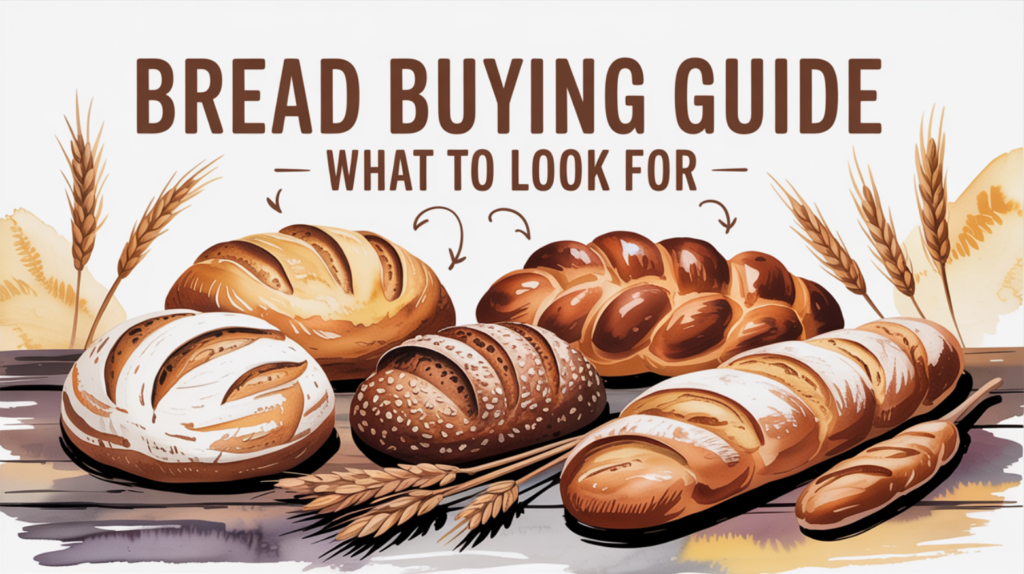
This guide helps you pick bread that matches how you actually eat it, without getting pulled around by front-of-pack claims.
Start with your “real use” (it saves money and waste)
Before you compare brands, decide what the loaf must do:
- Lunchbox sandwiches: soft slices that fold, don’t crumble, and don’t overpower fillings
- Toast-first homes: slices that brown evenly and stay tender inside
- Soup and dinners: crust and chew matter more than perfect slicing
- Occasional bread eater: freezer-friendly loaves win almost every time
If you want a quick overview of what’s typically on shelves, the breakdown in types of bread sold in UK supermarkets makes the categories feel obvious.
The 10 things worth checking (in the right order)
1) Slice shape and thickness
Bread can be “good” and still wrong for you if the slices don’t fit your routine. Thick slices make toast feel generous, but they can be awkward for sandwiches.
Quick tip: if you often make toast, a loaf designed for easy everyday slices can outperform a fancy loaf simply because it toasts more predictably.
2) Texture: soft, springy, or chewy?
Texture decides whether a loaf feels comforting or hard work.
- Soft-slice: easiest for kids, sandwiches, quick bites
- Springy: holds fillings better, less squashing
- Chewy: satisfying, often linked with slower fermentation styles
If you enjoy a loaf that feels more “bakery” than “sandwich aisle”, you’ll notice that chewiness in well-made sourdough options.
3) Ingredient list (keep it practical, not perfectionist)
You don’t need a laboratory-clean ingredient list, but you do want clarity.
- Shorter lists are often simpler loaves
- Longer lists can mean added softness and longer shelf life
- Some “brown” loaves are mainly white flour with colouring, so it helps to read beyond the front label
If you’re shopping brown loaves regularly, different UK brown breads can vary wildly in sweetness and softness, even when they look identical.
4) Wholegrain content (when “brown” isn’t wholemeal)
Wholemeal uses whole wheat flour, while “brown” can mean several things. If you want a deeper, more filling slice, it’s worth checking whether the loaf is actually wholemeal.
If you prefer a nutty flavour and a firmer bite, wholemeal loaves are usually the more reliable direction.
5) Sweetness level (the sneaky deal-breaker)
Some supermarket loaves lean sweet, even when they’re not labelled sweet. You’ll usually notice this most in white and brown sliced loaves.
If you dislike sweet bread: look for loaves described as “classic”, “tangy”, “sourdough-style”, or “artisan” (and then confirm by taste once).
6) Crust: thin, thick, or flour-dusted?
Crust isn’t just appearance; it changes how the bread eats.
- Thin crust: good for sandwiches and kids
- Thicker crust: better for soup nights and tearing
- Flour-dusted crust: often signals a more rustic style (not always, but often)
7) Freshness window (how quickly you’ll finish it)
A loaf that’s perfect on day one but sad on day two is only “best” if you finish bread quickly. If you don’t, choose bread that stays pleasant longer, or plan to freeze half immediately.
8) Freezing friendliness
This is one of the easiest ways to stop wasting bread. Many sliced loaves freeze and toast straight from frozen beautifully.
Small household rule: if you won’t finish the loaf in 2-3 days, freeze half the same day you open it.
9) “Special” add-ins: seeds, grains, oats
Seeds and grains change flavour, texture, and satisfaction.
If you want bread that feels more interesting without being heavy, multigrain loaves with a nutty bite often hit the sweet spot.
10) Dietary needs and tolerance (be realistic)
Gluten-free bread, for example, behaves differently. It’s often best toasted, and it needs a different kind of expectation.
If this is relevant for your household, the guide on how gluten-free bread behaves compared to wheat bread makes the shopping decision easier.
A simple “choose your loaf” table
| Your main goal | What to prioritise | Bread types that usually work |
|---|---|---|
| Sandwiches all week | Soft slices, neat shape, mild flavour | White sliced, brown sliced, sandwich loaves |
| Best toast at home | Even browning, thicker cut, good crumb | Sourdough-style sliced, seeded, toast loaves |
| More filling meals | Wholegrain content, firmer bite | Wholemeal, multigrain, seeded wholemeal |
| Soup and sharing | Crust, chew, tearability | Artisan-style loaves, sourdough rounds, soda bread |
| Less waste | Freezing quality, stays decent day 2-3 | Most sliced loaves, especially medium-soft styles |
Packaging claims: what they usually mean (without the hype)
- “Artisan” often means a rustic look and thicker crust, but ingredients still vary
- “Sourdough” can mean full fermentation or just sourdough flavour cues, taste and texture tell the truth
- “Wholegrain” is useful, but check the ingredient list if you want a true wholemeal loaf
- “High fibre” can come from wholegrain flour or added fibres, both can be fine, but they eat differently
If you want the plain-English definition of one of these labels, what “artisan bread” means in the UK is a good reference point for shoppers.
The quickest way to make a good choice (in 20 seconds)
- Pick your use (toast, sandwiches, soup).
- Check slice thickness and texture clues.
- Glance at ingredients (wholemeal vs “brown-style”).
- Choose the loaf that matches how fast you’ll eat it.
- If unsure, pick the one that freezes well.
Final thought
The best bread isn’t the most expensive loaf, it’s the loaf that fits your week. A soft sliced loaf makes weekday lunches effortless, wholemeal makes breakfast feel steadier, and a chewy sourdough can turn soup into a proper comfort meal. Once you shop by use, bread becomes one of the easiest categories to buy confidently.