
GroceriesReview.co.uk provides independent reviews and recommendations. Some pages contain affiliate links to Amazon.co.uk, and we may earn a commission when you make a qualifying purchase at no extra cost to you.
Bananas are sweet and eaten raw, while plantains are starchy and typically cooked – making them distinctly different despite their similar appearance.
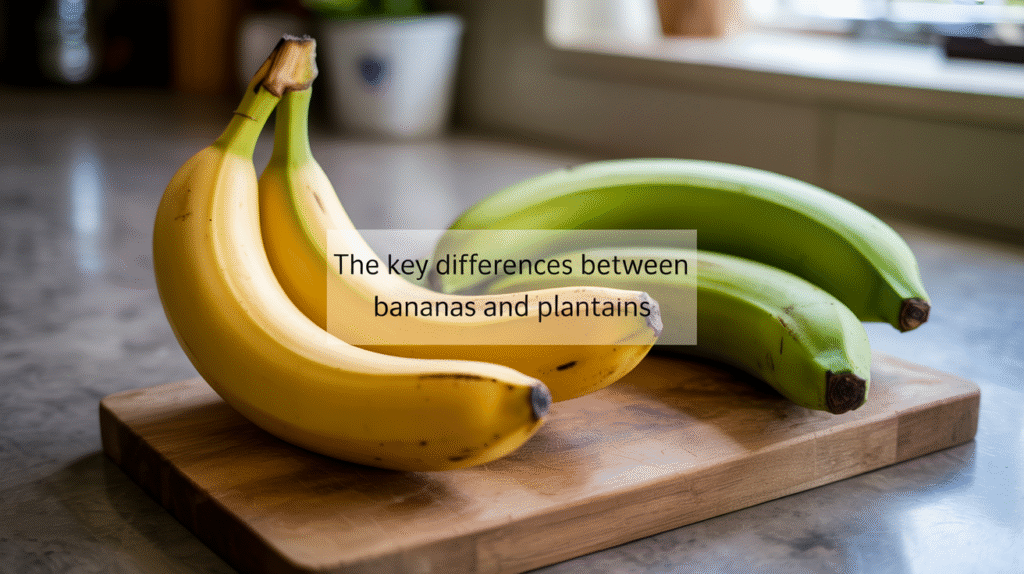
While bananas and plantains look alike and belong to the same family, they serve very different purposes in cooking and nutrition. Understanding these differences helps you make the best choice for your meals, whether you’re preparing a snack, dessert, or a hearty dish.
Bananas Are Sweet and Eaten Raw – Ideal as a Snack or in Smoothies
Bananas are one of the most popular fruits globally, thanks to their convenience and natural sweetness.
What Sets Bananas Apart
- Sweet flavour that becomes more intense as they ripen.
- Usually eaten raw, often used in smoothies, cereal, and desserts.
- Soft, creamy texture makes them ideal for direct consumption.
Bananas ripen from green to yellow and even brown, with the sugar content increasing over time.
Plantains Are Starchy and Best Cooked – Perfect for Savoury Dishes
Unlike bananas, plantains are much firmer and less sweet, even when ripe.
Why Plantains Are Different
- High in starch and low in sugar compared to bananas.
- Typically cooked by frying, boiling, or baking.
- Used in traditional African, Caribbean, South American, and Asian cuisines.
They resemble bananas but are usually larger and have thicker skins, ranging in colour from green to black.
Ripening Stages – Both Change, But Taste Differently
Both fruits undergo visual and texture changes during ripening, but their culinary uses vary at each stage.
How Ripeness Affects Use
- Bananas: Start starchy when green and become very sweet when brown.
- Plantains: Green plantains are best for savoury crisps and fries, while yellow or black ones are used in sweet or soft dishes like plantain fritters or mash.
Even at full ripeness, plantains retain more starch and are usually not eaten raw.
Nutritional Differences – Bananas Are Higher in Sugar, Plantains in Carbs
While both are nutritious, they serve slightly different roles in a balanced diet.
Nutrient Comparison
- Bananas: Higher in natural sugars, potassium, and vitamin B6.
- Plantains: Higher in complex carbohydrates, fibre, and vitamin A.
Both are gluten-free and low in fat, but plantains are often more filling and suited to hearty meals.
Cooking Methods – Plantains Are Versatile When Cooked
While bananas are usually eaten raw, plantains shine when cooked in various ways.
Popular Cooking Methods for Plantains
- Fried (e.g. tostones or maduros) – Crispy or caramelised depending on ripeness.
- Boiled or steamed – Served with stews or used as a side dish.
- Baked or roasted – Healthier option that softens plantains and brings out sweetness.
These techniques enhance their texture and taste while keeping them digestible and satisfying.
Cultural Uses – Plantains Play a Key Role in Global Dishes
Plantains are a dietary staple in many regions and used in a wide range of traditional dishes.
Global Dishes Featuring Plantains
- West Africa: Served with jollof rice or egusi soup.
- Caribbean: Fried as a side dish or included in patties.
- South America: Mashed into mofongo or used in empanadas.
Meanwhile, bananas are more common as a fresh snack, in baking (like banana bread), or in breakfast bowls worldwide.
Storage and Shelf Life – Bananas Ripen Quickly, Plantains Last Longer
Proper storage helps extend the usability of both fruits.
Shelf Life Considerations
- Bananas: Ripen rapidly and should be eaten within a few days unless refrigerated or frozen.
- Plantains: Ripen slowly and can be kept for up to a week or more, depending on the stage when bought.
Both can be frozen, although cooked plantains freeze better than raw.
FAQs About Bananas vs Plantains
Here are some questions and answers about the differences and uses of bananas and plantains:
Can you eat plantains raw like bananas?
No. Plantains are too starchy and firm to be eaten raw, even when ripe. They are almost always cooked.
Are plantains healthier than bananas?
Not necessarily. Plantains are higher in complex carbohydrates, while bananas offer more sugar and potassium. It depends on your dietary needs.
How can I tell a banana from a plantain?
Plantains are generally larger, have thicker skin, and are less curved. They also feel firmer and are typically not sweet when raw.
Can I substitute plantains for bananas in recipes?
Usually not. Bananas are suited for sweet, raw recipes while plantains require cooking and are used in savoury dishes.
Are both fruits good for digestion?
Yes. Both are high in fibre, though bananas are often easier to digest raw, while plantains need cooking for the same benefit.