
GroceriesReview.co.uk provides independent reviews and recommendations. Some pages contain affiliate links to Amazon.co.uk, and we may earn a commission when you make a qualifying purchase at no extra cost to you.
Pistachios are loved worldwide for their mild sweetness, buttery crunch, and vibrant green color. But there’s one thing almost everyone notices before enjoying them: pistachios cost more than most nuts. Why exactly are they so expensive?
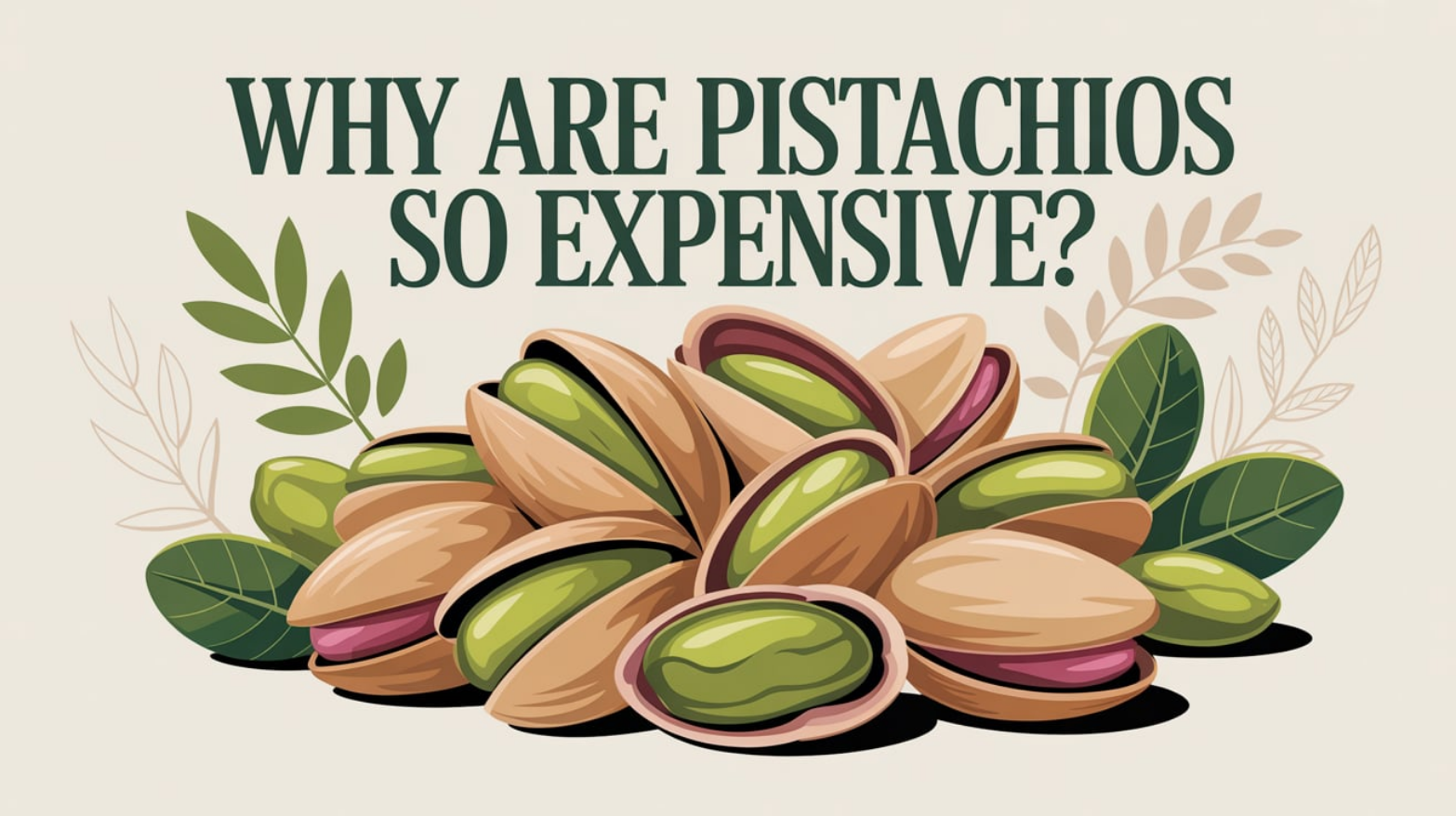
Let’s peel back the shell (very slowly) and reveal the truth behind the price tag.
🌱 They’re Hard to Grow — and They Take Forever
Growing pistachios is less like farming and more like a long-term investment. Pistachio trees require:
- Hot summers
- Cold winters
- Dry climates
- Specific soil conditions
Only a few regions in the world naturally provide the right environment.
And here’s the kicker:
Pistachio trees can take between 7 and 10 years to produce a real harvest.
So before farmers can make any money, they’re caring for trees that aren’t paying rent for nearly a decade.
👩🌾 They Only Produce Big Harvests Every Other Year
Pistachio trees are moody. One year they give a big, beautiful crop, and the next year—they take a break. This is called “alternate bearing.”
- On-years: High supply, more nuts
- Off-years: Low supply, higher prices
Because the global market depends on unpredictable trees, prices stay high to balance the inconsistent production.
🐛 They’re Vulnerable to Pests and Weather
Despite being grown in tough climates, pistachios are surprisingly delicate. Bad weather, drought, or pests can wipe out large parts of a crop. Farmers protect the trees with irrigation systems, pest control, and specialized care—all of which cost money.
Those costs land right in your snack bowl.
🥾 Harvesting Is Complicated—and Crunchy
Harvesting pistachios is not as simple as shaking a tree. It requires:
- Special machinery
- Fast transport
- Immediate processing
Why the rush? If pistachios are not hulled quickly after harvest, they can mold. The extra processing—sorting, drying, roasting, shelling—adds up fast.
🟢 Why the Green Color Matters
Not all pistachios are created equal. The greener the pistachio, the more valuable it is. High-grade pistachios, especially bright-green ones used in desserts like gelato, can cost as much as luxury ingredients in some countries.
More color = more cost.
For readers who want to enjoy premium raw pistachios without overpaying, we’ve reviewed several high-quality options in our Best Raw Pistachios in the UK guide.
🌍 Limited Growing Regions = Global Demand Pressure
Most of the world’s pistachios come from just a few places:
- United States (especially California)
- Iran
- Turkey
With limited supply and massive demand, prices naturally stay high.
🧾 So Why Are Pistachios So Expensive?
In short, pistachios are pricey because they are:
🕒 Slow to grow
📉 Unpredictable in production
🐛 Vulnerable to pests and climate
🏭 Expensive to harvest and process
🌍 Grown in limited regions
💚 Valued for premium quality
Pistachios are not just a snack—they’re an agricultural investment.
🥜 Final Crunch
When you crack open a pistachio, you’re not just paying for a nut—you’re paying for:
- Years of growing
- Strict climate requirements
- Labor-intensive harvesting
- High-quality processing
So the next time you enjoy that green treasure, remember: you’re eating green gold.