
GroceriesReview.co.uk provides independent reviews and recommendations. Some pages contain affiliate links to Amazon.co.uk, and we may earn a commission when you make a qualifying purchase at no extra cost to you.
An opened jar of pickles can keep well for quite a while, but only if the basics are handled properly. Once the seal is broken, the product is no longer protected in the same way it was on the supermarket shelf. Air, warmer temperatures, crumbs from cutlery and repeated handling all start to affect quality. That is why storage after opening is less about the cupboard and much more about the fridge, the liquid level and how the jar is used day to day.
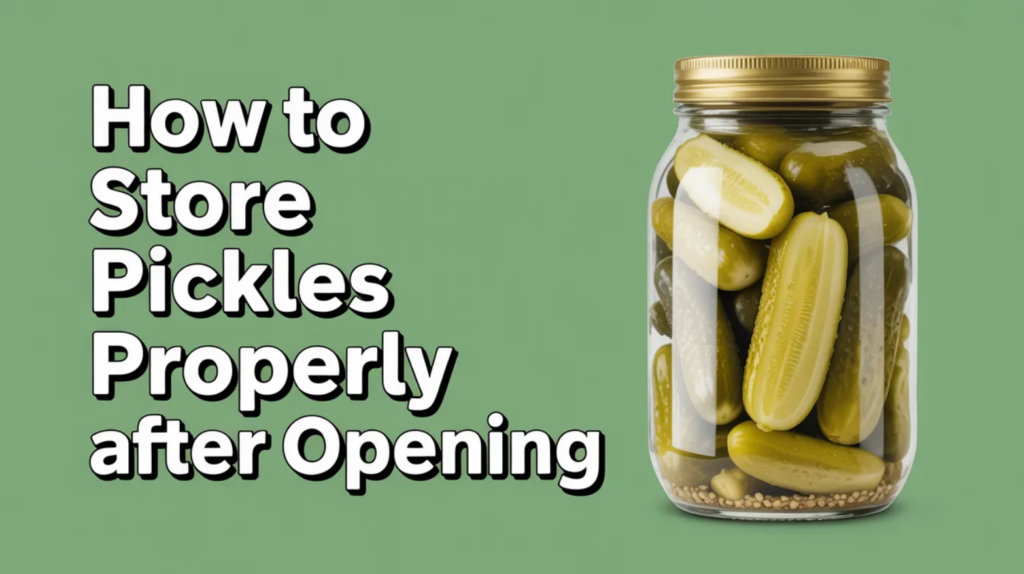
For most pickles sold in UK supermarkets, the rule is straightforward: refrigerate after opening, keep the contents covered by their pickling liquid, and use a clean utensil every time.
The fridge matters more than anything else
Before opening, many pickles are shelf-stable. After opening, that changes. The label on British supermarket jars will usually say to keep the product refrigerated once opened, and that instruction is there for a reason.
Cold storage slows the drop in quality and helps the pickle stay closer to its intended taste and texture. A jar left out on the worktop, even for short repeated periods, is more likely to soften, lose freshness and spoil sooner than one returned to the fridge promptly.
The vegetables need to stay under the liquid
One of the easiest mistakes is letting the pickles sit exposed above the brine or vinegar. The liquid is not just there for flavour. It also helps protect the contents and keeps the texture more stable.
If gherkins, onions or mixed vegetables start poking up above the surface for long periods, they can dry slightly, discolour, or lose quality more quickly than the submerged pieces. So after using some of the jar, it is worth checking that the remaining pickles are still sitting properly in the liquid.
Use a clean fork or spoon, not whatever is to hand
Cross-contamination is a common way to shorten the life of an opened jar. A knife that has just touched butter, mayonnaise, crumbs or sandwich filling should not go straight into the pickle jar. The same applies to fingers, even if it feels quicker.
A clean utensil keeps the liquid cleaner and reduces the chance of introducing food particles that can affect both flavour and shelf life. This matters especially with relishes, piccalilli and chopped pickles, where the jar is often used repeatedly over several weeks.
Tighten the lid properly after each use
A loose lid will not usually ruin a jar instantly, but it does make the product more vulnerable to air exposure and odour transfer from the fridge. Pickles can also start to lose their sharper, fresher character if the seal is not closed well between uses.
So the habit is simple: use what you need, wipe the rim if necessary, and screw the lid back on firmly before putting the jar away again.
Do not transfer them unless you have to
Some shoppers decant pickles into another container for convenience, but the original jar is usually the best place for storage. It is designed for the product, it already contains the correct preserving liquid, and it closes securely.
If the jar is damaged and you genuinely need to move the contents, use a very clean container with a tight-fitting lid and make sure the pickles stay covered by their liquid. Otherwise, keeping them in the original jar is normally the safer and simpler option.
Texture changes are normal over time
Even when stored correctly, opened pickles do not stay exactly the same forever. Gherkins may lose some snap, pickled onions may soften slightly, and relishes can become a bit less lively after repeated opening and closing.
That does not automatically mean the jar has gone bad. It simply means that storage preserves quality best when the jar is used steadily rather than forgotten at the back of the fridge for months. In practical terms, a recently opened jar will often taste brighter and feel firmer than an older one, even if both are still usable.
Always check the label for brand-specific guidance
There is a general pattern across UK supermarket pickles, but individual jars can still differ. Some brands suggest using the contents within a certain number of weeks after opening. Others may have slightly different storage instructions depending on the recipe.
That is especially relevant with sweeter relishes, mustard-based pickles and more specialist products, where the formula is not identical from one jar to the next. The label remains the best guide for that specific product in your fridge.
Signs a jar should not be used
An opened pickle jar is best left alone if the smell seems off, the liquid has changed in an unusual way, mould appears, or the lid and contents no longer look right. A little cloudiness can be normal in some products, but obvious spoilage is a different matter.
The point is not to overanalyse every jar. It is simply to treat pickles as preserved foods that still need sensible handling once opened.
A note on cupboard storage after opening
People sometimes assume that because pickles were bought from an ambient shelf, they can go back into the cupboard after opening. For most supermarket jars in Britain, that is not the right approach. Once opened, the product should usually move to the fridge and stay there between uses.
That distinction between unopened and opened storage is where many shoppers go wrong.
Conclusion
Properly storing pickles after opening is mostly about consistency. Keep the jar in the fridge, make sure the contents stay submerged, use clean utensils, and close the lid securely after every use. Those small habits do most of the work.
For UK shoppers, the storage instructions are usually simple, but following them makes a real difference. A well-kept jar stays sharper, cleaner and more pleasant to use, whether it is full of gherkins, pickled onions, piccalilli or relish.