
GroceriesReview.co.uk provides independent reviews and recommendations. Some pages contain affiliate links to Amazon.co.uk, and we may earn a commission when you make a qualifying purchase at no extra cost to you.
Pickles and relish are often grouped together in the same part of the condiments aisle, but they are not the same thing. One is usually a preserved vegetable sold in recognisable pieces, while the other is more often a chopped condiment built for spreading or spooning. That difference affects texture, flavour, packaging and how each product is used in everyday food.
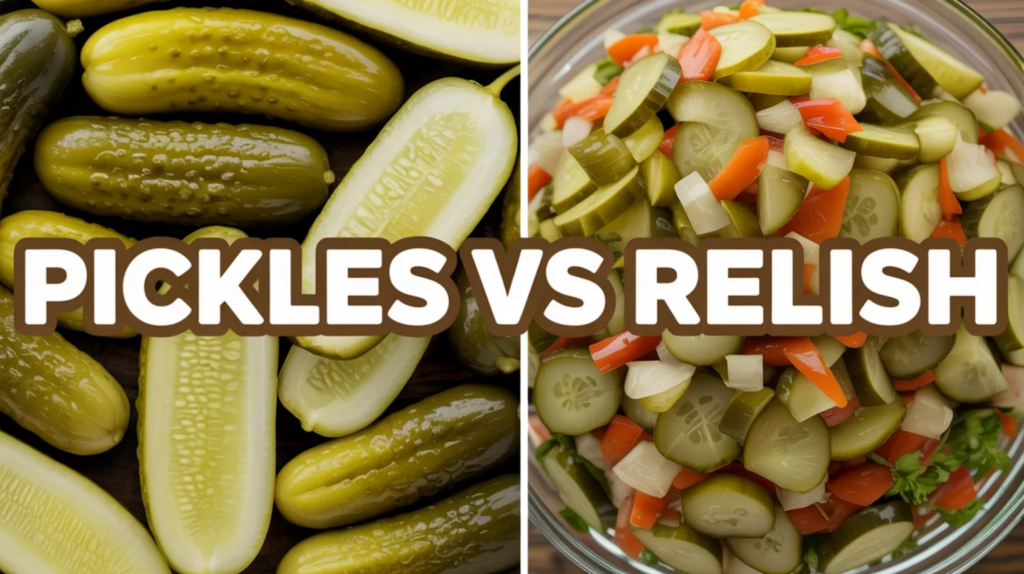
The simplest way to separate them is this: pickles are usually whole, sliced or chunked vegetables preserved in vinegar or brine, whereas relish is usually a chopped mixture designed to be added as a soft topping or filling.
The core difference
A pickle keeps the vegetable itself as the main focus. In UK supermarkets, that usually means cucumbers, onions or mixed vegetables sitting in a pickling liquid inside a jar. You can see the pieces clearly, and the bite comes from the crunch, acidity and the specific vegetable being preserved.
Relish works differently. Instead of presenting one intact pickled item, it usually combines finely chopped vegetables with vinegar, sugar, seasoning and sometimes a thicker sauce base. A jar of relish is therefore usually chosen for easy spreading and a more blended flavour rather than for distinct pieces and crunch.
How they look on supermarket shelves
The visual difference is usually obvious once you look through the packaging. Pickles are commonly sold in glass jars with whole or sliced contents visible through the side. Gherkins, pickled onions and mixed pickles all fit that pattern. The shopper can usually judge size, colour and cut before buying.
Relish is often looser, finer and more uniform. It may still come in a jar, but it can also appear in a squeeze bottle or a shorter condiment-style container. On the shelf, it tends to sit closer to burger toppings, sandwich condiments and table sauces because it is used more like a ready-to-spoon accompaniment.
Texture matters more than people expect
This is where the difference becomes practical rather than just technical. Pickles add bite. Even when sliced, they still bring a firmer texture that stands out in a burger, salad or buffet plate. You notice the individual ingredient first.
Relish is softer and more integrated. It spreads across bread more evenly, sits more neatly inside a sandwich and does not create the same chunky layers. For packed lunches and quick assembled meals, that softer texture is often the reason shoppers choose relish over a jar of sliced pickles.
The flavour gap
Pickles usually deliver a cleaner, more direct taste. The vegetable, the vinegar and any added herbs or spices stay fairly distinct. A pickled onion tastes primarily of onion and vinegar. A gherkin tastes primarily of cucumber with whatever sweetness, dill or spice has been added.
Relish tends to taste more blended. Because the ingredients are chopped and mixed together, sweetness, acidity and seasoning often feel more rounded and less separate. Some relishes lean sweet, some savoury, and some have a mustardy or spiced edge, but they are generally built to taste like one finished condiment rather than one preserved vegetable.
When each works best
Pickles are usually the better choice when you want visible pieces and a sharper contrast on the plate. They suit burgers, cheese boards, cold meats, salads and side servings because they bring crunch and a clear pickled note.
Relish is usually better when the goal is easier layering. It works well in sandwiches, wraps, burgers and buffet rolls because it spreads quickly and gives flavour without needing extra chopping. In practice, relish often replaces several separate toppings at once.
Can one replace the other?
Sometimes, but not perfectly. A chopped relish can add acidity and sweetness where sliced pickles might otherwise be used, yet it will not give the same crunch. Equally, sliced pickles can go into a sandwich instead of relish, but they create a chunkier texture and less even coverage.
That is why UK supermarkets continue to stock both. They may overlap in flavour family, but they solve different food problems.
What UK shoppers should check before buying
The front label usually tells most of the story, but the ingredients list helps confirm it. With pickles, it is worth checking the vegetable type, cut and whether the liquid is sweetened, brined or heavily spiced. With relish, the main clues are the texture, sugar level and whether it is designed for burgers, sandwiches or more general table use.
This matters because two jars in the same aisle can suit entirely different meals. One may be there for crunch and sharpness, while the other is meant to act almost like a ready-made topping.
Conclusion
Pickles and relish belong to the same broad supermarket category, but they are built differently. Pickles keep the preserved vegetable in recognisable pieces and are usually chosen for crunch and clear acidity. Relish is more finely chopped, more blended in flavour and better suited to spreading or spooning into food.
For shoppers in Britain, the easiest way to choose is to think about texture first. If you want a distinct pickle on the plate, go with pickles. If you want a softer condiment that blends into the filling, relish is usually the better fit.