
GroceriesReview.co.uk provides independent reviews and recommendations. Some pages contain affiliate links to Amazon.co.uk, and we may earn a commission when you make a qualifying purchase at no extra cost to you.
Not every pickle delivers the same kind of tang. Some hit quickly with a hard vinegar edge, while others taste rounder, softer or slightly sweet even when they belong to the same broad product category. That sharper taste is not random. It usually comes from the acid level, the type of vinegar, the amount of sugar, the vegetable being pickled and the way the recipe has been balanced.
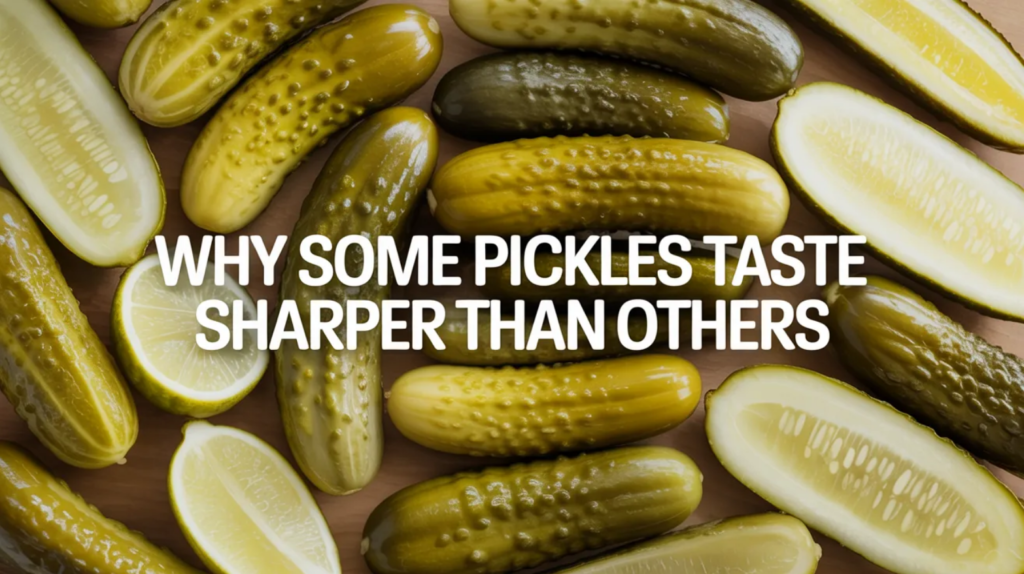
So when one jar tastes brisk and another feels gentler, the difference is usually built into the formulation rather than caused by chance.
Acidity is the main reason
The most obvious source of sharpness is acid. In many pickles sold in UK supermarkets, that acid comes from vinegar. The more prominent the acid is in the final recipe, the more direct and pointed the flavour tends to feel.
A pickle does not need to be painfully sour to be safely preserved, but recipes with a more noticeable acidic bite will naturally come across as sharper on the tongue. This is why some jars taste immediately punchy, while others seem more balanced from the first bite.
The vinegar type changes the character
Sharpness is not just about how much vinegar is present. It is also about which vinegar has been used. A clear spirit vinegar often gives a cleaner, more cutting taste. Malt vinegar can feel fuller and slightly rounder, even when it is still clearly acidic. Wine vinegar may bring a different sort of edge again, depending on the product style.
That helps explain why two pickles with similar ingredients can still taste quite different. One may come across as crisp and assertive, while another feels more mellow or deeper in flavour.
Sugar softens the edges
A pickle with added sugar will often taste less sharp, even when the acidity is still doing a lot of preserving work underneath. Sugar does not remove the acid, but it changes how the palate experiences it.
This is why sweet pickles, burger relishes and some sandwich pickles often feel easier-going than plain pickled onions or tart cornichons. The sourness is still there, yet it is cushioned. By contrast, a pickle with very little sweetness has nowhere to hide its acidity, so the sharpness stays right at the front.
Salt and seasoning can shift the balance too
Acid may lead the flavour, but it does not work alone. Salt, mustard, herbs, spices and aromatics can all alter how sharp a pickle seems. Mustard can make a pickle feel more forceful. Dill and garlic can make the sharpness feel more savoury. Warmer spices can distract from the acid or make the overall flavour seem more layered.
So a sharper-tasting pickle is not always the one with the most acid on paper. Sometimes it simply has fewer balancing elements, or a seasoning profile that lets the acidity stand out more clearly.
The vegetable itself matters
A cucumber pickle, a pickled onion and a cauliflower-based pickle do not carry acidity in the same way. Onion already has bite of its own, so pickled onions can feel especially piercing. Cucumber is milder and more watery, so the sharpness may read as cleaner and fresher. Mixed vegetable pickles can taste uneven in a good way, with some pieces seeming harsher than others depending on how they absorb the liquid.
Texture plays a part here as well. A firmer vegetable often delivers a more concentrated little burst when bitten into, which can make the pickle feel sharper even if the liquid itself is not especially aggressive.
Fermented and vinegar-pickled styles do not taste the same
Some pickles get their acidity from fermentation, while many mainstream supermarket pickles are acidified with vinegar. Those two routes can create different kinds of sourness.
Vinegar-pickled products often taste more immediate and direct. Fermented pickles can have a tang that feels deeper or more rounded, even when they are still clearly sour. So the sharpness people notice is not only about intensity. It is also about the shape of the acidity.
Time in the jar can affect the impression
As pickles sit in their liquid, flavours continue to settle and spread. The sharpness can seem more integrated over time, especially if sugar, spices or mustard are part of the recipe. A newly opened jar may taste brighter and more pointed than the same jar after it has been open for a while, although the overall style stays the same.
This is one reason shoppers sometimes feel that one brand is harsher than another even when the ingredients look broadly similar. Small differences in maturation, packing liquid and recipe balance can noticeably change the final impression.
Why cornichons often taste sharper than sweet gherkins
A useful supermarket example is the contrast between cornichons and sweet gherkins. Cornichons are usually less sweet and more directly acidic, so the palate reads them as sharper straight away. Sweet gherkins, by contrast, often include enough sugar to make the pickling liquid taste more rounded.
The cucumber base may be similar, but the balance is not. That is why one works neatly with charcuterie and rich foods, while the other fits more easily into burgers and everyday sandwiches.
What shoppers in the UK can look for
A label will not always say “sharp” outright, but there are clues:
- spirit vinegar often points to a cleaner, firmer acidic bite
- lower sugar usually means the sharpness will be more noticeable
- cornichons and traditional pickled onions are often tarter than sweeter sandwich-style pickles
- mustard-based or heavily spiced jars may feel stronger overall, even when sweetness is present
So the taste difference is often visible before the jar is opened, provided the ingredients and product style are read properly.
Conclusion
Some pickles taste sharper than others because their acid stands out more clearly. The main drivers are vinegar strength, vinegar type, sugar level, seasoning and the vegetable being preserved. A pickle with little sweetness and a clean acidic base will usually taste brisker than one softened with sugar or rounded out with sauce and spice.
For UK shoppers, sharpness is less about whether a pickle is “better” and more about what role it needs to play. A sharper pickle cuts through rich food well. A softer one is often easier in sandwiches and everyday lunches.