
GroceriesReview.co.uk provides independent reviews and recommendations. Some pages contain affiliate links to Amazon.co.uk, and we may earn a commission when you make a qualifying purchase at no extra cost to you.
Not every strawberry jam on a UK supermarket shelf is aiming to do the same job. Some jars are made for everyday toast and sandwiches, some are designed to feel fruitier and less sugary, and others lean into premium positioning with larger fruit pieces or more traditional-style recipes. That is why two jars labelled strawberry jam can still eat very differently at home.
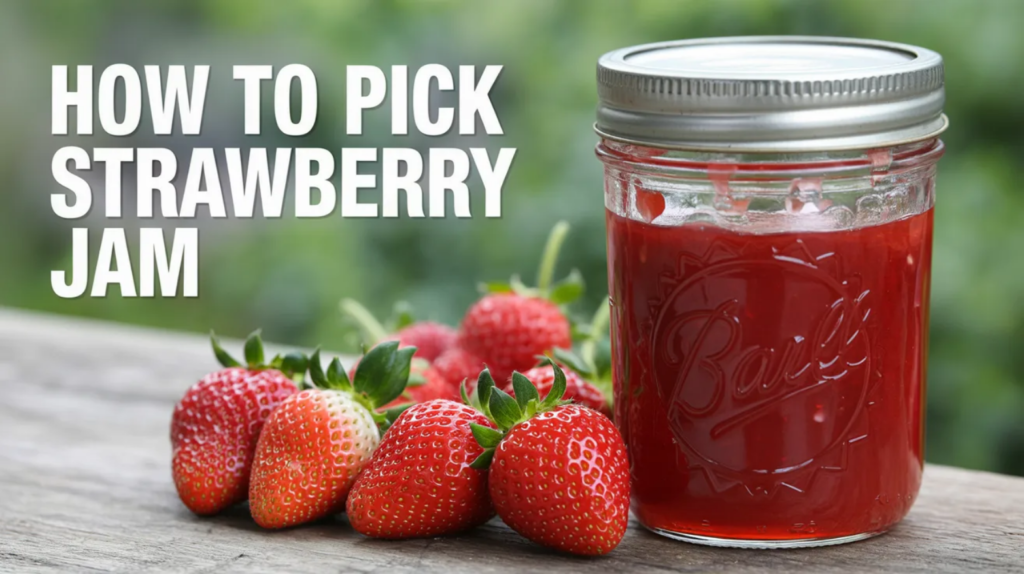
For shoppers in Britain, the best way to buy well is not just to look at the brand name. Texture, fruit percentage, sweetness, seed content, jar size, and intended use all make a noticeable difference once the jar is opened.
Start with the type of strawberry jam you actually want
A common mistake is treating all strawberry jam as interchangeable. On supermarket shelves, it is often sold in a few slightly different styles, even when the front label looks broadly similar.
Some jars are smooth and easy-spreading, made for everyday breakfasts and children’s sandwiches. Others are closer to a preserve, with softer strawberry pieces and a looser, fruitier feel. There are also reduced sugar versions, organic options, and premium recipes marketed as extra fruit or extra jam.
If you already know how you want to use it, the choice becomes easier. A smooth strawberry jam is usually better for neat spreading and cake fillings, while a chunkier jar may suit scones or toast where texture matters more.
Check the fruit content, not just the flavour name
Nearly every jar in the category says strawberry on the front, but the amount of fruit used can vary. This is one of the clearest differences between a cheaper everyday jam and a more premium one.
Higher fruit content often gives a fuller strawberry taste and a less purely sugary finish. That does not automatically make one jar better than another, because some shoppers prefer the familiar sweetness of a standard breakfast jam. Still, fruit percentage is one of the most useful label details when you want a stronger fruit-led product.
In practice, this matters most if you dislike jams that taste more sweet than fruity.
Pay attention to texture through the jar and the wording
Strawberry jam is one of the easier products to judge visually because the colour and consistency are often quite visible through the glass. A firmer, more uniform jar usually points to a smoother set. A softer-looking jar with visible fruit pieces may be closer to a preserve style.
The wording helps too. Terms such as “seedless”, “extra fruit”, “preserve”, or “reduced sugar” often signal a change in texture as much as a change in recipe.
This is worth checking because strawberry jam is used in different ways around the home. A cake filling usually needs an even spread. A breakfast topping may benefit from more fruit texture.
Sweetness level changes the whole experience
Some strawberry jams are designed to taste bright, sweet, and familiar. Others are balanced to let the fruit come through more clearly. Neither approach is wrong, but they suit different shoppers.
For everyday family use, a sweeter jam often works well because it feels predictable and broadly appealing. For adults who want something less sugary on toast or croissants, a jar with higher fruit content or a reduced sugar recipe may feel more balanced.
The key point is that sweetness is not a minor detail. It changes whether the jam tastes like a basic cupboard staple or a more fruit-forward spread.
Think about who will be eating it
A jar bought for a household with young children is often chosen differently from one bought for personal preference or serving to guests. Smooth texture, classic sweetness, and a standard mid-priced jar usually make sense for general family use.
By contrast, if the jam is mainly for weekend breakfasts, scones, or a gift hamper, shoppers may care more about visible fruit, premium packaging, or a more traditional-style recipe.
That is where context matters. The “best” strawberry jam is often the one that matches the household, not the one with the most expensive label.
Jar size is more important than it seems
Strawberry jam is sold in a range of jar sizes in UK supermarkets, from smaller premium jars to larger value or family-size options. This affects both cost and practicality.
A larger jar can offer better value if the jam is eaten regularly. A smaller jar may make more sense if you like to rotate flavours, prefer premium ranges, or only use jam occasionally for baking.
This also affects freshness once opened. A big jar is not always better value if it sits in the fridge for too long after opening.
Own-brand and branded jars are not always trying to compete directly
In the UK, supermarket own-brand strawberry jam often covers more than one tier. A value line may focus on price and sweetness, while a premium own-brand jar may aim for more fruit, better texture, or a more traditional feel.
Branded strawberry jams often compete on familiarity, consistency, or specific style. Some are known for a very smooth set, while others build their identity around fruit content or a more recognisable breakfast flavour.
So the decision is not simply own-brand versus branded. It is often about which tier and style within those ranges fits your needs.
Reduced sugar and organic labels should be read carefully
Reduced sugar strawberry jam can be useful for shoppers who want a less sweet spread, but the texture may differ because sugar affects how jam sets. Some jars feel softer or slightly less glossy, and the flavour can be more obviously fruit-led.
Organic strawberry jam usually appeals to shoppers who prioritise ingredient sourcing and organic certification. It may also sit in a more premium part of the shelf, with smaller jars and simpler ingredient lists.
These labels can be useful, but they do not tell you everything on their own. It still helps to check fruit content, texture cues, and intended use.
Consider how you will use it at home
Buying for toast is not the same as buying for baking.
For toast, crumpets, or scones, texture and flavour are often the deciding points. For Victoria sponge, doughnuts, or thumbprint biscuits, a smoother jam is usually easier to work with and gives a neater finish.
That is why the best buying question is often not “Which strawberry jam is best?” but “What do I want this jar to do?”
What matters most on the shelf
When comparing strawberry jam in UK supermarkets, the most useful things to look for are:
- fruit content
- smooth versus chunky texture
- sweetness level
- seed content
- jar size
- price tier
- whether it is for breakfast, baking, or occasional use
These details usually tell you more than front-of-pack branding on its own.
Conclusion
Buying strawberry jam well comes down to matching the jar to the job. Some shoppers want a smooth, sweet, dependable spread for everyday breakfasts. Others want a fruitier, softer-set jar that feels more premium or more natural on the palate.
On UK supermarket shelves, the smartest comparison points are fruit content, texture, sweetness, and jar size. Once you look at those properly, choosing the right strawberry jam becomes much more straightforward.