
GroceriesReview.co.uk provides independent reviews and recommendations. Some pages contain affiliate links to Amazon.co.uk, and we may earn a commission when you make a qualifying purchase at no extra cost to you.
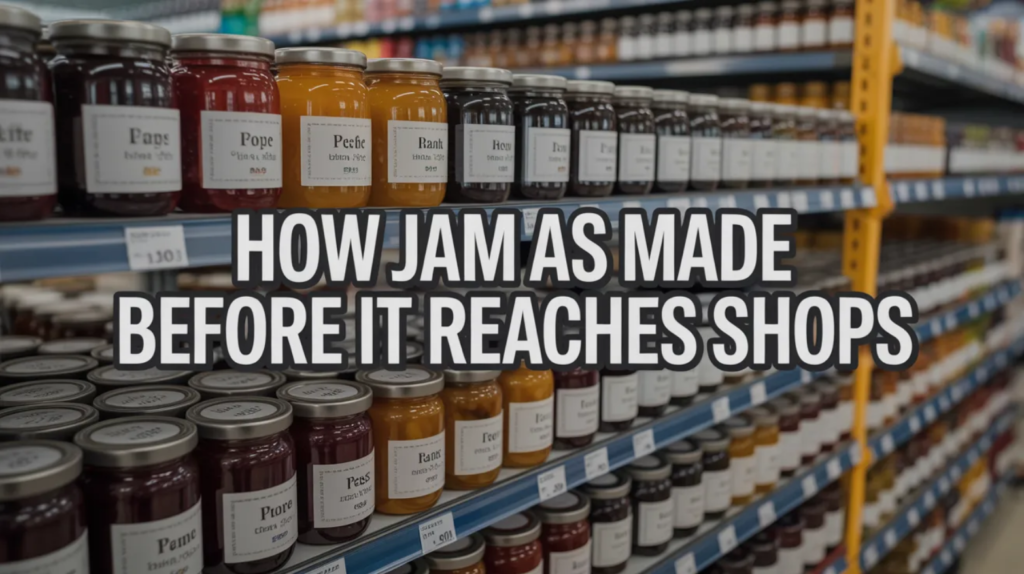
A jar of jam looks simple on the shelf, but quite a lot has already happened before it reaches a UK supermarket. By the time shoppers pick one up in the spreads aisle, the fruit has been selected, prepared, cooked, tested, packed, labelled, and moved through a supply chain designed to keep the product safe and consistent.
That process matters because jam is not just fruit in a jar. Its texture, sweetness, shelf life, and appearance all depend on how it is made long before it gets anywhere near a breakfast table.
It begins with fruit selection
Jam production starts with the fruit itself. Manufacturers choose fruit according to flavour, ripeness, colour, and how well it will hold up during cooking. Different fruits behave differently, so the starting point is not the same for every recipe.
Strawberries, raspberries, blackcurrants, apricots, and oranges all bring different levels of water, acidity, natural pectin, and softness. Those differences affect how much sugar is needed, how firmly the jam will set, and how intense the finished flavour will be.
In practice, that means jam-making is not just one standard process repeated for every variety. The recipe has to suit the fruit.
The fruit is prepared before cooking
Before anything is boiled down, the fruit usually needs sorting and preparation. This can include washing, trimming, peeling, destoning, or removing damaged pieces. For some jams, the fruit is crushed or chopped. For others, larger pieces may be kept so the final product has more texture.
At this stage, consistency matters. A factory making jam for supermarket sale needs the finished jars to be as uniform as possible across the batch. Shoppers expect one jar of raspberry jam to be much the same as the next, especially in large branded or own-brand ranges.
So preparation is not only about cleanliness. It is also about control.
Sugar is added for more than sweetness
Once the fruit is ready, it is cooked with sugar. Sugar is one of the most important parts of the process, and not just because jam is meant to taste sweet.
It also helps the jam set properly, supports preservation, and contributes to the glossy, thick texture shoppers expect. Without enough sugar, many jams would taste looser, feel less stable, and keep less well once packed.
This is one reason different jam types can behave differently. Reduced sugar products often need recipe adjustments because sugar normally plays such a large structural role.
Pectin helps create the set
Pectin is another key part of jam-making. It is a natural substance found in fruit, and it helps create the gel-like set that turns cooked fruit into a spread rather than a sauce.
Some fruits contain plenty of natural pectin. Others contain less, so extra pectin may need to be added during production. The balance between fruit, sugar, acidity, and pectin is what gives jam its final consistency.
If that balance is off, the product may end up too runny or too stiff. For supermarket jars, that is a major quality issue because shoppers expect jam to spoon and spread in a familiar way.
Cooking concentrates the flavour
As the fruit mixture cooks, water reduces and the flavour becomes more concentrated. This stage changes the product quite dramatically. Fresh fruit starts turning into something thicker, darker, sweeter, and more shelf-stable.
The cooking process also affects colour and texture. If the batch is cooked carefully, the fruit flavour stays clearer and the appearance remains appealing. If it is overcooked, the jam can lose brightness and taste more heavy than fresh.
That is why manufacturers monitor heat and timing closely. The aim is not simply to boil the mixture. It is to reach the right set while keeping the fruit character intact.
The mixture is tested before filling
Before the jam goes into jars, manufacturers usually check it for consistency, sweetness, temperature, and overall set. This helps ensure the product meets the expected standard for that recipe.
For supermarket supply, this step is especially important. Retailers want reliable products that look right on the shelf and perform as expected once opened at home. A jam that is too thin, too thick, or uneven in fruit distribution is more likely to disappoint shoppers and generate complaints.
Testing is part of what turns jam from a homemade-style product into a repeatable commercial one.
Jars are filled while the product is still hot
Once the jam is ready, it is filled into jars, usually while still hot. This helps with hygiene, flow, and shelf stability. The jars are then sealed with lids so the product stays protected during storage and transport.
Glass remains the most familiar packaging for jam in the UK because it suits the product well. It keeps the contents visible, preserves flavour effectively, and gives shoppers an easy way to judge colour and texture before buying.
At this point, the jam is beginning to look like the product people recognise on supermarket shelves, but it still has more stages to pass through.
Cooling, sealing, and safety checks come next
After filling, jars are cooled and checked. The seal must be secure, the lid must fit properly, and the product must remain safe throughout its shelf life. Labels, batch codes, and date markings are also added so the jars can be tracked and sold correctly.
This side of production is easy to overlook, but it is a major part of how jam reaches shops in saleable condition. A well-made jam still needs sound packaging and clear labelling if it is going to work as a retail product.
For UK shoppers, details such as ingredients, storage guidance, and best-before information all come from this stage of the process.
The product is packed for distribution
Once labelled and packed, jars are boxed and moved into distribution. From there, they are sent to warehouses, supermarket depots, and eventually individual shops.
This part is less about recipe and more about logistics. Jam is a shelf-stable grocery item, which makes it easier to transport than chilled products, but it still needs careful handling. Broken jars, damaged lids, or torn labels can all affect whether the product makes it onto the shelf.
By the time a jar arrives in a supermarket, it has moved through a fairly controlled chain designed to preserve both quality and presentation.
Why supermarket jam feels so consistent
Commercial jam production is built around repeatability. That is why a jar bought this month is usually very similar to one bought earlier, especially from the same brand and range.
Manufacturers work to keep fruit content, sweetness, colour, and texture within a narrow standard. Own-brand supermarket lines do the same, because consistency is part of what shoppers are buying. Even when one season’s fruit differs slightly from another, the finished jar is meant to feel familiar.
That consistency is one of the biggest differences between supermarket jam and small-batch homemade jam.
Homemade and shop-bought jam are not made in quite the same way
Homemade jam is often made in smaller quantities, with more variation from batch to batch. The fruit may be riper, the texture looser, the set softer, or the sweetness adjusted to personal taste.
Shop-bought jam, by contrast, is designed for scale. It must survive transport, sit on shelves for longer, meet labelling rules, and deliver a predictable result every time.
Neither approach is automatically better. They simply serve different purposes. Homemade jam often feels more individual, while supermarket jam is built for reliability, convenience, and broad appeal.
Conclusion
Before jam reaches shops, it goes through much more than a simple cooking stage. Fruit is selected and prepared, sugar and pectin are balanced, the mixture is cooked and tested, then the finished product is filled into jars, sealed, labelled, and distributed.
For UK shoppers, all of that work shows up in the final jar as texture, flavour, shelf life, and consistency. So although jam may look straightforward on the shelf, the process behind it is carefully managed from the first fruit preparation stage right through to the supermarket aisle.