
GroceriesReview.co.uk provides independent reviews and recommendations. Some pages contain affiliate links to Amazon.co.uk, and we may earn a commission when you make a qualifying purchase at no extra cost to you.
Dried beans and tinned beans serve the same broad purpose in a UK kitchen, but they are not simply two versions of the same product. They differ in preparation time, texture, shelf use, convenience, and the level of control the shopper has once the pack is opened.
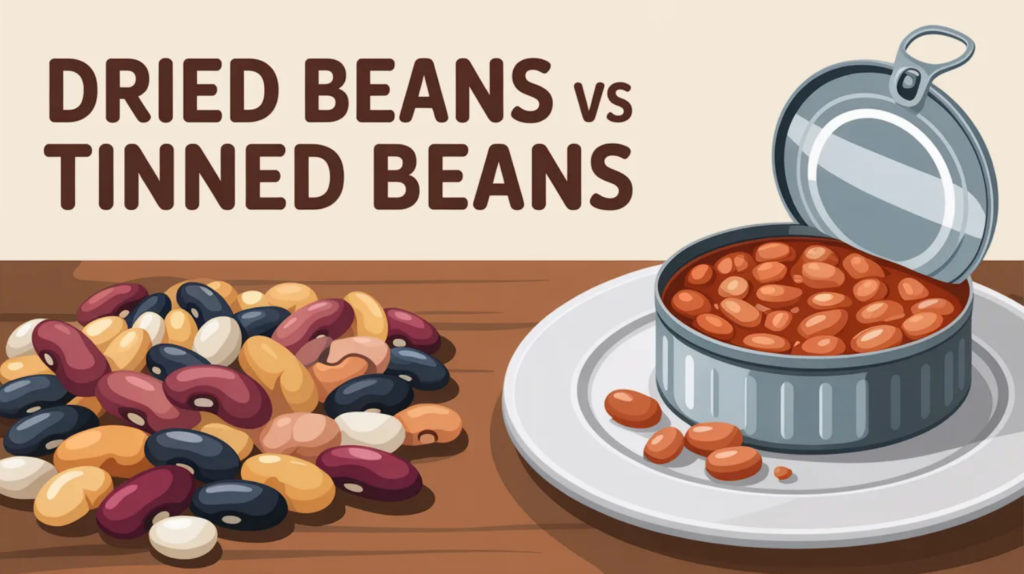
That is why the choice between dried and tinned beans usually comes down to how you cook and shop rather than which format is supposedly better in general. One suits planning and batch cooking. The other suits speed and everyday convenience.
The simplest distinction
Dried beans are raw beans that still need soaking or cooking before they can be eaten, depending on the type. They are usually sold in bags and kept in the cupboard for long-term storage.
Tinned beans have already been cooked and preserved in liquid, so they are ready to use after draining and rinsing in most cases. In UK supermarkets, this is the format many shoppers buy most often because it removes nearly all of the preparation time.
Time is the biggest difference
If speed matters, tinned beans are the easier option by a wide margin. They can go straight into soups, stews, salads, or sauces with very little work. A tin of kidney beans, for example, is usually bought precisely because it can be opened and used on the same day without any advance planning.
Dried beans ask more from the cook. Some need soaking, many need a longer simmer, and the whole process is less suited to last-minute meals. That extra time is not a flaw, but it does make dried beans a different kind of cupboard ingredient.
Texture is not quite the same
The texture gap matters more than many people expect. Tinned beans are cooked during processing, so they are usually softer from the outset. That softness is convenient, especially for quick chilli, soups, and one-pan meals, but it can also mean the beans split more easily if stirred too much or cooked for too long.
Dried beans often give a firmer, more controlled result once cooked properly at home. Because the cooking happens in your own pan rather than in the factory process, there is more room to decide whether you want the beans very soft or still holding a bit of shape.
This is one reason some people prefer dried beans for dishes where the beans are meant to stay distinct rather than blend into the background.
The shopping habit is different too
Tinned beans fit routine supermarket buying in a very straightforward way. They are easy to stack, quick to use, and reliable for a midweek meal. Many UK households keep a few tins on hand because they work without much thought.
Dried beans tend to be bought more deliberately. They appeal to shoppers who batch cook, plan ahead, or use beans often enough to make the longer preparation worthwhile. A bag of dried beans can also feel more flexible in portioning, since you cook only what you need rather than opening a full tin.
Shelf life works differently depending on whether the pack is open
Before opening, both formats keep well in the cupboard, although dried beans are especially associated with long storage. Tins are also shelf-stable for a long time, which is part of their supermarket appeal.
The difference shows up once the product is in use. A bag of dried beans can simply be resealed and put back in the cupboard. An opened tin needs transferring or covering and then refrigerating. That makes dried beans easier to store between uses, while tinned beans are easier to use immediately.
Cost is not always as obvious as it looks
Dried beans often look better value by weight, especially for people who cook them regularly. You are paying for the raw ingredient rather than for the cooking and preserving process.
Tinned beans, though, are often better value in practical terms for shoppers who prioritise speed, smaller portions, or less preparation. Paying a little more for convenience can make perfect sense if it means the beans actually get used.
So the cheaper format on paper is not always the more useful one in an ordinary weekly shop.
The format can shape which beans people buy
Some beans are far more visible in tins than in dried form in mainstream UK supermarkets. Kidney beans, black beans, butter beans, and cannellini beans are often bought cooked and tinned because that is how they are most commonly displayed and used.
By contrast, some pulses are regularly bought dried because the format already suits the way they are cooked. Shoppers comparing beans with pulses will notice that dried chickpeas are still easy to find, especially in larger stores and world foods sections, even though tinned chickpeas remain popular for convenience.
That supermarket pattern shapes behaviour. People often buy whichever format is easiest to find and easiest to fit into the meals they already make.
One is not replacing the other
It is tempting to treat tinned beans as a shortcut version of dried beans, but that is slightly too simple. They overlap, but they do not always behave identically in cooking. A slow-cooked dish made from dried beans can end up with a different firmness and feel from the same dish made with tinned ones added near the end.
Even so, both formats have a clear place in UK kitchens. Tinned beans suit quick meals, emergency cupboard cooking, and shoppers who want less preparation. Dried beans suit more hands-on cooking and anyone who wants greater control over texture and portioning.
Which format makes more sense for most shoppers?
For many households in Britain, tinned beans are the more practical everyday choice because they reduce effort and fit the pace of a normal supermarket shop. They are especially useful for quick lunches, traybakes, stews, and bean-based dinners that need to come together without much notice.
Dried beans make more sense when cooking is planned in advance, when larger quantities are needed, or when the cook wants the beans prepared to a more exact texture. They are not harder to understand, but they do require more intention.
Conclusion
Dried beans and tinned beans differ less in what they are and more in how they fit into everyday cooking. Dried beans offer more control, more preparation, and often better value by weight. Tinned beans offer speed, convenience, and a format that suits the way many UK shoppers cook during the week.
The better choice depends on what matters more in your kitchen: planning and texture, or speed and ease.