
GroceriesReview.co.uk provides independent reviews and recommendations. Some pages contain affiliate links to Amazon.co.uk, and we may earn a commission when you make a qualifying purchase at no extra cost to you.
Orzo often gets mistaken for rice at first glance. In a packet, it looks small, neat, and grain-like, which makes it stand out from more obvious pasta shapes such as penne, fusilli, or spaghetti. On UK supermarket shelves, that visual difference is exactly why shoppers sometimes hesitate over it. It sits within the pasta category, but it does not immediately look like what many people expect pasta to look like.
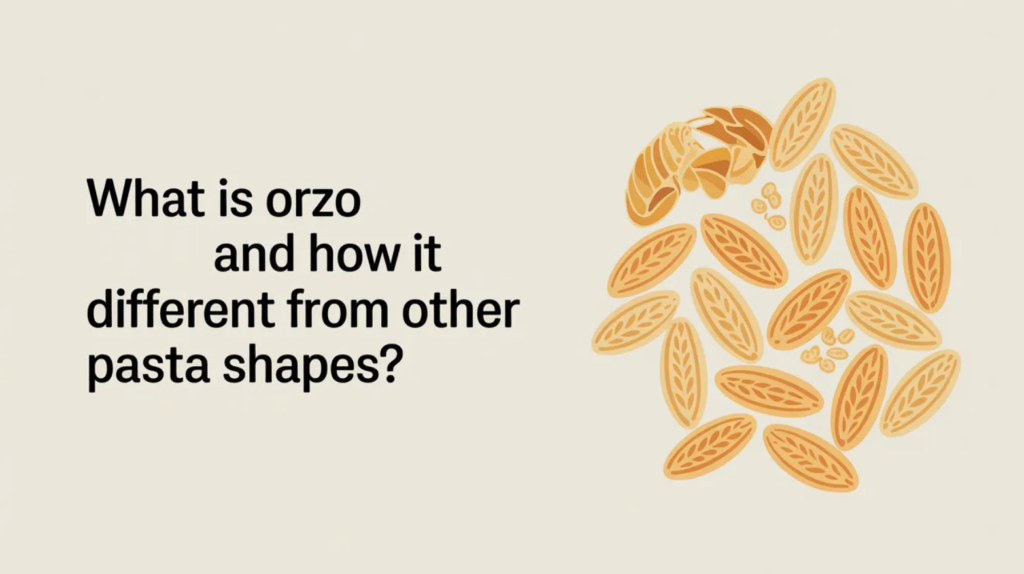
The simple answer is that orzo is a small wheat pasta shape made to resemble a grain of rice. What makes it different from other pasta shapes is not only its size, but also the way it is used. It can work in soups, traybakes, salads, and side dishes in a way that feels closer to rice or small grains, even though it is still pasta.
Why orzo looks different straight away
Most pasta shapes make their identity obvious. Spaghetti is long, macaroni is curved, and penne is tubular. Orzo does something different. It is tiny, oval-shaped, and much more compact, which changes how shoppers read it on the shelf and how it behaves in the pan.
That smaller shape gives orzo a very different role from larger pasta types. Instead of becoming the main visual element in a bowl, it blends into the dish more closely. This is one reason Orzo is often chosen for soups and lighter pasta dishes where the texture needs to feel smaller and more evenly distributed.
Orzo is still pasta, not a grain
Although it resembles rice, orzo is usually made in the same broad way as standard dried pasta sold in UK supermarkets. Traditional versions are typically made from durum wheat semolina and water, which places it firmly in the pasta category rather than the rice or grain category.
That matters because shoppers sometimes assume orzo will cook or taste like rice. It does not. The texture is still recognisably pasta-like, with a soft but slightly springy bite when cooked properly. The main difference is that the shape makes the pasta feel finer and less dominant in the dish.
The size changes how it works in meals
With larger pasta shapes, sauce usually sits on the outside, inside tubes, or around twists and folds. Orzo behaves differently because the pieces are so small. Rather than each shape carrying sauce individually in a visible way, the whole dish tends to come together more as one mixture.
This makes orzo especially useful when a meal needs to feel loose, spoonable, or evenly combined. In soup, it spreads through the broth rather than sitting as separate pieces. In a salad, it mixes easily with vegetables, herbs, and dressings. In a traybake or side dish, it can absorb surrounding flavour in a more uniform way than larger pasta shapes.
It does not replace every pasta shape
One reason orzo stands apart is that it is not a direct substitute for the shapes most UK shoppers use for pasta sauces. If someone wants a pasta bake, penne is usually more practical. If they want a twirlable bowl of pasta, spaghetti makes more sense. If they want a shape that traps sauce in spirals, fusilli is the clearer choice.
Orzo is not built for those jobs. It is better understood as a pasta shape for dishes where the texture needs to be smaller, neater, and more blended. The result is less about bold shape and more about overall consistency across the dish.
Where orzo fits on UK supermarket shelves
In British supermarkets, orzo is usually sold as a dried cupboard product in the pasta aisle rather than beside rice. That shelf position helps clarify what it is, although the shape still causes confusion for shoppers who have not bought it before.
It is not always stocked as widely as spaghetti or penne, especially in smaller convenience-format branches. Larger supermarkets, premium own-label lines, and online grocery ranges are more likely to carry it consistently. When it does appear, it is often grouped with other specialist or less common dried pasta shapes rather than with the core family staples.
Cooking orzo feels different from cooking larger pasta
Cooking orzo is straightforward, but the experience is not quite the same as boiling larger shapes. Because the pieces are so small, the pasta can move more like a grain in water and can be drained through a finer colander more carefully than larger pasta shapes.
Its cooking time is also typically quite short, and the final texture can shift quickly from firm to too soft if left too long. This matters more with orzo because the shape is already delicate. Overcooked orzo can lose the light, defined texture that makes it useful in soups and mixed dishes.
Some shoppers also cook it more like a grain or risotto-style product in certain recipes, allowing it to absorb liquid gradually. That is another feature that separates it from standard long or tube-shaped pasta.
Why shoppers choose orzo instead of other pasta shapes
In practice, UK shoppers usually pick orzo when they want pasta that does not dominate the meal visually. It works well when the dish needs to feel lighter, more compact, or easier to spoon rather than fork in large strands or chunks.
That makes it useful for:
- soups
- pasta salads
- side dishes
- traybakes
- lighter one-pan meals
Those uses explain why orzo often appeals to shoppers looking for something more flexible than traditional pasta shapes without leaving the pasta category altogether.
A shape that sits between pasta and grain-style cooking
What makes orzo distinctive is that it sits in an unusual middle ground. It is clearly pasta in ingredients and category, but its shape gives it some of the practical appeal of rice and other small grains. That is why it often appears in meals where standard pasta would feel too large or too obvious.
For UK shoppers, that difference is usually the most helpful way to think about it. Orzo is not just “small pasta”. It is a shape chosen for a different texture, a different look on the plate, and a different role in the meal.
Final thoughts
Orzo is a small pasta shape made to look like rice, but it behaves like pasta in cooking and texture. Its main difference from other pasta shapes is its size and the way it blends into soups, salads, and mixed dishes rather than standing out as the main structural element.
That is why orzo feels different from shapes such as spaghetti, penne, or fusilli on supermarket shelves and in everyday cooking. It belongs firmly in the pasta aisle, but it fills a more specific role than the larger, more familiar shapes most shoppers buy every week.