
GroceriesReview.co.uk provides independent reviews and recommendations. Some pages contain affiliate links to Amazon.co.uk, and we may earn a commission when you make a qualifying purchase at no extra cost to you.
The difference between wholewheat pasta and white pasta starts long before the pan. On a UK supermarket shelf, the two can sit side by side in almost identical shapes, yet they are made from different forms of wheat flour and give a noticeably different result once cooked. One tends to look darker, taste nuttier, and feel firmer. The other is paler, milder, and usually closer to what most shoppers think of as standard pasta.
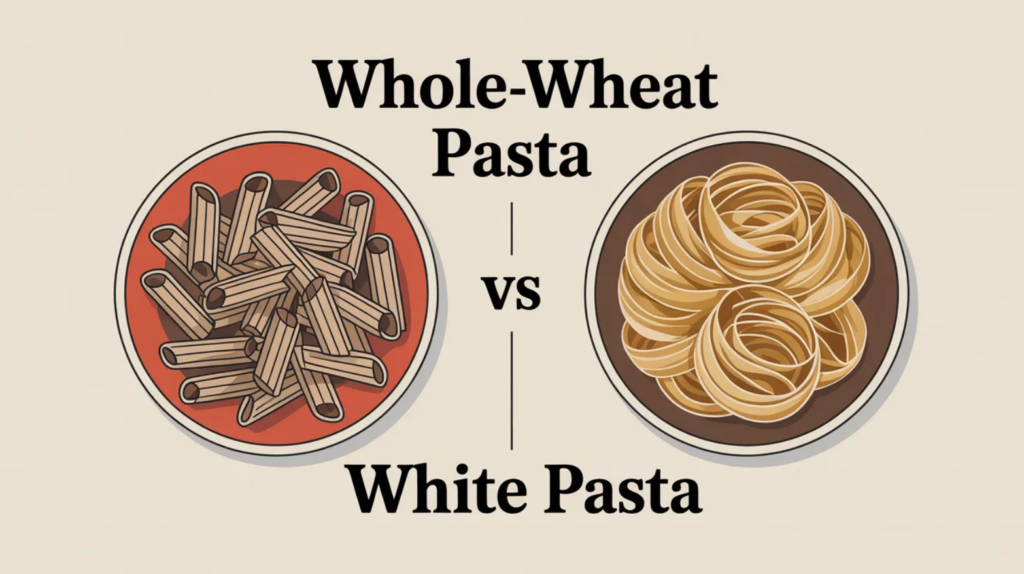
In simple terms, wholewheat pasta keeps more of the grain, while white pasta uses more refined flour. That single change affects colour, flavour, texture, and the way many shoppers choose between them.
The key difference is in the flour
White pasta is usually made from more refined wheat, most commonly durum wheat semolina in dried supermarket pasta. That refinement gives it a cleaner, lighter appearance and a more neutral flavour.
Wholewheat pasta uses more of the wheat grain rather than removing as much during processing. Because more of the grain remains, the pasta keeps a darker brown colour and a fuller grain taste. This is why wholewheat pasta looks and feels different even when the shape is exactly the same as the white version beside it.
For UK shoppers, that matters because the choice is not just about appearance. It changes the character of the meal.
The flavour is usually the first thing people notice
White pasta has a milder taste. It is often chosen because it lets the sauce take centre stage and does not bring much flavour of its own beyond the usual wheat base.
Wholewheat pasta is more distinctive. It tends to have a nuttier, slightly earthier flavour, which some shoppers prefer and others find heavier than standard pasta. The difference is often easiest to notice in simple dishes where the sauce is not overpowering.
This makes the comparison less about better or worse and more about how much you want the pasta itself to be part of the flavour.
Texture separates them just as clearly
Even before sauce is added, the mouthfeel tends to change between the two.
White pasta usually cooks to a smoother, more familiar bite. It is often softer on the outside while still holding some firmness in the centre if cooked well. That texture is one reason it remains the default choice across UK supermarkets.
Wholewheat pasta often feels firmer and slightly rougher. It can seem denser, especially in shapes such as penne or spaghetti, and some shoppers find it more substantial in everyday meals. That firmer texture is part of its appeal, but it also means it does not always behave exactly like white pasta in the pan.
They do not always pair with sauces in the same way
Because white pasta is more neutral, it works easily across almost every type of sauce sold in UK supermarkets, from basic tomato sauces to creamier jarred options and richer pasta bakes.
Wholewheat pasta can still be used in the same meals, but the stronger flavour and firmer bite can make the dish feel slightly different. In practice, it often suits sauces that can stand up to that extra grain flavour rather than being overshadowed by it.
The result is subtle rather than dramatic, but it is enough to matter if a shopper is expecting wholewheat pasta to taste exactly like standard white pasta.
The supermarket context is slightly different too
White pasta is still the mainstream default in Britain. It usually has the widest range of shapes, brands, pack sizes, and price points. In most supermarkets, it dominates the pasta aisle.
Wholewheat pasta is common enough to be a regular line in larger shops, but the range is usually narrower. Shoppers are more likely to find it in staple shapes such as spaghetti and penne than in every specialist shape sold in white pasta. That tells you something about demand. Wholewheat pasta is firmly established, but it is still usually treated as an alternative version of the core range rather than the centre of the category.
Wholewheat does not mean gluten-free
This is one point that can confuse shoppers on the shelf.
Wholewheat pasta and white pasta are both usually wheat-based. The difference is how much of the grain remains in the flour, not whether the wheat is removed. So wholewheat pasta is still not suitable for someone looking for a gluten-free product unless the packaging specifically says otherwise.
That distinction matters because wholewheat and gluten-free products can both appear as alternatives to standard pasta, yet they solve completely different shopping needs.
Cooking can need a little more attention
White pasta is often very predictable to cook, especially in familiar supermarket own-label ranges. The timing on the pack usually produces the expected texture with little adjustment.
Wholewheat pasta can be slightly less forgiving if overcooked, because the firmer grain structure is part of what defines it. Many shoppers find it best to check the texture a little before the full pack time rather than assuming it will behave exactly like the white version.
This is not a major difficulty, but it is one of the practical differences that becomes clearer once the product is in use rather than on the shelf.
Which one are UK shoppers usually choosing?
White pasta is usually chosen for familiarity, versatility, and broader household appeal. It fits most sauces easily, works in almost any pasta dish, and is the version many families buy without much thought.
Wholewheat pasta is more often chosen by shoppers who prefer its flavour, want a firmer texture, or simply want something less refined than standard white pasta. It is still pasta for the same kinds of meals, but the eating experience is slightly more robust.
So the choice is often less about replacing one category with another and more about deciding which style of pasta suits the household better.
Final word
Wholewheat pasta and white pasta are close relatives on the supermarket shelf, but they are not identical once cooked. White pasta is lighter in colour, milder in flavour, and more neutral in everyday dishes. Wholewheat pasta is darker, firmer, and more grain-forward, which changes both taste and texture.
For shoppers in the UK, the most useful way to think about the difference is this: white pasta is the standard baseline, while wholewheat pasta is the sturdier, more distinctive alternative.