
GroceriesReview.co.uk provides independent reviews and recommendations. Some pages contain affiliate links to Amazon.co.uk, and we may earn a commission when you make a qualifying purchase at no extra cost to you.
On a supermarket shelf, fusilli and penne can look like two everyday dried pastas doing much the same job. In practice, they behave quite differently once sauce is involved. The shape of the pasta changes where the sauce sits, how evenly it spreads, and whether it clings to the pasta itself or gathers in pockets.
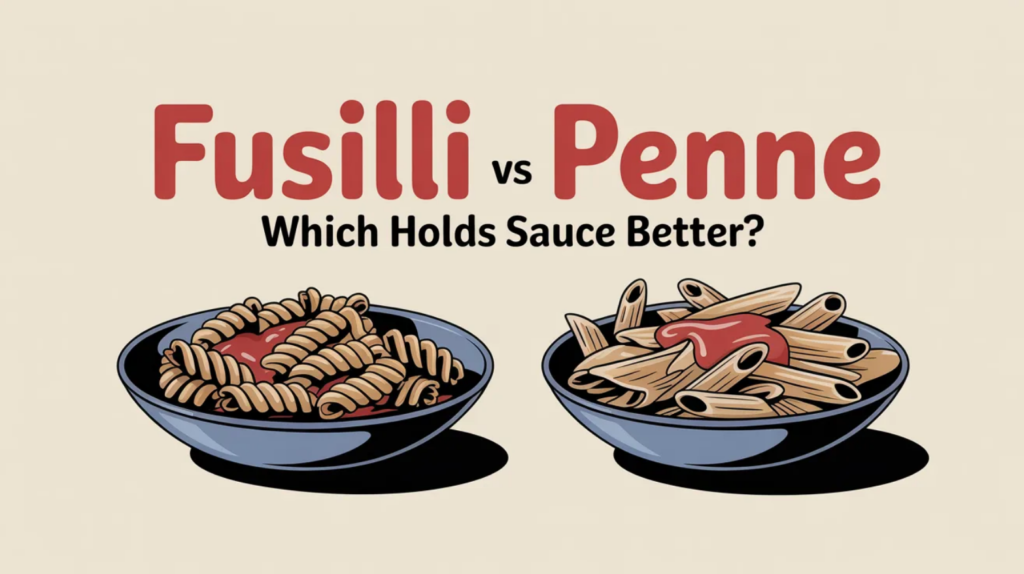
The clearest answer is that neither shape wins in every situation. fusilli usually holds smoother sauces more evenly because the spirals catch and spread sauce across the whole shape, while penne often handles thicker, heavier sauces better because the ridged tubes can hold sauce both outside and inside.
The real difference comes from the shape, not the ingredient
In UK supermarkets, standard dried fusilli and penne are usually made from very similar ingredients, most often durum wheat semolina and water. That means the main difference is not what they are made from but how the shape interacts with sauce.
Fusilli is built around twists and curves. Sauce gathers along the grooves and around the spiral, which helps create an even coating. Penne is built around short tubes, often with ridges. That gives sauce two places to settle: on the outer surface and inside the hollow centre.
So when shoppers ask which one holds sauce better, the more useful question is what kind of sauce they have in mind.
Fusilli is better at coating the whole dish
Fusilli works especially well when the aim is for every forkful to carry a similar amount of sauce. Because the pasta twists in on itself, smoother sauces can catch in the folds instead of sliding straight off.
That makes fusilli a strong choice for tomato sauces, pesto, creamy sauces without large chunks, and pasta salads where dressing needs to spread through the bowl rather than sit in one place. In those cases, the shape helps distribute sauce more consistently across the meal.
For UK shoppers buying pasta for quick midweek dinners, this is one reason fusilli appears so often in own-label family ranges. It is forgiving, versatile, and reliable with a wide mix of everyday sauces.
Penne is stronger with heavier sauces
Penne has a different advantage. The tube shape gives thicker sauces somewhere to sit, especially when there are visible pieces of onion, cheese, vegetables, or meat in the pan. Ridged penne, which is the version most commonly sold in UK supermarkets, adds even more grip on the outside.
This is where penne starts to feel sturdier than fusilli. Instead of coating the pasta in a spiral pattern, the sauce gathers around each piece and also slips into the centre. With thicker sauces, that can make the dish feel fuller and more structured.
A creamy chicken pasta, a tomato and vegetable bake, or a cheese-heavy sauce often suits penne better for that reason. The pasta does not just carry the sauce. It helps contain it.
Thin sauces and thick sauces do not behave the same way
This is the easiest way to separate the two shapes.
With a thin or smooth sauce, fusilli usually performs better because the curves help stop the sauce from slipping away too easily. A spoonful of pesto or a lighter tomato sauce tends to cling naturally to the twists.
With a thick or chunky sauce, penne often comes out ahead. The larger pieces in the sauce have more chance of catching on the tube shape, and the overall dish can feel more balanced because the pasta matches the weight of the sauce.
So the difference is less about which pasta is universally better and more about whether the sauce needs coating or catching.
Texture on the fork matters too
Another reason shoppers notice a difference is the way the sauce feels during eating.
Fusilli tends to give a more evenly dressed bite. The sauce wraps around the spirals, so each mouthful often tastes well combined. Penne feels more segmented. One piece may have sauce pooled inside, another may have it sitting along the ridges, and another may carry a chunk of ingredient against the side.
Neither effect is wrong. They simply create different types of pasta dish. Fusilli often feels more blended. Penne often feels more defined.
In pasta bakes, penne usually has the edge
Once the pasta goes into the oven, penne often becomes the more practical choice. Its shape holds up well during baking, portions neatly, and works naturally with thicker sauces and melted cheese.
Fusilli can still be used in a bake, and many UK households do use it that way, especially in simple family meals. Even so, penne generally gives a tidier and more robust result in baked dishes because the sauce sits comfortably around the tubes rather than settling unevenly between curls.
That is why pasta bake recipes and supermarket meal ideas often lean towards penne or similar tube shapes.
For cold pasta salads, fusilli often feels more useful
Cold dishes shift the balance the other way. Fusilli is especially good in pasta salads because dressings cling to the spirals and the shape mixes easily with vegetables, cheese, and light salad ingredients.
Penne can work in a cold dish as well, but it tends to feel heavier and less evenly coated when the dressing is light. Fusilli usually gives a better spread, which matters when the pasta is being served chilled and the sauce or dressing has less movement.
What this means when shopping in UK supermarkets
On UK supermarket shelves, both fusilli and penne are easy to find in value, standard, and premium ranges. The choice is rarely about availability. It is more about the meal you want to make.
If the sauce is smooth, light, or intended to coat everything evenly, fusilli is often the better buy. If the sauce is thick, chunky, cheesy, or heading for the oven, penne usually makes more sense.
That is also why many households keep both in the cupboard. They may look interchangeable at first, but they solve slightly different problems.
Which holds sauce better overall?
If the question is about even coating, fusilli usually wins. The spirals give sauce more places to grip, and that helps the dish come together smoothly.
If the question is about carrying a thick sauce with substance, penne often wins instead. The hollow centre and ridged outside make it better suited to heavier pasta sauces and bakes.
So the most accurate answer is this: fusilli holds lighter sauces better, while penne handles thicker sauces better.
Final word
Fusilli and penne are both dependable supermarket staples, but they do not hold sauce in quite the same way. Fusilli is better at spreading and gripping smoother sauces across the whole dish, while penne is better at catching weightier sauces and giving them structure.
For shoppers in Britain, the better choice usually depends less on the pasta aisle and more on what is happening in the sauce pan.