
GroceriesReview.co.uk provides independent reviews and recommendations. Some pages contain affiliate links to Amazon.co.uk, and we may earn a commission when you make a qualifying purchase at no extra cost to you.
Most bread doesn’t go bad because it’s low quality.
It goes bad because it’s stored the wrong way for how it was baked.
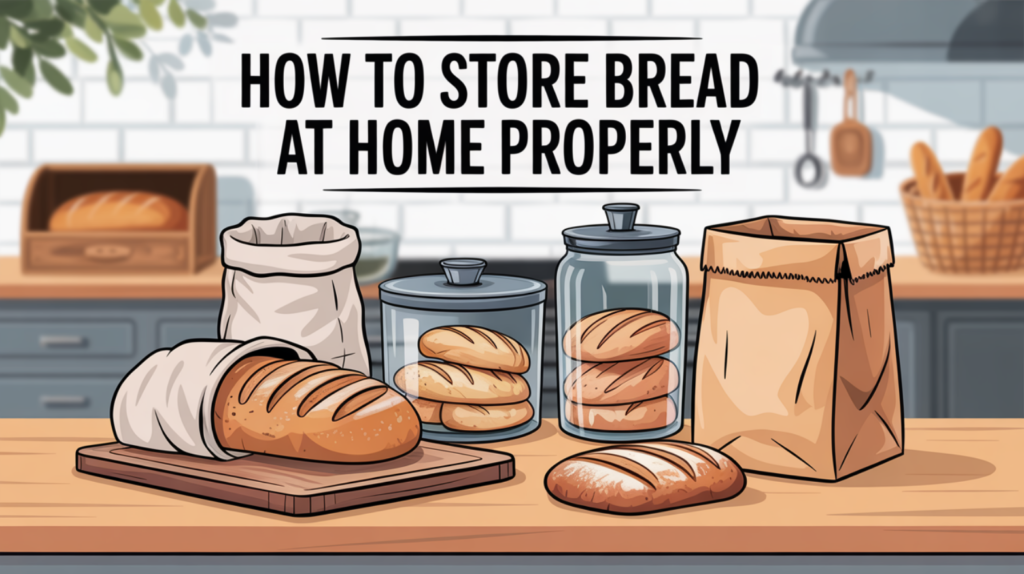
Different breads hold moisture differently. That means the same storage method that works for a soft sliced loaf can ruin an artisan one overnight. Once you understand that, bread stops going stale in your kitchen nearly as often.
This guide keeps it practical and UK-home friendly.
The core rule: store bread for its texture, not its label
Before thinking about cupboards or fridges, think about the loaf itself:
- Soft sliced loaves trap moisture easily
- Crusty / artisan loaves need air to protect the crust
- Dense breads (wholemeal, multigrain, sourdough) sit somewhere in between
That’s why the storage plan changes depending on whether you’re eating something like a soft white loaf for lunches or tearing into a chewy sourdough with soup.
Where most people go wrong
| Mistake | What it causes |
|---|---|
| Putting all bread in the fridge | Bread dries out faster |
| Leaving crusty loaves uncovered | Loaf goes rock-hard |
| Sealing artisan bread airtight immediately | Crust turns rubbery |
| Waiting too long to freeze | Half-stale bread in the freezer |
| Keeping bread near heat (kettle, oven) | Accelerated staling |
The right way to store each bread type
1. Soft sliced bread (white, brown, sandwich loaves)
Best home: Original bag, tightly closed
Location: Cool cupboard, away from heat
Shelf life: 3-5 days
These loaves already contain moisture-retaining ingredients. Your job is simply preventing moisture from escaping.
If your household goes through sandwiches quickly, loaves like everyday brown breads are easiest to manage because they hold softness well.
2. Wholemeal & multigrain bread
Best home: Bag or bread bin with light airflow
Location: Cupboard or counter
Shelf life: 2-4 days
Because these loaves are denser, they dry more slowly but feel stale sooner when they do. Many people freeze half on day one.
If multigrain is your daily loaf, freezing early saves waste, especially for heavier loaves similar to UK multigrain styles.
3. Artisan & crusty loaves
Best home: Paper bag or loosely wrapped cloth
Location: Counter, not sealed
Shelf life: 1-2 days (fresh texture), 3-4 days (still usable)
These breads need airflow so the crust stays crisp. Plastic makes the crust collapse.
If you’re buying artisan regularly, loaves like those described in this artisan bread guide behave best when allowed to breathe.
4. Sourdough
Best home: Wrapped loosely for first day, then freeze slices
Location: Counter then freezer
Shelf life: 2 days fresh, months frozen
Sourdough freezes beautifully. Slice it once it cools, freeze it, and toast from frozen whenever needed.
5. Gluten-free bread
Best home: Freezer
Location: Always frozen
Shelf life: Best quality from freezer
Gluten-free bread stales extremely fast at room temperature. Freezing is not optional if you want decent texture.
The freezer method that actually works
Freezing isn’t a last resort, it’s the secret weapon.
- Slice the loaf completely
- Stack slices in pairs with baking paper between
- Seal in freezer bag
- Toast directly from frozen
This method works for nearly everything, from sandwich bread to sourdough.
How to rescue bread that already feels stale
| Situation | Fix |
|---|---|
| Dry sliced bread | Toast it |
| Crusty loaf gone hard | Sprinkle with water, warm in oven |
| Artisan loaf rubbery | Toast or bake uncovered |
| Bread slightly stale | French toast or breadcrumbs |
Should bread ever go in the fridge?
Almost never.
The fridge speeds up starch crystallisation, which makes bread go stale faster. The only time it helps is in extreme heat and humidity, and even then, freezing is better.
A simple home system
If you want bread to stop going off:
- Keep one soft loaf in the cupboard
- Keep one flavour loaf (artisan / sourdough / multigrain) sliced in the freezer
- Buy crusty loaves only on days you plan to eat them
This keeps choice high and waste low.