
GroceriesReview.co.uk provides independent reviews and recommendations. Some pages contain affiliate links to Amazon.co.uk, and we may earn a commission when you make a qualifying purchase at no extra cost to you.
Walk into a UK supermarket and the bread aisle feels simple at first, white, brown, seeded, maybe a few “posh” loaves. But once you look closer, bread in the UK splits into clear types based on flour choice, fermentation style, shape, and how it’s meant to be eaten. Those differences matter because the “right” loaf depends less on what sounds healthy and more on what fits your meals, your taste, and how quickly your household finishes a loaf.
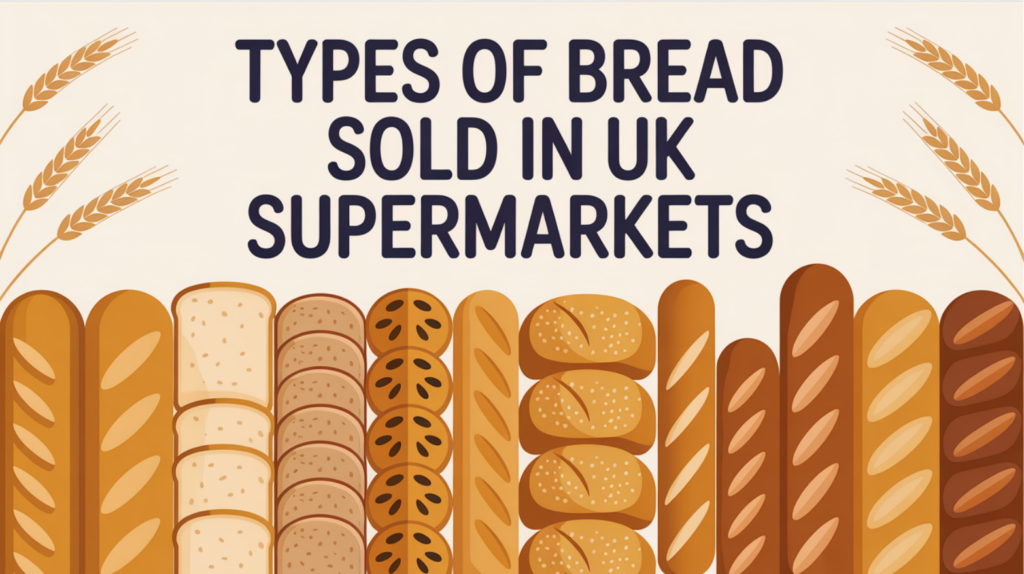
If you already keep a basic loaf for everyday sandwiches, the bread types below will help you choose a second loaf that brings either better toast, better flavour, or better texture, without wasting money on something that goes stale before you enjoy it.
1) White sliced bread (everyday soft loaf)
White sliced bread is built for convenience. The crumb is soft, the slices are uniform, and it’s easy for kids’ lunches and quick toast.
What it’s like: mild flavour, soft bite, fast to chew
Common uses: sandwiches, toast, quick snacks
What to watch for: if you want a softer daily option, it helps to compare different white bread picks sold in the UK because “white bread” ranges from airy and fluffy to slightly dense.
2) Brown bread (often wheat-based, darker loaf)
Brown bread usually sits between white and wholemeal in taste and texture. Some brown loaves are simply white flour with colouring or malted flavouring, while others have a higher wholegrain content.
What it’s like: slightly deeper flavour than white, still fairly soft
Common uses: everyday sandwiches, toast, general use
Best comparison point: if you’re shopping in this category often, UK brown bread options can differ more than people expect, especially in sweetness and softness.
3) Wholemeal bread (whole wheat flour)
Wholemeal bread uses whole wheat flour, which changes both texture and flavour. It tends to feel more filling and slightly nutty.
What it’s like: more “grain” taste, firmer crumb
Common uses: breakfast toast, hearty sandwiches
If you prefer a fuller bite: wholemeal bread choices are often better for people who want bread that feels like a proper part of the meal.
4) Multigrain bread (mixed grains, sometimes seeds)
Multigrain bread is about variety. It often includes grains like oats, rye, barley, or other cereals, and sometimes seeds. Two multigrain loaves can taste completely different, because “multigrain” is more a style than a strict recipe.
What it’s like: textured, often nutty, sometimes soft-slice
Common uses: toast, sandwiches, “upgrade” everyday bread
Helpful for choosing: multigrain bread in the UK works well when you want more character without going fully dense.
5) Seeded bread (seeds added for crunch and richness)
Seeded bread is popular because it makes even a plain topping feel more satisfying. Seeds add crunch and a toasted aroma, especially after warming.
What it’s like: richer mouthfeel, a bit more chew
Common uses: toast, soups, snack plates, open sandwiches
Who loves it: people who want texture and a more savoury finish
6) Sourdough (fermented flavour, chewy crumb)
Sourdough has a recognisable character: gentle tang, elastic chew, and a crust that can feel more bakery-style. Some supermarket sourdough is milder and sliced for convenience, while artisan loaves are crustier and more open in texture.
What it’s like: tangy, chewy, often crisp crust
Common uses: toast, soup, cheese boards, open sandwiches
When you want that bakery feel: good sourdough bread options in the UK vary a lot by style, so it helps to choose based on how you’ll use it.
7) Artisan-style loaves (bakery-style shape and crust)
“Artisan” in supermarkets usually signals a loaf that looks and eats more like bakery bread: a thicker crust, a less uniform crumb, and a stronger aroma.
What it’s like: crustier, less uniform, more flavourful
Common uses: tearing and sharing, soups, weekends
Good to know: “artisan” describes style more than ingredients, which is why it deserves its own breakdown later.
8) Sandwich loaves and soft rolls (built for fillings)
Some breads are specifically made to hold fillings neatly: sandwich loaves, soft baps, burger buns, and rolls. They tend to prioritise softness and shape consistency.
What it’s like: soft, structured, easy to bite
Common uses: packed lunches, burgers, quick meals
Best for: households that value speed and neatness
9) Toasting breads and thicker-cut loaves
Some loaves toast beautifully because the crumb structure stays soft while the outside crisps up. Thicker slices also hold butter better and resist drying out too quickly.
What it’s like: satisfying toast, often a sturdier slice
Common uses: breakfast, soups, “proper toast” evenings
Why it matters: a loaf that’s “fine” as a sandwich can be disappointing as toast, and vice versa.
10) Soda bread (quick bread, different texture)
Soda bread is often denser and more rustic, with a texture that feels different from yeast breads. It’s popular with soups, stews, and savoury meals.
What it’s like: firm, rustic, slightly crumbly
Common uses: soup nights, savoury spreads
Tip: it’s best when eaten fresh or toasted.
11) Gluten-free bread (different structure, different expectations)
Gluten-free bread isn’t just “normal bread without gluten.” It behaves differently because gluten is what gives bread its elastic structure.
What it’s like: softer, sometimes more fragile, often benefits from toasting
Common uses: toast, sandwiches with care
Why it matters: it deserves a separate guide because choosing it well is about texture and ingredients, not just labelling.
12) Wraps, thins, pittas, bagels, and flatbreads (bread alternatives)
UK supermarkets also stock plenty of bread-adjacent staples: wraps for quick lunches, bagels for sturdy fillings, pittas for easy pockets, and flatbreads for meals.
What it’s like: varies widely
Common uses: quick meals, packed lunches, sharing foods
Best mindset: choose by meal type, not by “health” marketing.
A simple way to choose the right bread type
If you want the choice to feel obvious, match the bread to the moment:
- Packed lunches: white, brown, sandwich loaves
- Toast-first homes: sourdough, seeded, thicker-cut loaves
- Soup + cosy dinners: artisan loaves, sourdough, soda bread
- Texture lovers: multigrain, seeded, rye-style breads
- Sensitive eaters: milder sliced breads, or gluten-free when needed
And if you’re trying to reduce waste, a loaf that freezes well is often the quiet winner, especially when the household doesn’t eat bread daily.