
GroceriesReview.co.uk provides independent reviews and recommendations. Some pages contain affiliate links to Amazon.co.uk, and we may earn a commission when you make a qualifying purchase at no extra cost to you.
Thickness is not a cosmetic choice, it controls crunch, flavour delivery, oil absorption, and the entire eating experience.
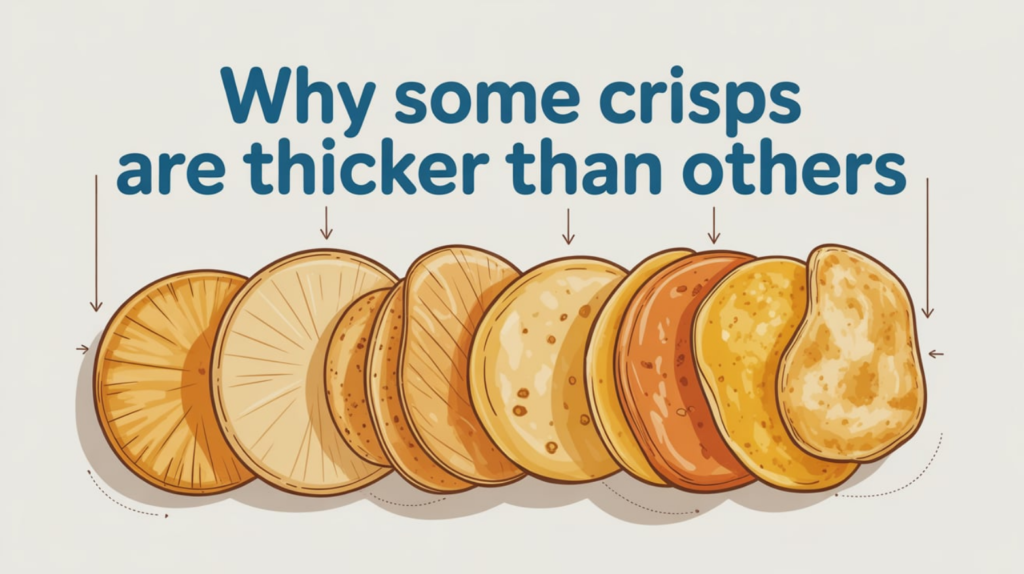
When you bite into different crisps, one of the first things you notice is thickness. Some shatter instantly, others deliver a slow, powerful crunch. That difference is the result of engineering decisions made long before seasoning is added.
Thickness Begins With the Slice
For potato-based crisps, thickness is defined at the cutting stage. Industrial slicing blades are calibrated to fractions of a millimetre. A slight change in blade setting transforms the final product completely.
Thin slices lose moisture rapidly, forming delicate, light crisps. Thicker slices retain more internal structure, producing deeper crunch and heavier mouthfeel.
How Thickness Changes Cooking Behaviour
Thicker crisps require longer cooking times. This extended exposure to heat allows sugars to caramelise more deeply and oil to penetrate differently, creating a richer flavour profile and darker colour.
That is why thicker styles often appear in premium snack ranges and are especially popular among people who prefer the bold texture found in deep-crunch styles.
Thickness Controls Oil & Flavour
Oil absorption increases with thickness. More oil means flavour compounds dissolve and linger longer on the tongue. This amplifies aroma and intensifies taste.
Thinner crisps, by contrast, release flavour quickly and fade just as fast, which is why many light snacks, including popped varieties, feel brighter but less rich.
Texture & Sound: The Psychology of Thickness
Thickness affects not only taste but sound. Thicker crisps fracture in slower, louder patterns that the brain interprets as “fresh” and “satisfying.” This auditory feedback is a major reason many people describe thick-cut crisps as more indulgent.
Why Brands Choose Different Thicknesses
Brands use thickness strategically to shape identity:
- Thin = light, fast snacking
- Medium = balanced crunch and flavour
- Thick = premium, bold, slow-eating experience
These design choices explain why baked snacks feel completely different from traditional products such as classic fried crisps, even when the ingredients are similar.
Final Thoughts
Crisp thickness is one of the most powerful tools in snack engineering. It shapes how the crisp cooks, how it absorbs flavour, how it breaks in your mouth, and how long the taste stays with you. Once you understand thickness, you stop choosing crisps randomly, and start choosing the exact experience you want.