
GroceriesReview.co.uk provides independent reviews and recommendations. Some pages contain affiliate links to Amazon.co.uk, and we may earn a commission when you make a qualifying purchase at no extra cost to you.
When a crisp is described as “popped,” it means it was cooked using heat and pressure to expand the ingredients, not fried in oil.
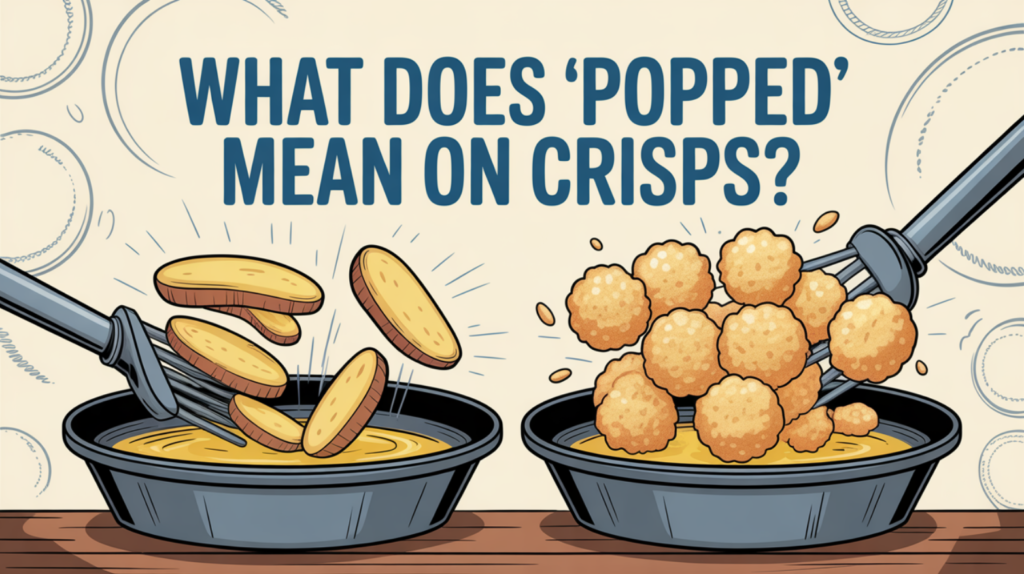
The word “popped” on crisp packaging refers to a production method known as expansion cooking. Instead of being sliced and submerged in hot oil, grains and starches are heated under pressure until their internal moisture rapidly expands. This causes the structure to puff outward, creating an airy, crunchy texture with far less oil.
How the Popping Process Works
Raw ingredients such as rice, corn, lentil flour, or chickpea flour are mixed into a dough and shaped into thin pieces. These pieces are then exposed to intense heat inside sealed chambers. When pressure is released, trapped moisture instantly expands, “popping” the structure into its final form.
The result is the light, crisp texture many people notice when comparing these snacks with traditional fried varieties.
Why Popped Crisps Feel Lighter
Because the structure is created by expanding air pockets instead of oil evaporation, popped crisps contain far less surface fat. This gives them a dry, clean crunch and prevents the heavy mouth-coating sensation associated with classic crisps.
This is also why shoppers who prefer delicate textures often gravitate toward options such as rice-based snacks rather than thick-cut or hand-cooked styles.
What Ingredients Can Be Popped?
Popping works best with starch-rich ingredients. Common bases include:
- Rice
- Corn
- Lentils
- Chickpeas
- Potato starch blends
Vegetable powders and seasonings are then added after expansion to build flavour without altering the crisp structure.
How Popped Affects Flavour Release
Popped crisps fracture differently in the mouth. Their fragile structure breaks quickly, releasing flavour immediately rather than gradually. This creates a fast, bright taste experience, the opposite of the slow flavour development you get with thick, dense crisps such as extra-crunchy styles.
Are Popped Crisps Healthier?
They are not automatically “healthy,” but they usually contain less fat and fewer calories per gram because little oil is used in the cooking process. This makes them popular among people seeking lighter snacks without sacrificing crunch.
Final Thoughts
“Popped” does not mean microwaved, baked, or fried, it describes a completely different physical transformation. The texture, flavour release, and mouthfeel of popped crisps come from pressure and expansion, not oil. Once you recognise that difference, the word on the packet becomes a powerful clue about the snack experience waiting inside.