
GroceriesReview.co.uk provides independent reviews and recommendations. Some pages contain affiliate links to Amazon.co.uk, and we may earn a commission when you make a qualifying purchase at no extra cost to you.
Crisp packaging is more than branding, it is a technical document that explains how your snack was built, cooked, and preserved.
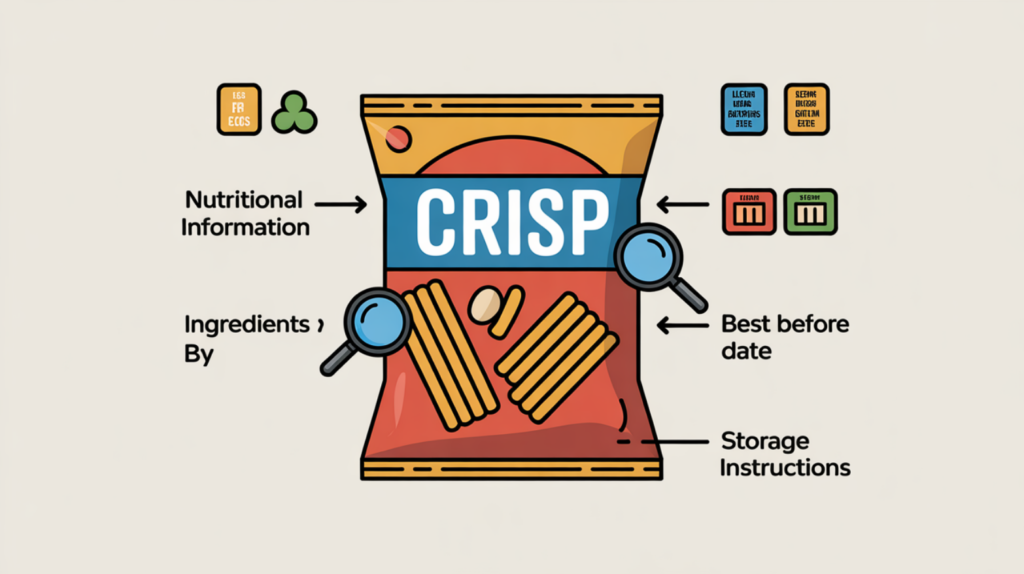
Every packet of crisps sold in the UK must communicate a surprising amount of information in a very small space. Once you know how to read that information correctly, you can understand not only what you are eating, but how it will taste, feel, and behave once opened.
The Front of Pack: What It Is Trying to Tell You
The front of a crisp packet is designed to trigger appetite and communicate identity. Key elements include:
- Brand name and product family
- Primary flavour description
- Cooking method indicators such as “baked,” “popped,” or “hand-cooked”
- Ingredient emphasis like “made from lentils,” “corn,” or “vegetables”
These claims give strong clues about texture and eating experience. For example, when a packet highlights “popped,” it usually signals a lighter, airier structure, something many people recognise when comparing such products with popped snack styles.
The Ingredient List: What the Crisp Is Really Made Of
UK regulations require ingredients to be listed in descending order by weight. The first three items usually define the entire snack.
For potato crisps this is often potatoes, oil, and seasoning. For modern alternatives it may be corn flour, rice flour, lentil flour, chickpea flour, vegetable powders, or seaweed.
If oil appears very high on the list, the crisp will feel richer and heavier on the palate, a sensation many people associate with traditional styles such as classic fried crisps.
Understanding Flavour Descriptions
Flavour names on packaging often combine real ingredients with flavour compounds. Terms such as “cheese flavouring,” “onion powder,” “yeast extract,” and “natural flavourings” indicate how savoury depth and aroma are built.
The order of flavour ingredients also matters: the earlier they appear, the more dominant that flavour note will be when you eat the crisp.
Nutrition Panel: How to Interpret the Numbers
The nutrition table shows values per 100g and per serving. The most important indicators for crisp texture and satisfaction are:
- Fat — higher fat usually equals richer mouthfeel
- Carbohydrates — drive crunch structure
- Salt — directly influences flavour intensity
Comparing these numbers explains why some crisps feel indulgent while others feel light and crisp.
Claims, Symbols & Marketing Language
Labels such as “gluten-free,” “vegan,” “no artificial colours,” and “suitable for vegetarians” reflect ingredient choices and processing methods. While these symbols do not automatically indicate taste quality, they often align with certain crisp categories and textures.
Why Texture Hints Matter
Words like “thick cut,” “ridged,” “kettle cooked,” and “extra crunchy” tell you how the crisp will fracture in your mouth. These cues are especially useful if you prefer bold textures like those found in deep-crunch varieties.
Expiry Dates & Storage Information
“Best before” dates reflect flavour stability, not food safety. Crisps remain safe after this date but gradually lose aroma and crunch as oils oxidise and moisture seeps into the packaging.
Storage instructions such as “store in a cool, dry place” help preserve the engineered crisp structure and flavour balance until the moment you open the bag.
Final Thoughts
Crisp packaging is a roadmap. It tells you how the snack was built, cooked, flavoured, and preserved. When you learn to read it properly, you stop guessing, and start choosing the exact eating experience you want before you ever open the packet.