
GroceriesReview.co.uk provides independent reviews and recommendations. Some pages contain affiliate links to Amazon.co.uk, and we may earn a commission when you make a qualifying purchase at no extra cost to you.
From raw ingredients to the perfect crunch, this is the complete behind-the-scenes process of how crisps are made in modern food production.
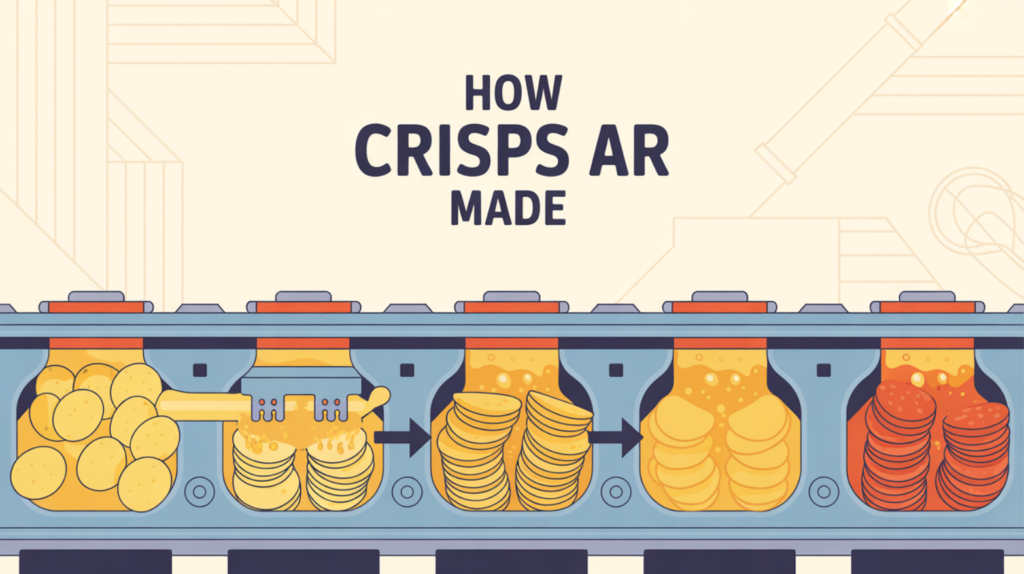
Every packet of crisps in a UK supermarket goes through a carefully controlled journey that balances food science, engineering, and flavour development. The reason potato crisps, tortilla chips, lentil snacks, and seaweed thins all feel so different is because each one follows a distinct production path before it ever reaches the shelf.
Step 1: Choosing the Base Ingredient
The process begins with selecting the main ingredient. Traditional crisps start with potatoes, while many modern snacks use corn, rice, lentils, chickpeas, vegetables, or seaweed. Each ingredient behaves differently when cooked, which is why corn-based snacks have a bold crunch, rice crisps feel lighter, and vegetable crisps often deliver natural sweetness.
This ingredient choice alone is why shoppers comparing textures between classic fried crisps and vegetable-based alternatives often notice such dramatic differences in mouthfeel and flavour.
Step 2: Cleaning, Preparation & Cutting
Potatoes and vegetables are washed thoroughly, peeled if required, and sliced with high-precision blades. Thickness is critical — thinner slices become delicate and crisp, while thicker cuts produce the hearty bite many people associate with premium crunchy styles.
Grains and legumes such as corn, rice, lentils, and chickpeas are milled into fine flours or doughs instead of being sliced, allowing manufacturers to shape them into waves, curls, or thin sheets before cooking.
Step 3: Shaping the Snack
Once prepared, the raw material is shaped into its final form. Potato crisps remain as slices, corn dough is pressed into triangular tortilla shapes, and lentil or chickpea mixtures are moulded into bite-size crisps. Seaweed is cut into sheets and layered for even drying.
This shaping stage determines whether a snack ends up looking like a classic potato crisp, a tortilla chip, or a light popped bite.
Step 4: Cooking & Texture Formation
Cooking is where the real transformation happens. There are three main methods:
- Frying — creates the traditional rich crunch most people associate with classic crisps
- Baking — produces a lighter texture with less oil absorption
- Popping / expansion cooking — uses pressure and heat to create airy, low-density crisps
This stage is why the eating experience of a fried crisp feels completely different from the lighter structure you find when comparing them with popped snacks or oven-baked varieties.
Step 5: Seasoning & Flavour Development
While still warm, crisps are gently tumbled with powdered seasonings. Heat allows the flavours to bind to the surface, creating everything from subtle salted profiles to bold flavour blends such as cheese & onion, salt & vinegar, prawn cocktail, and pickled onion.
This is the moment when a plain crisp becomes a flavour experience — the reason some people gravitate toward tangy varieties while others prefer richer savoury blends like those found in cheese-based crisps.
Step 6: Cooling, Quality Control & Packaging
After seasoning, the crisps are cooled to stabilise their structure, inspected for quality, and weighed into individual packets. Oxygen is replaced with nitrogen inside the bag to protect freshness and maintain crunch throughout transport and storage.
Why Different Crisps Taste So Different
The final crunch and flavour you experience are shaped by five factors: ingredient selection, thickness, cooking method, seasoning chemistry, and packaging environment. Change even one of these, and the result on your tongue is dramatically different.
This is why a bag of potato crisps feels nothing like corn-based snacks, and why seaweed crisps provide such a unique experience compared with traditional varieties — an effect many shoppers notice when browsing options such as seaweed snacks alongside standard crisps.
Final Thoughts
Making crisps is a precise science of moisture control, heat transformation, and flavour bonding. Every crunch is engineered — and once you understand the process, you start to appreciate why no two crisp styles ever truly taste the same.