
GroceriesReview.co.uk provides independent reviews and recommendations. Some pages contain affiliate links to Amazon.co.uk, and we may earn a commission when you make a qualifying purchase at no extra cost to you.
Before rice appears neatly packaged on UK supermarket shelves, it passes through a carefully controlled processing journey. Each step of this process directly affects the rice’s appearance, texture, cooking behaviour, shelf life, and overall quality.
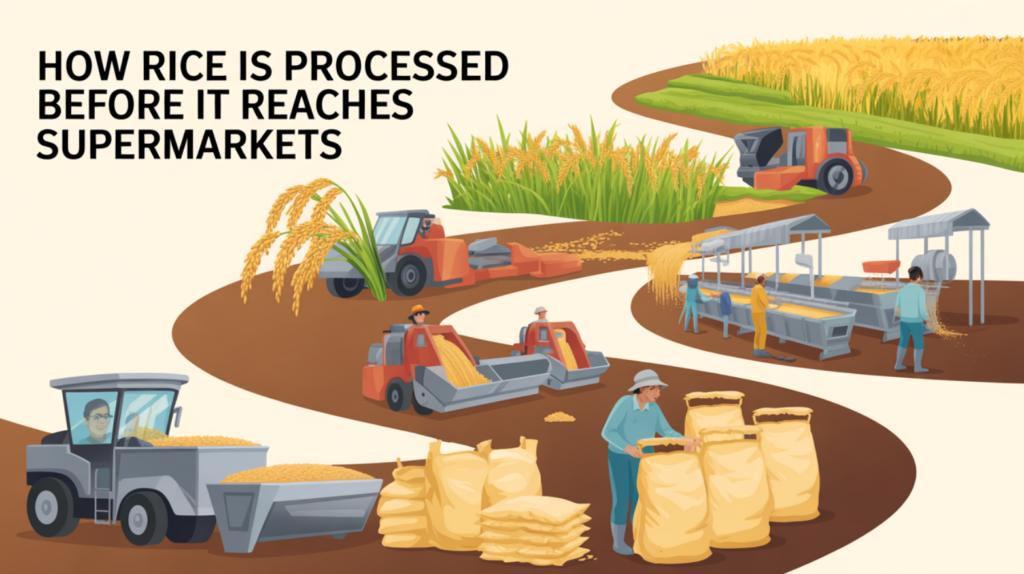
Understanding this journey allows shoppers to make better sense of the differences they see between rice types and brands.
Step 1: Harvesting the Paddy Rice
Rice begins as paddy rice, harvested with its husk fully intact. At this stage, the grain is not suitable for consumption and must undergo multiple processing stages before becoming edible rice.
Step 2: Removing the Husk
The first processing stage removes the outer husk, producing brown rice. This is the most natural edible form of the grain, retaining its bran layer and natural oils.
Related guide:
Best Brown Rice in the UK
Step 3: Milling & Polishing
Brown rice can then be milled to remove the bran and germ, producing white rice. The extent of milling determines the final grain texture and appearance.
Related guide:
Best White Rice in the UK
Step 4: Specialised Processing Methods
Some rice undergoes additional treatments:
- Parboiling — soaking, steaming, and drying before milling
- Aging — controlled storage to improve aroma and cooking quality
- Steaming & pre-cooking — for microwave and convenience rice
Each method alters the grain’s behaviour.
Related guide:
Best Parboiled Rice in the UK
Step 5: Sorting & Grading
After processing, rice is graded based on:
- Grain length
- Uniformity
- Percentage of broken grains
- Colour and appearance
Higher grades typically command higher prices due to superior milling standards.
Step 6: Packaging for Retail
Rice is sealed into protective packaging to preserve:
- Moisture balance
- Aroma
- Grain integrity
- Shelf life
Packaging quality plays a major role in how well rice performs once it reaches home kitchens.
How Processing Creates Different Rice Types
| Processing Choice | Final Rice Type |
|---|---|
| Minimal milling | Brown rice |
| Full milling | White rice |
| Parboiling | Easy-cook rice |
| Aging | Premium basmati |
| Steaming | Microwave rice |
Understanding these steps explains why basmati rice behaves differently from jasmine rice, even though both are aromatic long-grain varieties.
Final Perspective
Rice processing is not simply industrial preparation — it defines how the grain cooks, stores, and tastes. From husk removal to polishing, grading, and packaging, every stage shapes the final product UK shoppers bring home.