
GroceriesReview.co.uk provides independent reviews and recommendations. Some pages contain affiliate links to Amazon.co.uk, and we may earn a commission when you make a qualifying purchase at no extra cost to you.
UK supermarkets stock a wide range of rice products that often look similar on the surface but differ significantly in processing, grain type, quality standards, and intended use. Packaging and labels are designed to communicate these differences, yet many shoppers find them confusing or inconsistent.
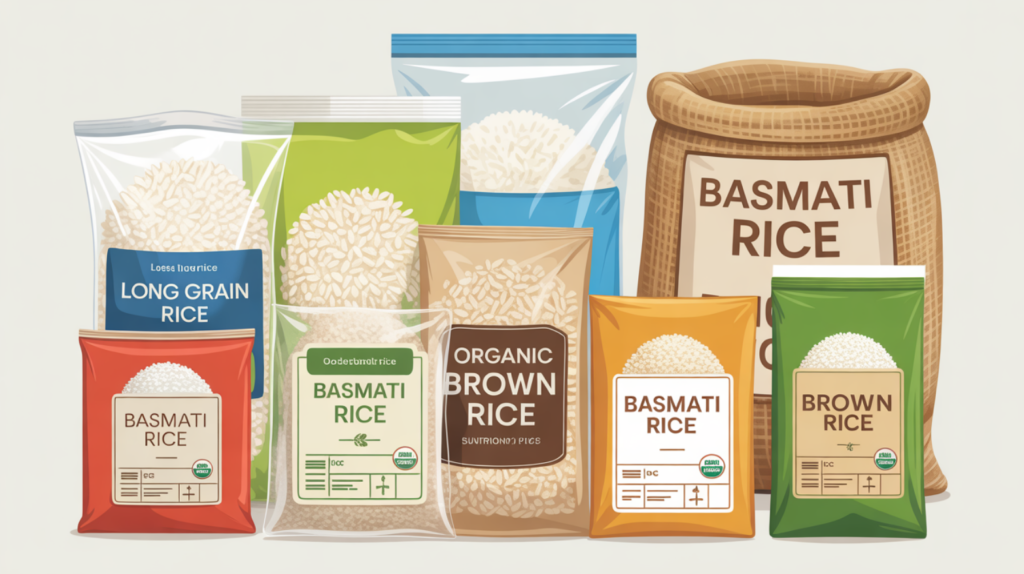
Understanding how rice is labelled allows buyers to compare products more accurately and select rice that truly fits their needs.
Why Rice Labels Matter
Rice packaging is not simply branding — it communicates essential information about:
- Grain type and variety
- Processing method
- Cooking behaviour
- Storage expectations
- Quality positioning
Reading these labels correctly helps avoid mismatched purchases and cooking disappointment.
Core Label Elements Explained
Grain Type & Variety
Most rice packs prominently display the grain category:
- Long grain
- Short grain
- Basmati
- Jasmine
- Arborio
- Sushi rice
These terms describe the rice’s physical structure and cooking behaviour rather than marketing style.
Related guides:
Best Long Grain Rice in the UK
Best Basmati Rice in the UK
Processing Descriptions
Common processing labels include:
- White rice — fully milled
- Brown rice / wholegrain — bran retained
- Parboiled / easy-cook — pre-steamed before milling
- Steamed / microwave rice — fully cooked and packaged
Each processing method affects texture, cooking time, and storage behaviour.
Related guide:
Best Parboiled Rice in the UK
Quality & Positioning Terms
Some labels reflect quality positioning:
- Premium
- Extra long grain
- Aged basmati
- Hom Mali (Thai jasmine standard)
- Organic
These terms often indicate sourcing standards, milling quality, and flavour characteristics.
Packaging Format
Rice is sold in several formats:
- Loose dry rice (standard packs)
- Multi-packs
- Bulk catering packs
- Pre-cooked microwave pouches
Each format serves a different household need and storage approach.
How UK Supermarkets Organise Rice
Rice is typically grouped by:
- Grain category
- Processing method
- Brand tier
- Pack size
- Convenience format
Understanding this structure makes the rice aisle easier to navigate.
How Labels Affect Storage & Cooking
Labels provide important guidance for:
- Cooking method and water ratio
- Storage requirements after opening
- Shelf life expectations
For example, fragrant varieties such as jasmine rice require tighter sealing than white rice to preserve aroma.
Final Perspective
Rice packaging in the UK communicates far more than just brand identity. Grain type, processing method, and quality terms directly influence cooking performance and storage needs. Learning to read these labels correctly transforms the rice aisle from guesswork into informed choice.