
GroceriesReview.co.uk provides independent reviews and recommendations. Some pages contain affiliate links to Amazon.co.uk, and we may earn a commission when you make a qualifying purchase at no extra cost to you.
Rice is one of the most commonly stocked foods in UK households, yet it is also one of the easiest to store incorrectly. While rice appears dry and shelf-stable, improper storage can quietly degrade its flavour, texture, and cooking performance long before any obvious spoilage occurs.
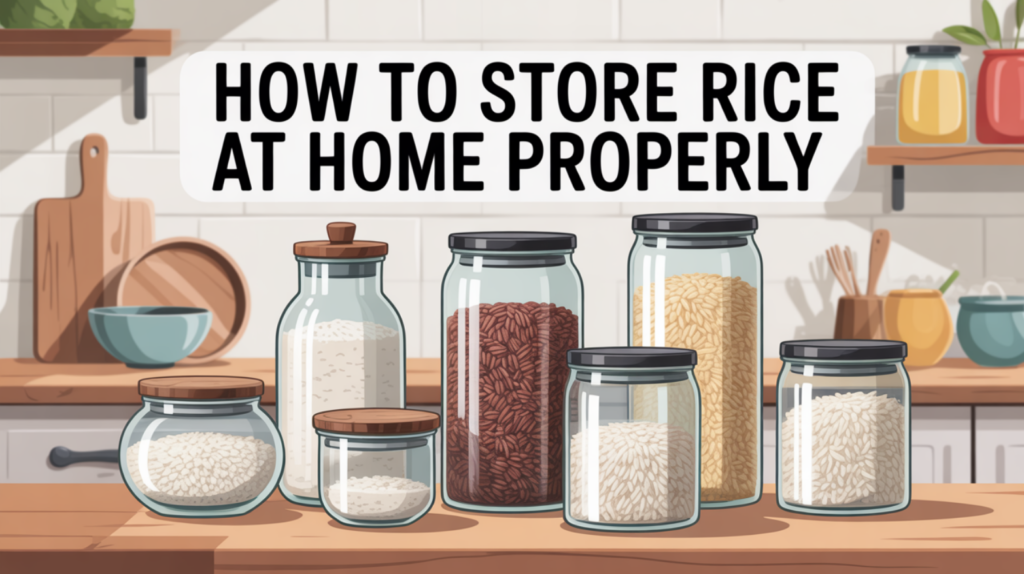
Understanding how to store rice correctly protects both food quality and long-term value.
Why Rice Storage Matters More Than People Realise
Rice is naturally sensitive to four main threats:
- Moisture, which promotes mould and grain deterioration
- Air exposure, which dulls aroma and encourages oxidation
- Heat, which accelerates quality loss
- Pests, especially insects that thrive in open packaging
When these factors are not controlled, even high-quality rice begins to lose its original cooking behaviour and consistency.
The Ideal Home Environment for Rice
| Storage Factor | Why It Matters |
|---|---|
| Cool temperature | Slows quality loss and oxidation |
| Low humidity | Prevents moisture absorption |
| Limited light | Preserves grain integrity |
| Airtight container | Blocks air, moisture, and insects |
| Stable location | Prevents condensation and temperature swings |
Cupboards away from ovens, kettles, and windows provide the most stable environment for rice storage.
Why Containers Are Essential After Opening
Original rice packaging is designed mainly for transport and retail display. Once opened, it provides little protection against moisture and pests. Transferring rice into sealed containers immediately after opening is one of the most effective ways to preserve quality.
This is especially important for fragrant varieties such as basmati rice and jasmine rice, whose aroma fades noticeably when exposed to air.
Storage Behaviour by Rice Type
Different rice types respond differently to storage conditions:
- White rice stores exceptionally well because the bran layer has been removed
- Brown rice retains natural oils that become unstable over time
- Parboiled rice tolerates storage fluctuations better than standard white rice
- Sushi rice and short-grain rice benefit from careful sealing to maintain texture
These natural differences explain why some rice lasts for years while others should be consumed within months.
How Long Rice Typically Lasts at Home
| Rice Type | Expected Storage Life (Sealed & Stored Properly) |
|---|---|
| White rice | Several years |
| Parboiled rice | Several years |
| Basmati rice | Several years (often improves with age) |
| Jasmine rice | 1–2 years |
| Sushi rice | 1–2 years |
| Brown rice | 6–12 months |
Warning Signs That Rice Has Deteriorated
Quality loss often appears gradually, but these signs indicate rice should no longer be used:
- A sour or musty odour
- Visible condensation or moisture
- Discolouration of grains
- Presence of insects or webbing
- Sticky or clumping texture in dry rice
Final Perspective
Proper rice storage is not about extending shelf life alone — it preserves flavour, texture, and cooking reliability. With airtight containers, stable temperatures, and controlled humidity, UK households can maintain the full quality of their rice and avoid waste while ensuring consistently good cooking results from every pack.